
Why the handover matters more than the last job
In a label converting plant, the shift handover is not just about saying the machine ran well or badly. It is about passing on the small details that affect the next reel, the next set of plates and the next operator decisions. On narrow-web flexo presses, those details often include web tension changes, drying behaviour, anilox condition, registration quirks and how the finishing station behaved during the run.
When the outgoing team gives a clear handover, the incoming team can pick up the job faster and with less trial and error. That matters in Johannesburg, Durban or Cape Town where production schedules are tight and delivery windows are often short. It also matters when load-shedding, humidity or a late artwork amendment has already put pressure on the shift.
- Record what was running, not just the job number.
- Note any repeat faults, alarms or operator adjustments.
- Confirm what still needs checking before the next start.
Keep the notes practical and job specific
Good handovers are short, factual and easy to read. A neat page of practical notes is more useful than a long story that nobody has time to work through. The best handover sheets tell the next team what was done, what changed and what still needs attention. If a plate mounting issue was corrected on one unit, or the varnish was drying slower than expected, say so clearly.
For narrow-web flexo label presses, the handover should also capture anything that affects setup or finishing. That includes substrate behaviour, roll change notes, die-cutting pressure, rewind quality and whether the ink laydown stayed stable throughout the shift. If the job is going onto a food label or cosmetic label run, the incoming team needs to know whether the print finish stayed within the required standard.
- Use plain wording that any trained operator can follow.
- Write down the exact point where the job paused.
- Include settings that worked, even if they seemed small.
- Keep the sheet beside the machine until the next team has read it.
Hand over the press condition, not only the production result
A press can finish a shift with acceptable output and still need attention before the next run. Belts, rollers, guides, sensors and drying units may all need a quick check. If the team leaves without noting a worn blanket, a weak suction point or a recurring registration drift, the next operator may spend the first hour trying to solve a problem that was already visible before handover.
This is especially useful where plants are running multiple label types in one day. A clear handover helps the next team understand whether the machine needs a light clean, a plate check, a change in tension or a fuller maintenance look. Around Spartan in Kempton Park, many converters work with mixed job bags and tight turnaround times, so the press condition note is often as important as the production note.
- List any noise, vibration or heat that was not normal.
- Record cleaning completed and what still needs cleaning.
- Note parts that were working but should be watched.
Include finishing and rewind details before the reel changes hands
Finishing problems often show up after the press operator thinks the job is almost done. That is why the handover should include rewind tension, slitting behaviour, die-cut registration and any issue with stripping or matrix removal. If the finishing setup was adjusted to suit a thinner film or a paper label stock, the next shift needs that information before the first new roll goes in.
A good handover also helps when the same press is feeding different customers' work with different finish requirements. One job may need sharp varnish contrast, while another needs a clean matte result and consistent cut through. If the outgoing team had to make extra corrections to keep the rolls neat, that should be written down in a way that is easy to follow.
- Write down any rewind edge tracking issue.
- State whether the finish station ran clean or needed frequent adjustment.
- Mark any batch that should not be mixed with the next one.
- Confirm if samples were approved or still pending sign-off.
Use a handover routine that works on every shift
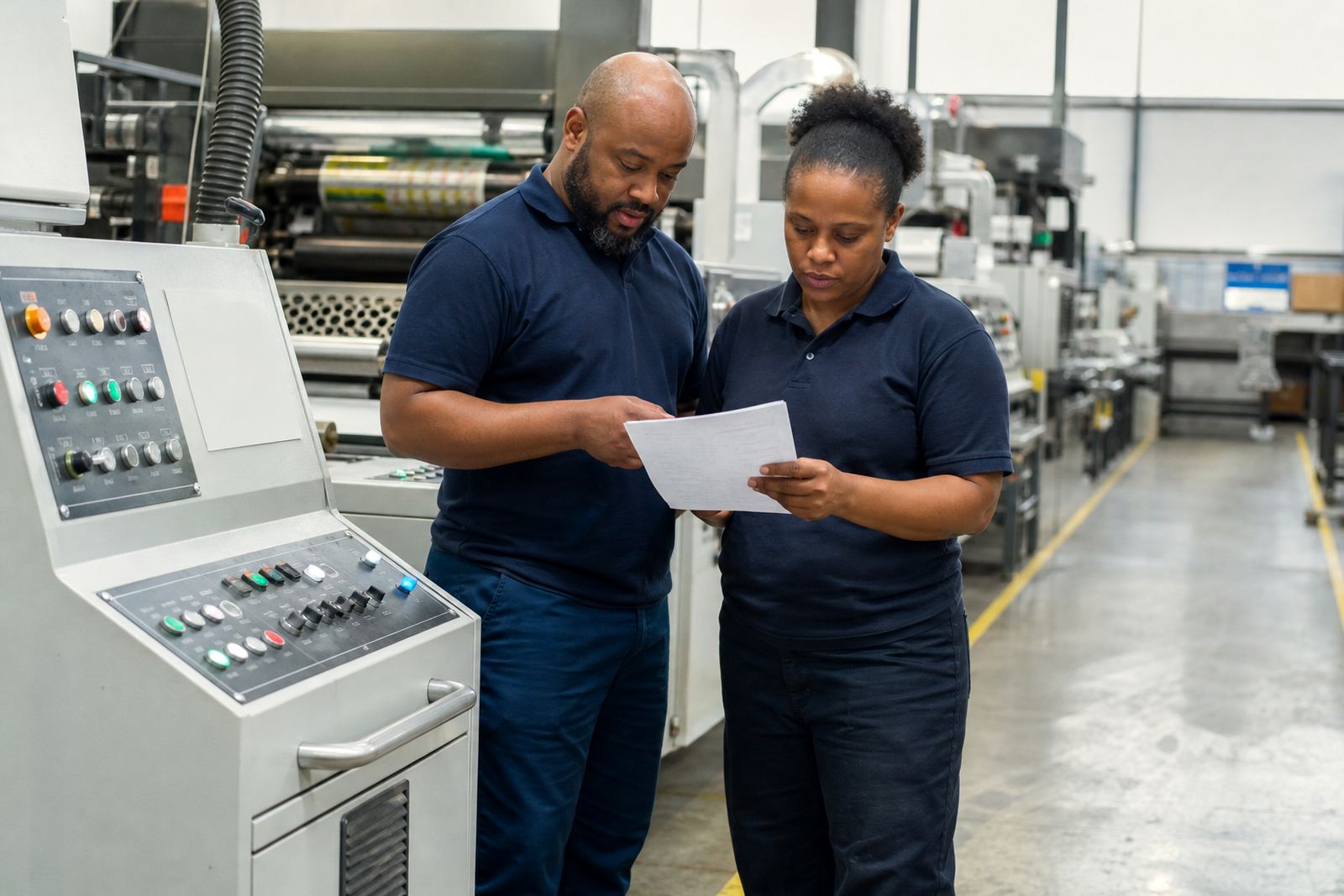
The best plants do not rely on memory. They use the same routine every time so nothing gets missed. A handover can start with a quick walk around the press, then a verbal summary, then a written note signed by both shifts. That simple pattern cuts confusion, especially when a team is changing over in a hurry or during night production. It also helps new operators settle in faster.
In practice, the routine should cover safety, job status, machine condition and next actions. If the incoming team knows exactly what must happen first, they can start up with confidence. In Pretoria or Gqeberha, where some sites run early starts and others work split shifts, consistency is what keeps the operation steady.
- Walk the machine together before the outgoing team leaves.
- Read the notes aloud if the job is sensitive.
- Agree who will handle the first checks on restart.
- Keep one standard handover sheet for all shifts.
When a clean handover saves a full shift in Gauteng
A label converter in the East Rand can lose a full morning if the night team forgets to mention that the web was tracking slightly left after a roll change. The day shift then starts with a crooked first reel, adjusts the guides, checks plate alignment and reworks the setup before production stabilises. A clear handover would have saved time, waste and frustration.
That is why handover discipline matters across South Africa, from Centurion and Johannesburg to Durban and Cape Town. It supports continuity, protects print quality and helps the pressroom stay steady when conditions change. For plants dealing with load-shedding, coastal humidity or urgent orders, the handover is part of keeping the day on track, not just an admin task.
When teams treat handover as part of the production process, the pressroom becomes easier to manage. Operators make fewer guesses, supervisors get better visibility and the next shift starts with proper context instead of guesswork.