Why repeat label work needs more than memory
When a label job comes back for a second or third run, the first pressure point is usually not the press itself. It is the gap between what was done last time and what the team remembers today. On narrow-web flexo label presses, small changes in web tension, plate mounting, ink laydown or drying can affect the result quickly. That is why repeat jobs need records that are simple to follow and easy to trust.
A good setup record should tell the operator what matters most for that job: substrate type, web path notes, plate details, anilox choice, drying settings, finishing steps and any issues found during the last run. If the job ran well in Johannesburg in winter but struggled later in humid Durban, that difference should be written down. The next team then starts with facts, not guesswork.
For converters handling food labels, cosmetic wraps or retail stickers, repeatability saves time at changeover and cuts down on waste. It also helps when load shedding or power dips interrupt production, because the restart is faster when the record shows the exact setup that worked before.
What to record at press setup
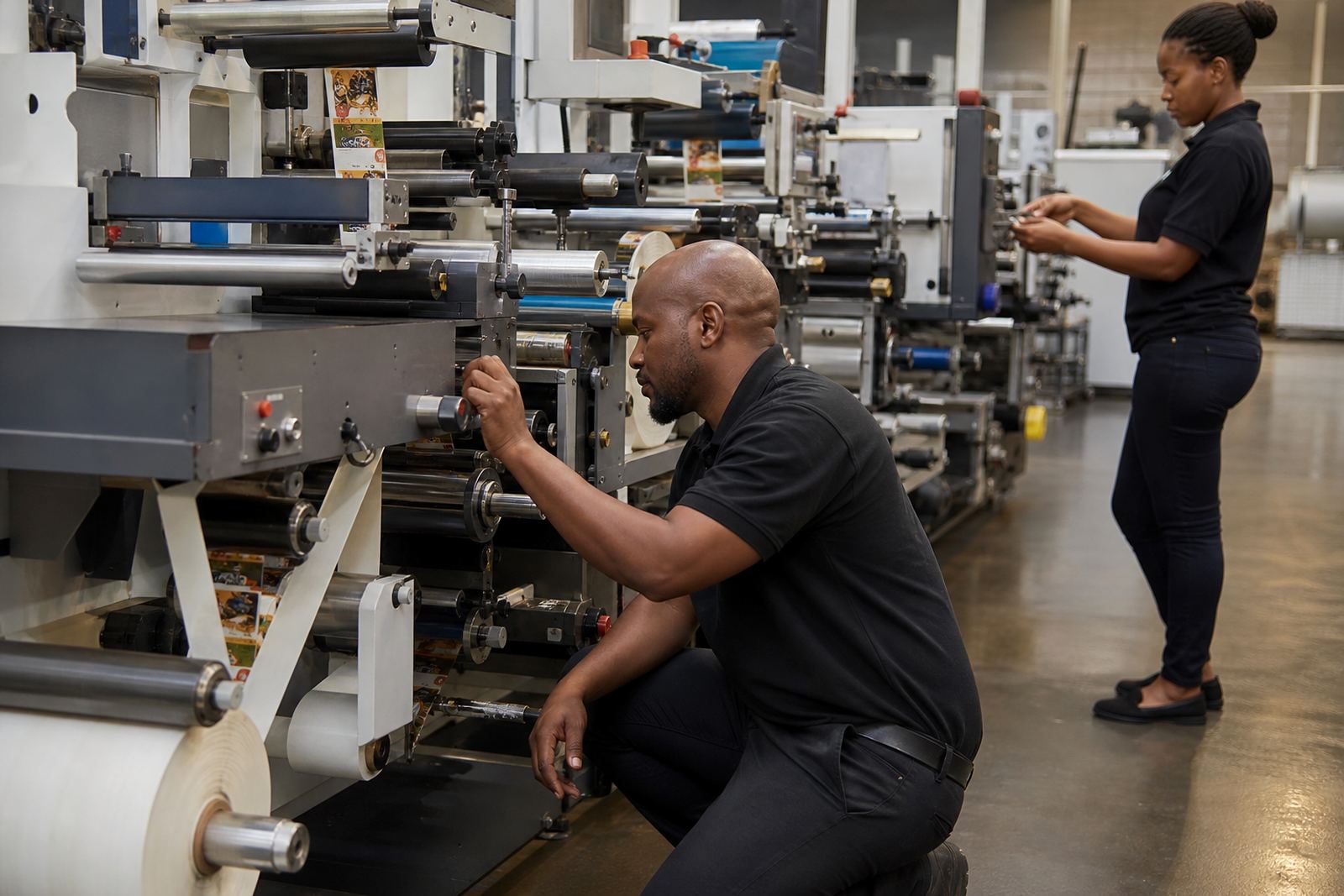
Good records do not need to be complicated. They need to be practical. At press installation, commissioning and training stage, the aim is to build a habits that stay useful long after the first run. A clean setup sheet should let a new operator follow the same approach, even if the original team is off shift or away on another site.
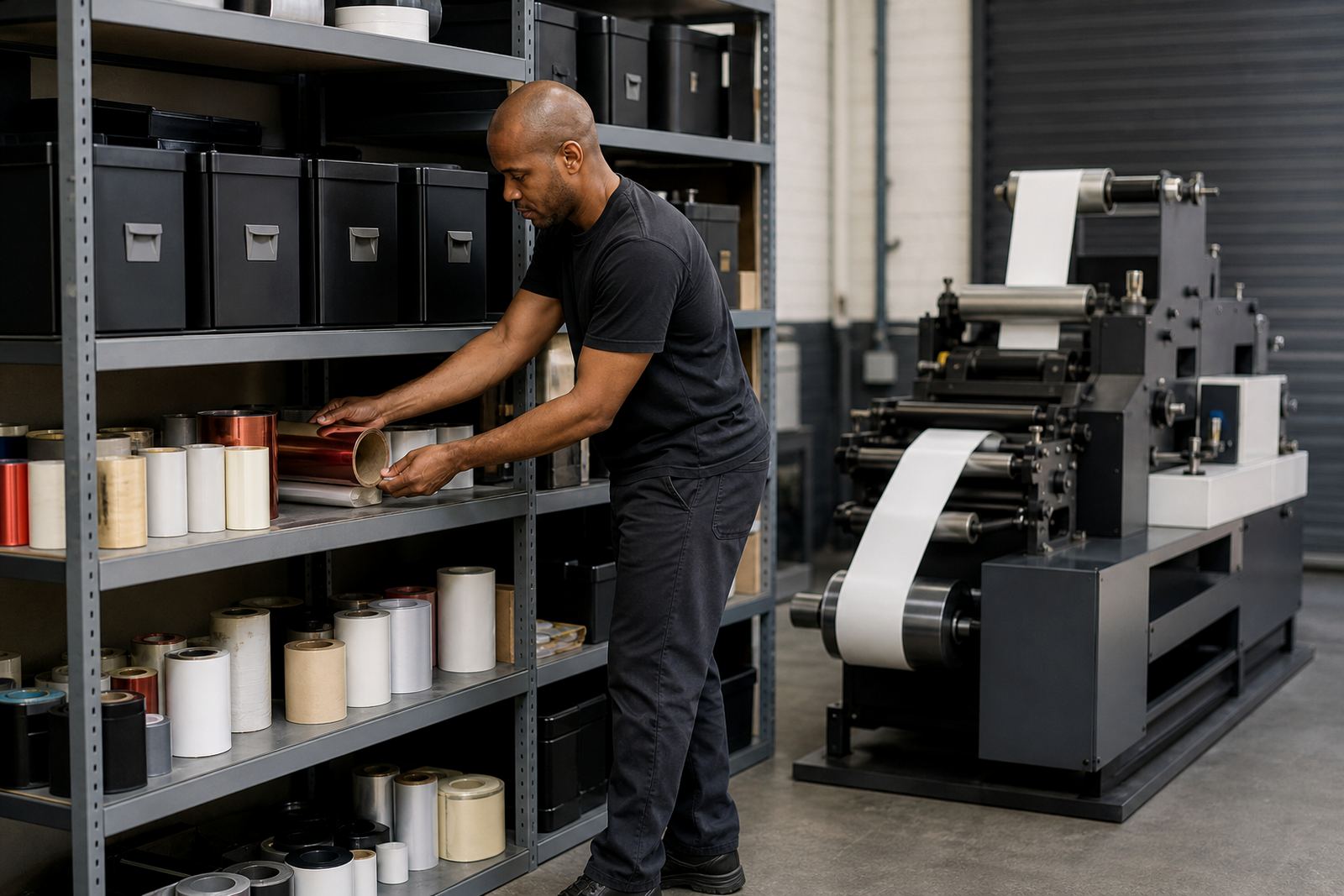
- Material type and thickness, including any note on liner behaviour
- Plate order, plate count and mounting position
- Anilox details and where each one was used
- Ink order, drying notes and colour targets
- Tension settings and web path observations
- Any finishing step such as varnish, die cutting, slitting or rewind handling
- Problems found during startup production support and the fix used
One small missing detail can cost a full roll later. If a press team knows the job needs a slower start to avoid web drift, or that a certain substrate marks easily during rewind, the record should say so plainly. That way the next setup does not begin from zero.
How finishing notes prevent repeat problems
Many label jobs print well but still leave the factory with finishing faults. A clean print is not enough if the slit edge feathers, the rewind is uneven, or the die cut drifts out of line. Finishing setup needs the same level of attention as print setup because repeat customers notice changes in the finished label before they notice anything else.
For converters across Gauteng, coastal humidity and temperature shifts can change how adhesive liners and face stocks behave. In Cape Town and Gqeberha, a job that looked stable in the morning can react differently later in the day. In Durban, moisture can affect release and rewind. Notes on finishing should therefore include how the job handled on the last run, not just how it looked leaving the press.
- Record slitting width and blade wear if relevant
- Note rewind tension and roll firmness
- Log any edge dust, curl or telescoping
- Keep a note of whether finishing ran better after a press speed change
- Capture any plate or web alignment issue that showed up only at the finishing stage
Operator training turns records into routine
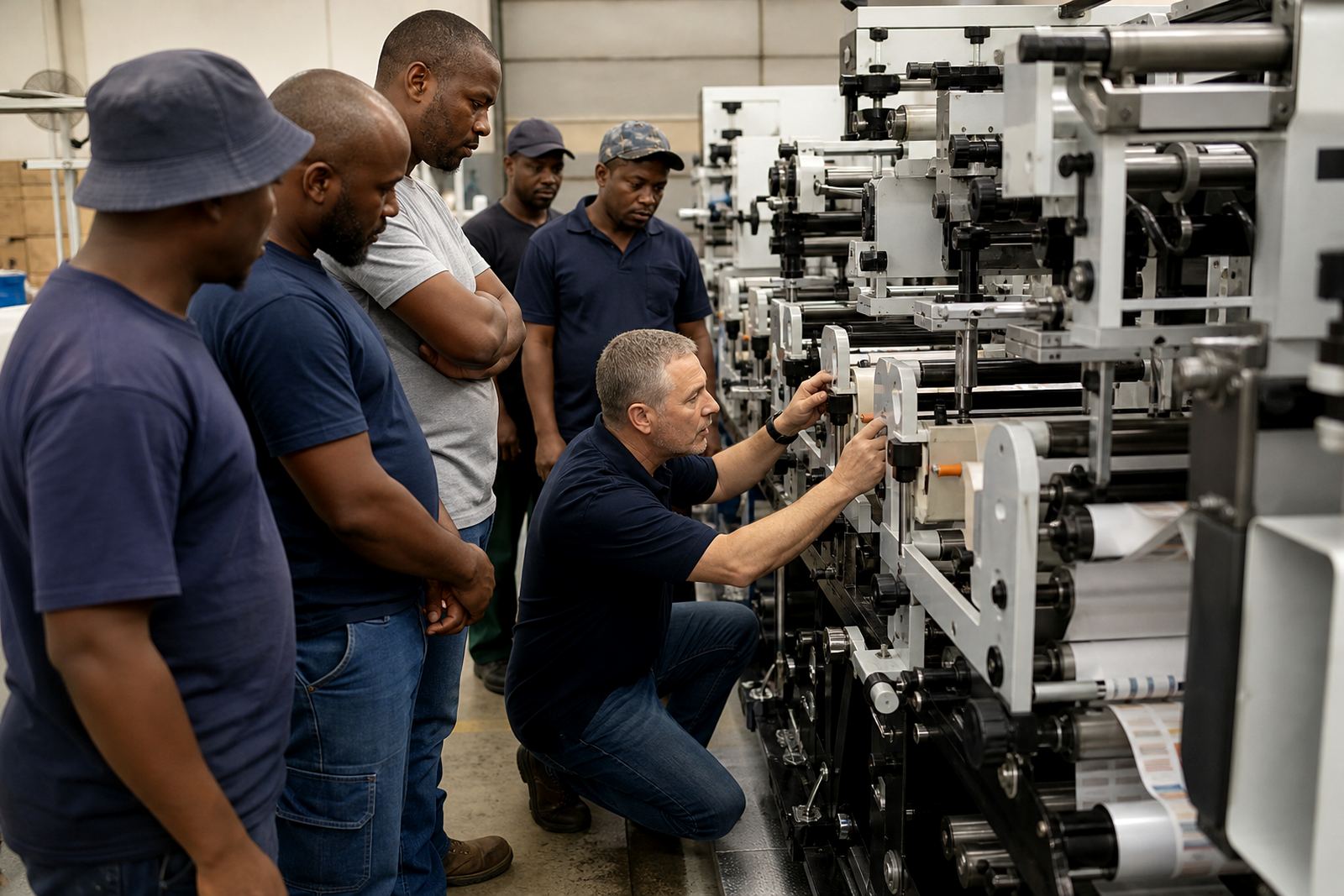
Records only help if the team uses them. That is where operator training matters. A good training session should show why the notes matter, where to find them and how to update them after a run. If the setup record is buried in a drawer or saved in a place no one checks, it will not help the next shift.
In a busy plant, the best habit is a short handover at the end of each job. The outgoing operator should leave behind the basic setup details, any faults, what was adjusted and what should be checked first on the repeat run. This is especially useful for converters in Pretoria, Centurion and the East Rand where teams often share presses across shifts.
When staff understand the link between the record and the result, they take more care with plate mounting, anilox handling and cleaning. They also spot patterns sooner. If a certain job keeps losing register after lunch or after a power interruption, the problem is easier to trace when the details are written down each time.
A Kempton Park example that saves time
A label converter in Kempton Park may run the same short label for a retail customer every few weeks. The first run is usually the hardest because the team is still learning how the substrate behaves, how the press reacts to the drying load and how the finishing line handles the roll. By the second run, the aim should be to cut setup time and reduce spoilage, not to start over.
If the team keeps clear notes, the repeat job begins with a known web path, a known plate order and a finishing sequence that has already been tested. When the job comes back, the operator checks the old record, confirms the setup and watches only the points that matter. That saves time and helps avoid unnecessary adjustments that can throw off an otherwise good run. It also makes support easier if a technician is called in for breakdown support or remote support.
For a plant working near Spartan or receiving service across Johannesburg, Pretoria and the wider Gauteng area, that kind of discipline is worth a lot. It keeps the job moving even when the day is interrupted by load shedding, staff changes or a machine fault that needs quick attention.
Building a repeat-job system that lasts
The strongest repeat-job system is not fancy. It is consistent. Every job needs the same basic record, the same handover habit and the same after-run review. Over time, that creates a usable history for each label type and each customer requirement. It also makes preventive maintenance and spare parts planning easier because wear patterns become visible before they turn into a failure.
At Flexography Printer in Spartan, Kempton Park, we see the value of these habits across press installation, press commissioning, training and ongoing support. The goal is straightforward: help label converters keep their narrow-web flexo presses ready for the next run, not just the current one. When records are accurate and setup habits stay steady, repeat work becomes quicker, cleaner and more predictable.
For converters serving Johannesburg, Durban, Cape Town, Gqeberha and the towns in between, that consistency can mean fewer stoppages and better control over finishing. It also gives the production team something solid to rely on when a familiar job comes back after weeks or months away.