Why slit quality starts before the first cut
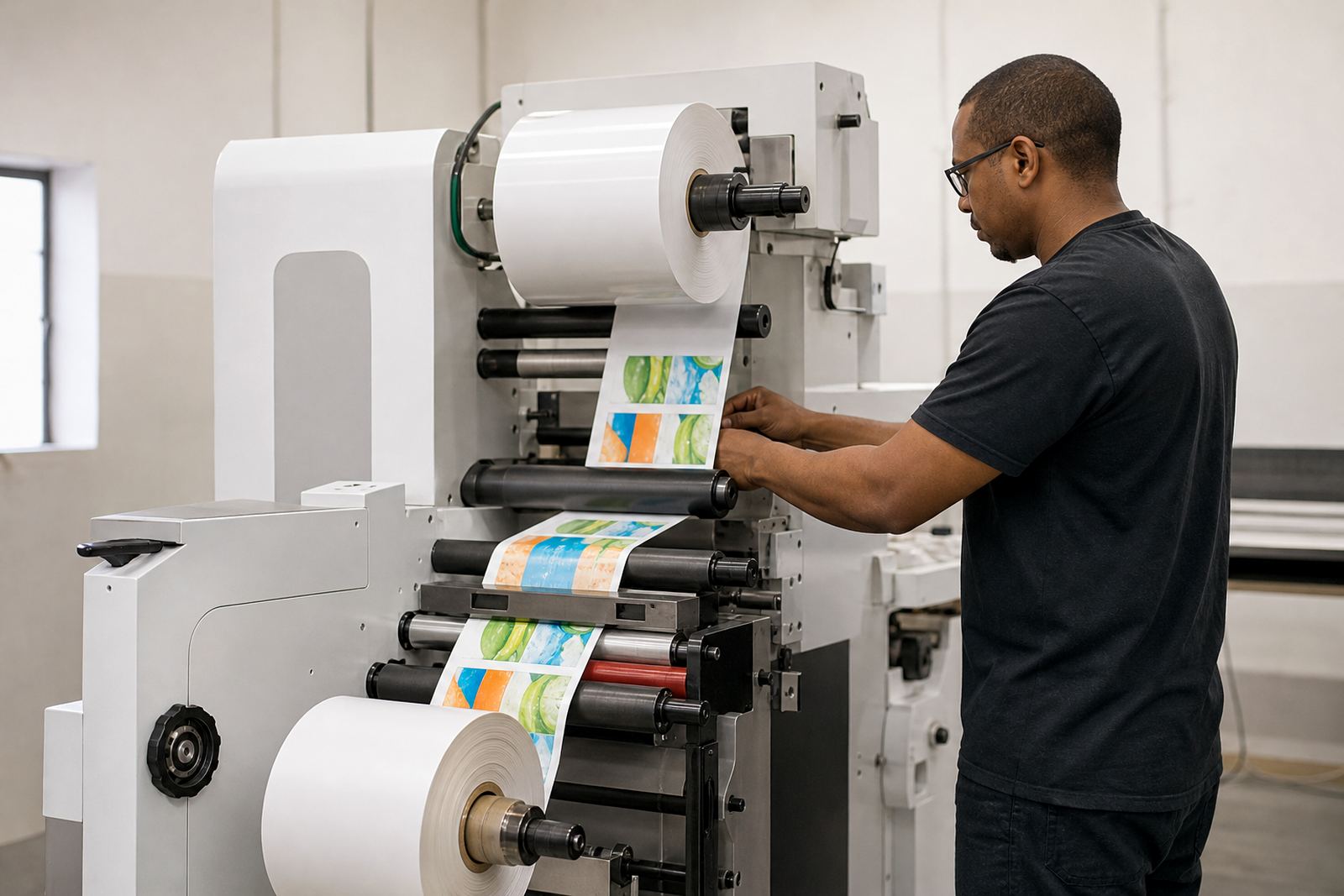
In narrow-web flexo work, slitting is not only about making a roll narrower. It is part of the final quality of the label reel, and it affects everything that happens after printing, from rewind to carton packing and label application. If the slit edge is rough, the reel may telescope, dust up, or unwind unevenly. That slows down the next process and creates avoidable complaints.
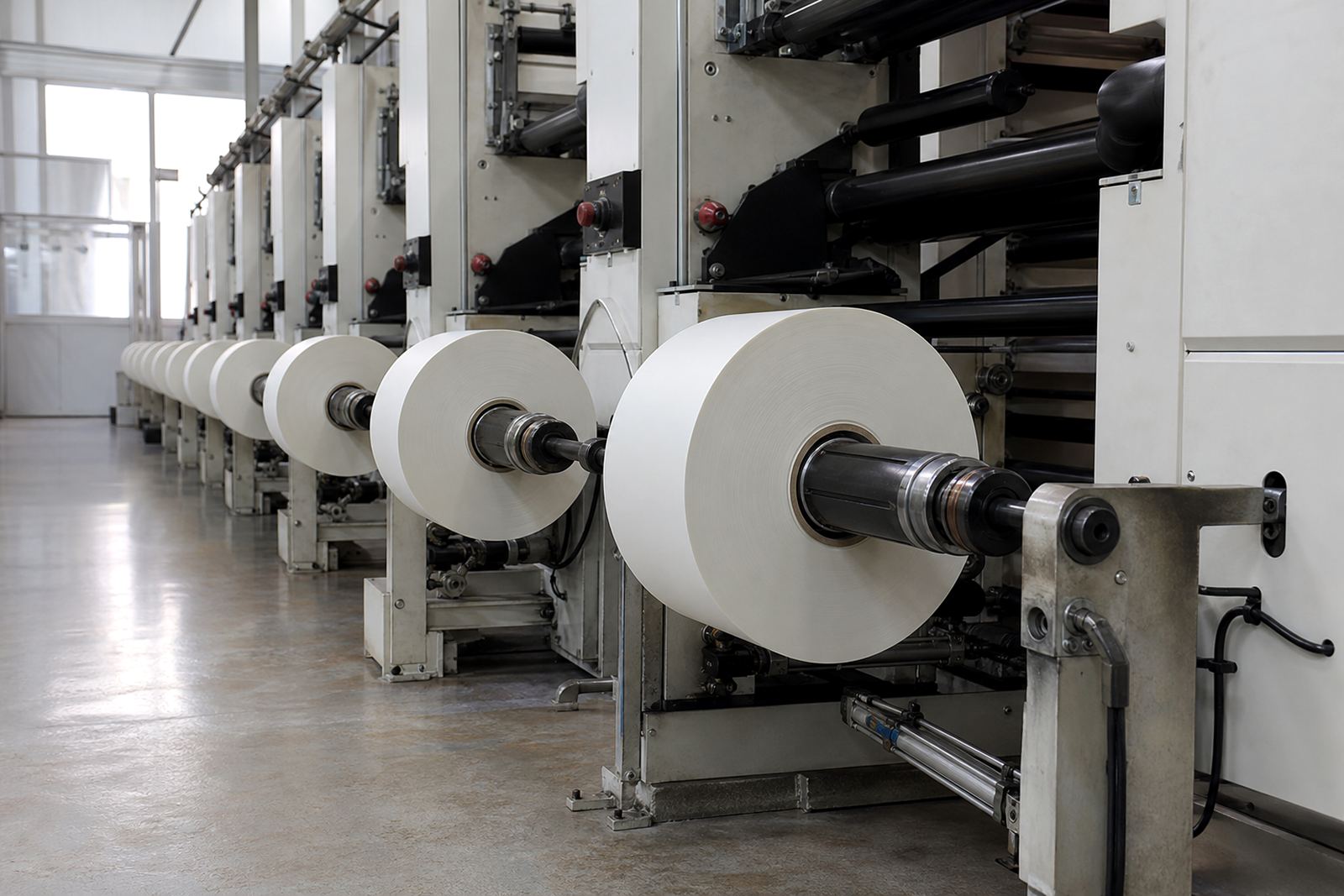
Good slitting setup begins with the printed web itself. If the web tension, drying and rewind build are not steady, the slit knives have to deal with a roll that is already under stress. On humid days in coastal areas like Durban or Gqeberha, that becomes more noticeable because materials can hold moisture and behave differently under tension. In Gauteng, load shedding can also interrupt production flow, so it helps to have a repeatable setup that returns to the same result after a stoppage.
What clean reel edges actually do for your operation
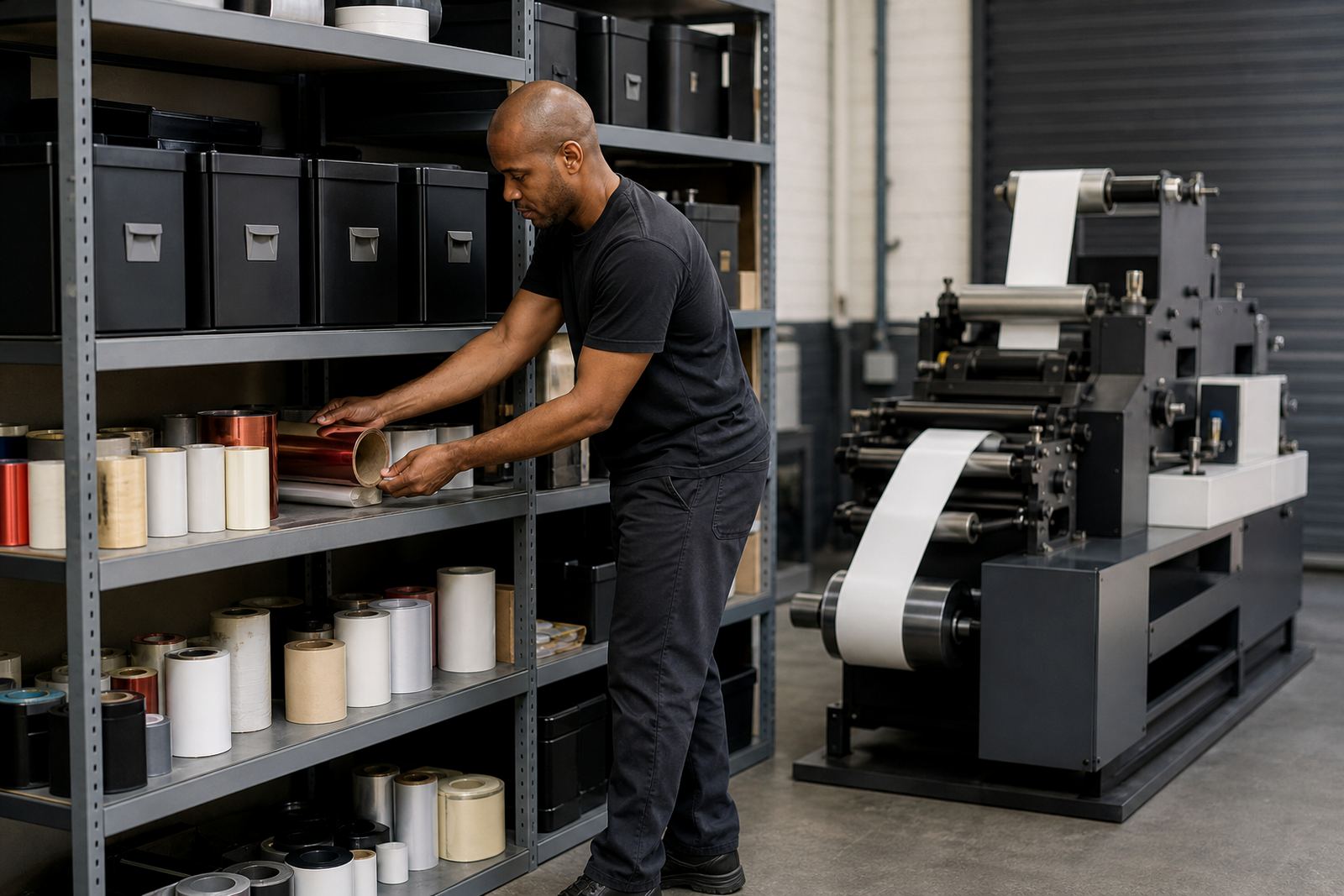
Clean edges are not cosmetic. They help a reel hold its shape in storage, during transport and on the slitting table. A neat reel feeds better through packing, boxing and labelling lines. It also reduces the chance of edge damage when reels are stacked, wrapped or moved around the warehouse. For converters working from Spartan, Kempton Park to clients in Johannesburg, Pretoria and beyond, that matters because reels often travel long distances before they are used.
When the slit is true, the reel starts and ends square, and the layers sit properly. That means less dust, fewer loose tails and better reel consistency from one batch to the next. If the finish is poor, the whole roll can look acceptable from a distance but still perform badly in use.
- Neat edges help prevent telescoping and lateral movement.
- Cleaner reels are easier to count, wrap and store.
- Stable rolls reduce complaints from packing teams and end users.
Setting knives, tension and rewind the practical way
There is no shortcut here. Slitting setup should be adjusted for the material, the web width and the way the reel will be handled after finishing. Knife condition matters, but so does alignment. If blades are worn or slightly off, the cut can feather the edge instead of slicing cleanly. Tension must also be controlled. Too much tension can crush the roll and make the edge hard, while too little can leave it loose and uneven.
Rewind settings need equal attention. A reel that is wound too tightly can become hard to unwind later, especially in warmer inland conditions. A reel that is wound too loosely can collapse at the edge or mark during transit. For label converters, the aim is a reel that stays neat in storage and still runs smoothly when the customer loads it.
Operator training is often the difference between a job that looks fine on the slitter and a job that performs well on the next machine. Training should cover setup checks, safe blade handling, inspection of edge quality and what to do when the roll starts to wander. Small changes, made early, usually save a lot of scrap later.
How finishing setup supports the slit reel
Slitting is tied closely to finishing. If the finishing setup is not right, the reel may leave the line with good print but poor handling. That includes the way rolls are trimmed, rewound, packed and marked for dispatch. A clean finish depends on more than the knife station alone. It depends on the whole path from print to pack.
Plate mounting help, anilox care and general press setup all influence the web condition before slitting. If ink laydown is uneven or if there is poor drying, the reel can pick up set-off or edge contamination. That becomes harder to correct once the roll is already on the slitting line. Preventive maintenance also plays a part. A machine with worn bearings, tired shafts or inconsistent web guidance will not hold a neat slit for long.
For businesses supplying food, beverage, cosmetics and retail labels, the standard has to be practical and repeatable. The reel must arrive ready for the next step, not require another round of sorting or rework.
When a local press room needs support fast
In a busy label converter, slitting issues often show up at the worst time. A job is due for dispatch, but the edge is fraying or the roll is winding unevenly. In that moment, remote support can help with checks on setup, tension paths and rewind settings, while on-site breakdown support may be needed if a mechanical issue is stopping production.
From our Spartan base in Kempton Park, support can be organised for Johannesburg, Pretoria, East Rand and Centurion, with wider support to Durban, Cape Town and Gqeberha. The practical goal is to keep reels moving and reduce time lost to trial and error. Where spare parts support is needed, it is usually the small items, such as worn blades, guides or components in the handling system, that make the biggest difference when they are replaced on time.
For converter teams, this is also where startup production support helps. A fresh setup after installation or maintenance needs a disciplined handover so the same reel quality can be repeated shift after shift.
A Kempton Park example of better reel handling
A label converter in the East Rand may run a job with narrow reels that must travel to clients in different provinces. If the slit edges are uneven, the reels can arrive with loosened layers or scuffed sides, especially after hot afternoon loading and long road transport. Once that happens, the problem is no longer only about the slitter. It becomes a handling issue, a storage issue and a customer service issue as well.
By tightening the setup discipline, checking the rewind profile and matching blade condition to the material, the same operation can produce reels that stack better and stay tighter in transit. That reduces claims and makes the final pack look more professional. It also keeps the production team focused on output instead of sorting damaged rolls at the end of the shift.
That is the point of proper slitting setup. It saves time later, protects the printed product and helps every reel do its job cleanly from press to dispatch.
What to review before you release a slitting job
Before a job leaves the line, it helps to do one last practical check. Not every defect is obvious at a glance, so the team should look at the reel core, the edge line, the tension feel and the way the roll sits on the pallet. If something is off, it is far easier to correct it there than after delivery.
- Check that the reel edges are square and free of feathering.
- Confirm the roll width against the job card and cutting order.
- Look for telescoping, loose layers or edge crush.
- Make sure the reel is packed for the route and storage conditions it will face.
For South African converters, practical slitting is part of reliable production. It is the difference between a reel that only looks finished and one that handles properly in the real world.