
Why the Web Path Deserves Attention Before First Print
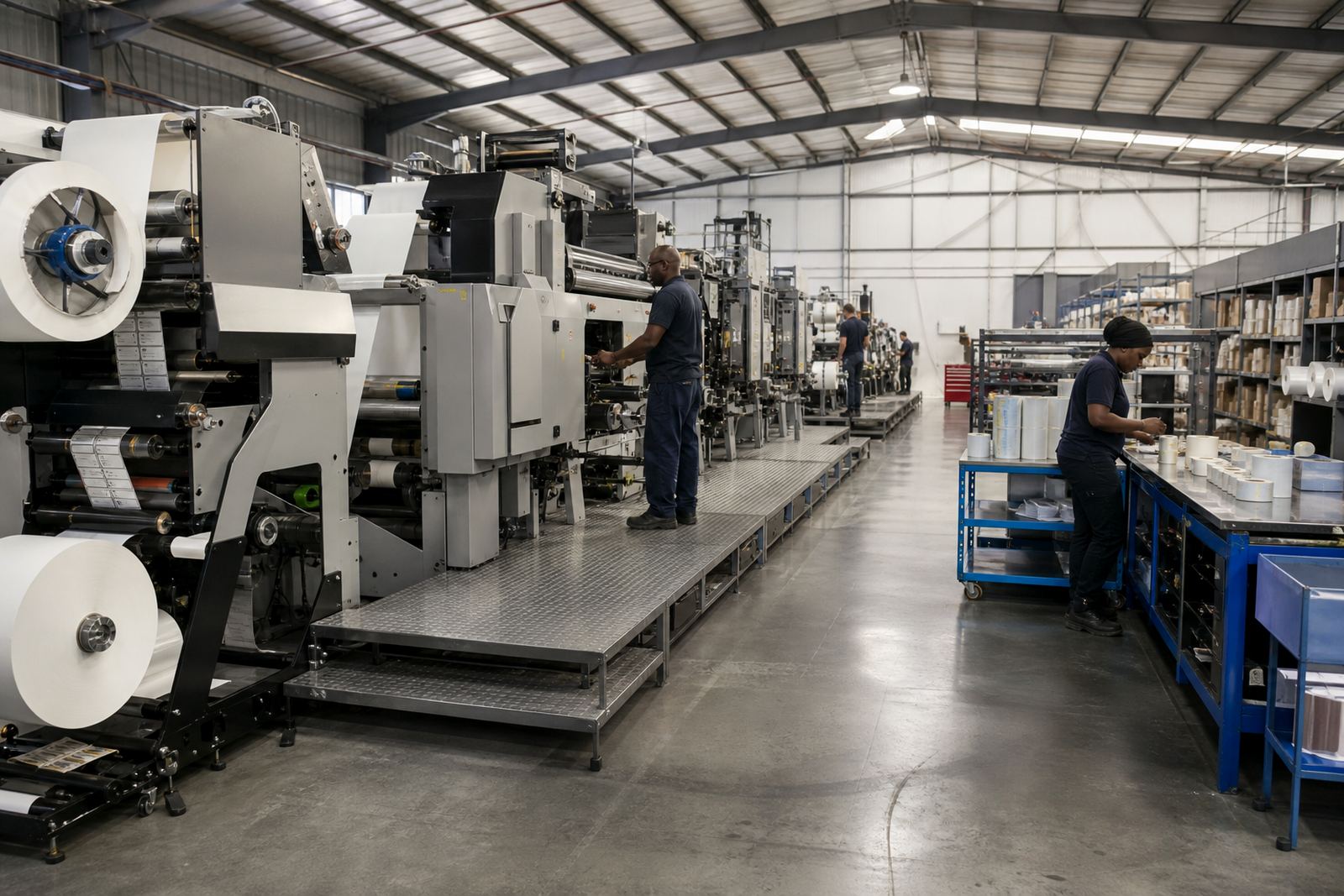
When a roll enters a narrow-web flexo press, it does more than simply move from one side to the other. It passes through tension zones, print units, drying or curing areas, converting stations and rewind controls, and each step has a direct effect on how the label comes out. If the web path is not set correctly, the press will fight the material instead of controlling it.
That is why setup is never only about ink or artwork. It starts with how the web is threaded, how the edges are guided and whether the press is aligned for the specific substrate. A small error at the unwind can show up later as poor register, wrinkling or a trim issue at finishing. In practical terms, the web path sets the standard for the whole job.
For label converters in Kempton Park, Johannesburg or Durban, this matters even more when switching between paper, film and other common substrates. Different materials behave differently in heat, humidity and tension, so a path that works on one job may need adjustment on the next.
What Happens to the Web at Each Stage of the Press
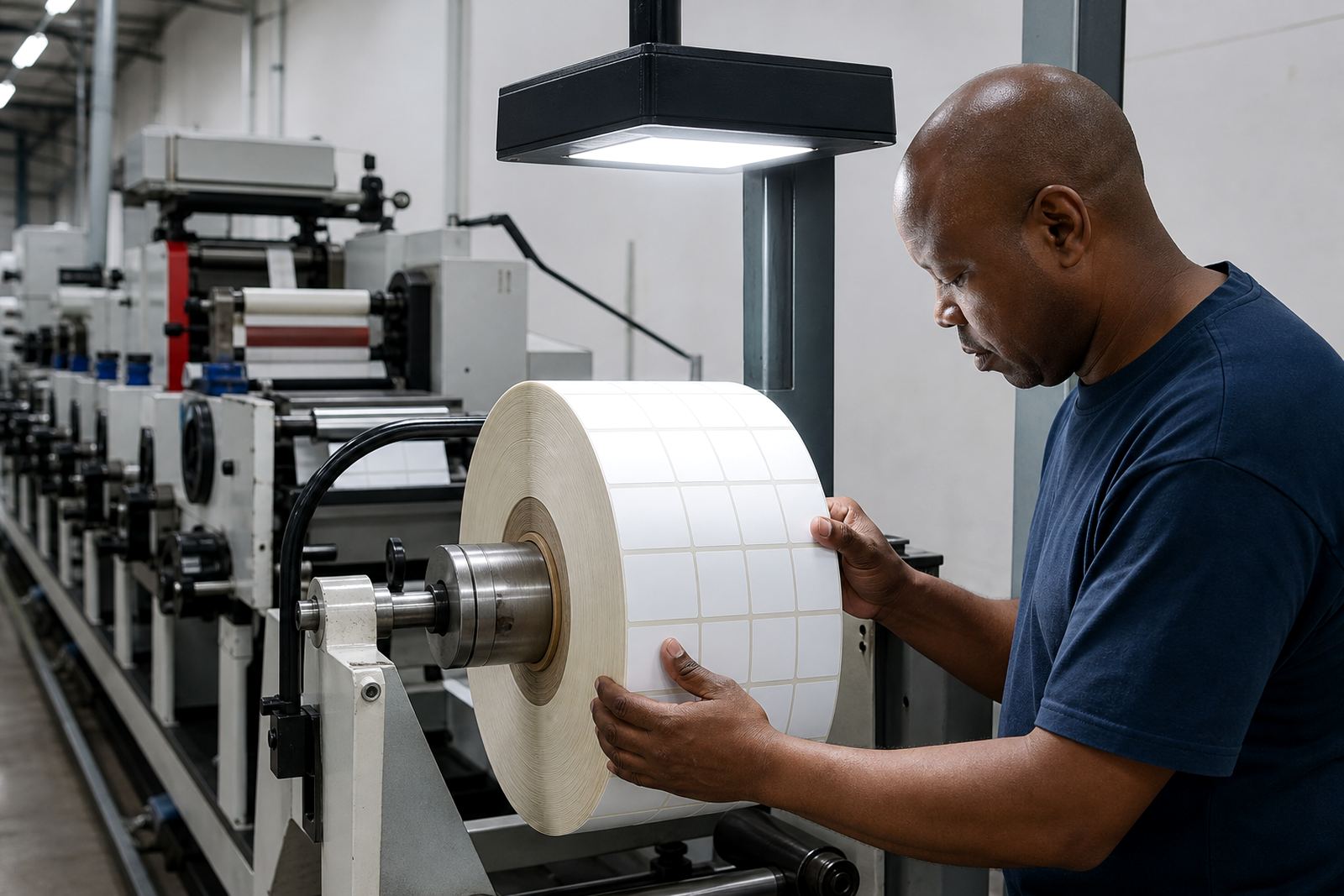
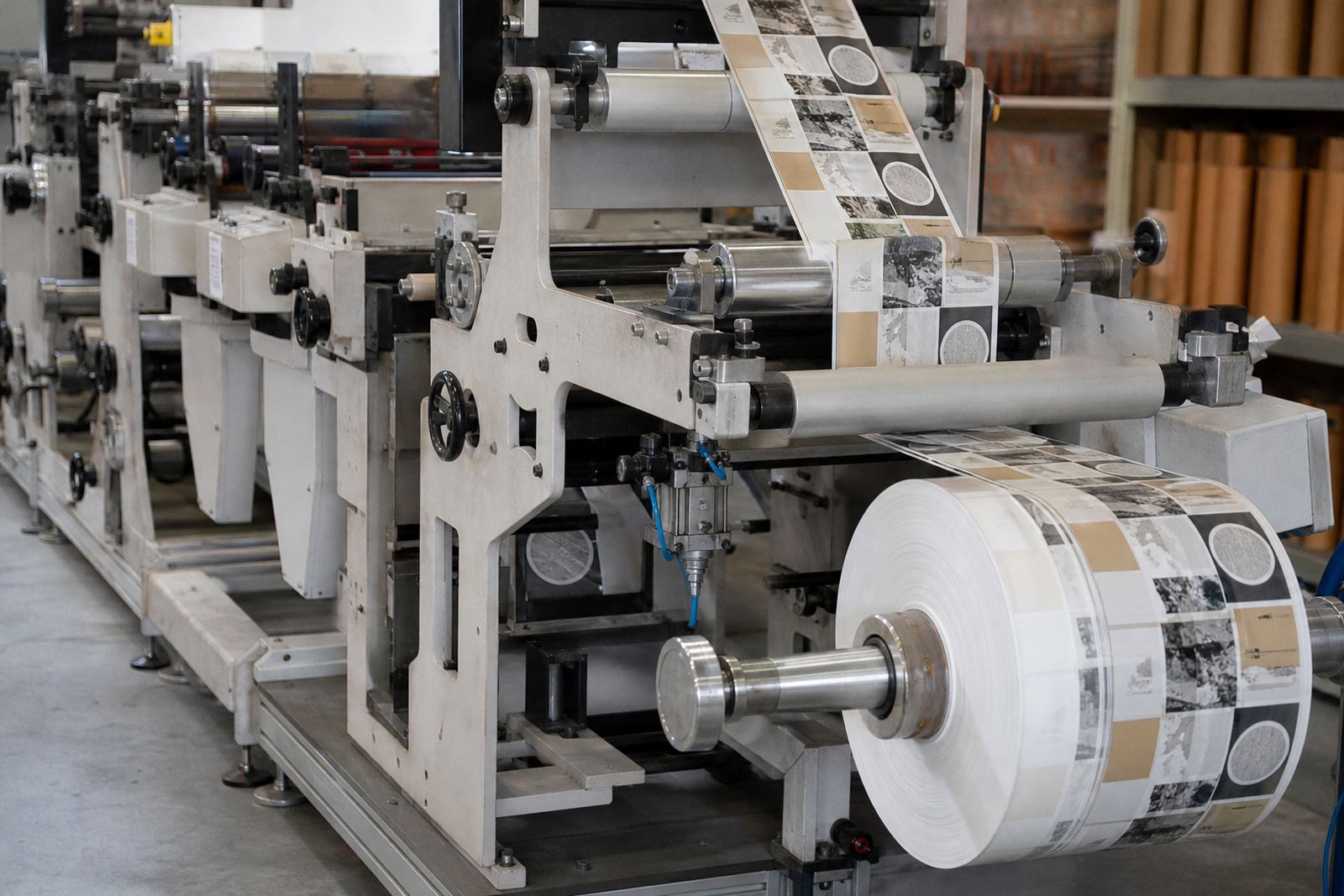
The web path is a controlled sequence. First, the unwind must feed smoothly without surging or pulling too hard. Then the web is guided into print stations where each colour, coating or varnish layer has to land in the right place. After that, the web may pass through finishing steps such as die cutting, slitting or other inline work before it reaches rewind.
At every point, the operator is managing tension, alignment and surface condition. If the web is too loose, it can flutter and shift. If it is too tight, it can stretch, distort or cause edge damage. Either way, print consistency suffers. That is why operators who understand the full path can solve problems quicker and keep production moving.
- Unwind stability affects the whole run from the start.
- Guiding systems help keep edges in line through the press.
- Print stations need consistent tension to hold register.
- Finishing sections depend on accurate web control for clean conversion.
- Rewind quality matters for handling, packing and the next process step.
How Setup Choices Affect Print Quality and Waste
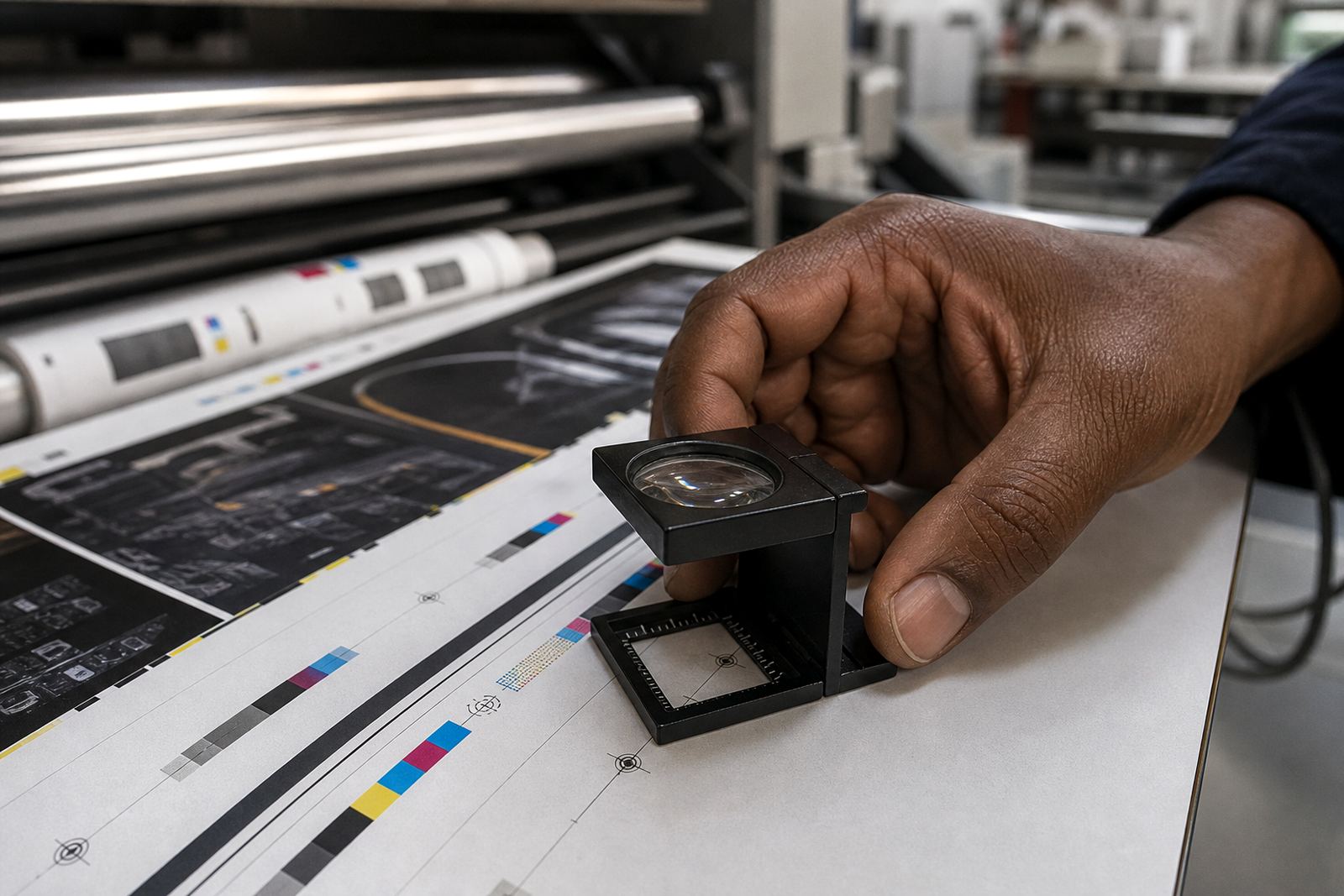
A press can only perform as well as its setup. When the web path is threaded correctly, the operator spends less time correcting web breaks, poor tracking and uneven print. That saves material, avoids unnecessary stoppages and gives the team a better chance of hitting the colour and register target from the first good sheet or roll.
Setup also affects finishing. If a label is not tracking accurately through the path, it may cut off centre or leave poor edge quality after slitting. This is where plate mounting, anilox condition and finishing setup all come together. A neat web path helps those other tasks do their job properly.
In South African production rooms, load-shedding can interrupt a run and coastal humidity can change how some materials behave. A press that is set up with care will recover more easily after a stop and restart. That is useful in plants from Cape Town to Gqeberha where conditions can shift during the day.
Signs the Web Path Needs Correction
Many press faults look like print problems at first, but the source is often the web path. If the operator keeps seeing the same fault across more than one station, the thread may be off or the tension settings may be wrong. It helps to check the path methodically instead of chasing one symptom after another.
- Web breaks near the unwind or before the first print unit.
- Regular edge wandering or tracking drift.
- Misregister that appears and returns during the run.
- Wrinkles, curl or surface marking on the substrate.
- Poor rewind build or uneven roll edges.
These signs usually mean the press needs a proper inspection, not just a quick adjustment. A narrow-web line is sensitive to small changes, so the root cause may sit a few stations away from where the problem shows up. That is why experienced support matters during troubleshooting and startup production.
A Practical South African Example From Setup to Output
A label converter in Spartan, Kempton Park might receive a mixed production week with food labels on paper, cosmetic labels on film and a retail run that needs quick changeovers. If the web path is set up carelessly, every change can add time and waste. The team then spends longer on threading, correcting tension and checking the finishing section before they can print at speed.
With a disciplined setup, the process is calmer. The operator threads the web in the correct order, confirms the path through the print units and checks that the rewind is taking up evenly. After that, training makes the difference. Staff who understand what each roller and guide is doing can spot a fault early and keep the press running through a busy shift.
That is why local support is useful not only in Kempton Park but also for converters in Johannesburg, Pretoria, Durban, Cape Town and Gqeberha. When a press is down or the web is not tracking correctly, it helps to have technical support that understands narrow-web production and the practical pressure of meeting delivery dates.
Keeping the Web Path Stable After Commissioning
Once a press is installed and commissioned, the work does not end there. The web path needs regular attention through preventive maintenance, operator coaching and simple checks before each shift. Small wear points can build up over time, especially where the press runs long hours or the substrate mix changes often.
A good support plan usually includes:
- Routine inspection of rollers, guides and tension points.
- Cleaning and care for anilox and plate mounting areas.
- Operator training for threading, setup and fault finding.
- Breakdown support when the line stops unexpectedly.
- Remote support for quick guidance during production pressure.
For converters across South Africa, that kind of follow-up helps protect output and reduces avoidable downtime. It also keeps the press ready for busy periods, whether the job is a short retail run or a longer packaging order. The web path may be hidden inside the machine, but it controls a large part of what the customer finally sees on the label.