
Food label work needs repeatable print, not guesswork
Food labels are often the first thing a buyer notices on shelf, but they also have to work hard once the pack leaves your line. The print must stay legible on bottles, pouches, tubs and cartons, with barcodes, ingredient panels and batch areas kept clear and consistent from first run to repeat run.
For converters in Johannesburg, Pretoria, Durban, Cape Town and Gqeberha, the real challenge is keeping colour steady across different substrates and shift changes. Heat, humidity and dust all affect setup, and in many plants load-shedding means the press must be brought back online without losing registration or wasting material. That is where good planning and proper operator training make a big difference.
- Short runs for product launches and seasonal foods
- High repeat orders for staple ranges
- Clear text for ingredients, allergens and traceability
- Finishing that supports wipe resistance and handling
Typical narrow-web flexo setup for food labels
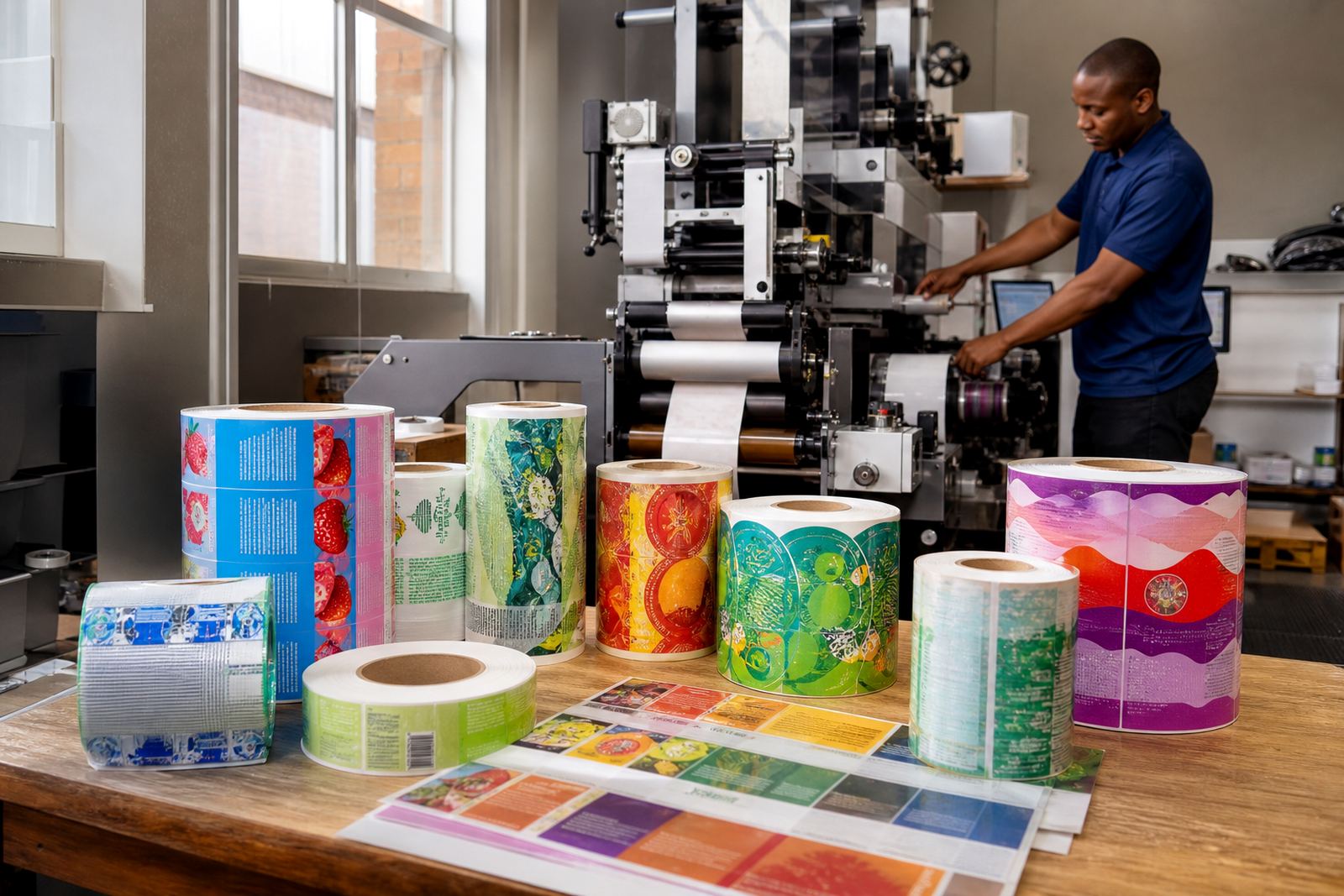
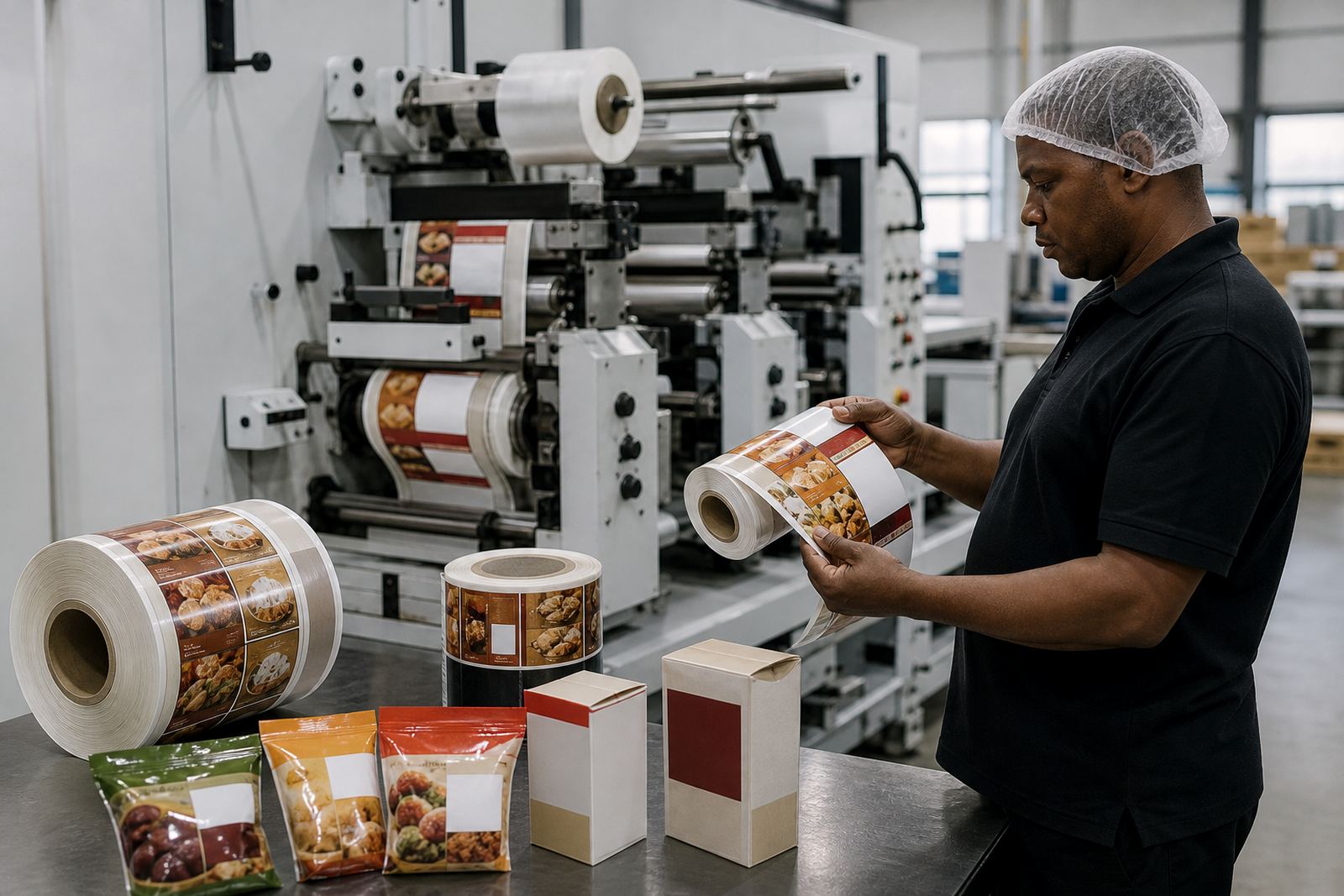
A practical food label line usually starts with a narrow-web flexo press matched to the label size, material and finishing requirements. The exact configuration depends on whether you are printing pressure-sensitive labels, wraparound labels or linerless formats, but the same basics apply: stable web handling, accurate print stations, drying suited to the ink system and finishing that suits the end use.
At Spartan in Kempton Park, we assist with press installation, commissioning and startup production support so the line is set up for the work that will actually come through the door. That includes advice on layout, plate mounting, anilox care, finishing setup and operator routines that reduce waste at changeover.
- Press installation and commissioning
- Operator training for make-ready, register and cleanup
- Startup support after installation or relocation
- Remote support when a quick check is needed
Planning the press layout around food factory realities
Food printers often work in tight spaces, with the press, rewinder, inspection station and finishing unit all needing a sensible flow. If the room is cramped, changeovers take longer and operators are forced to move material more often than they should. A cleaner layout also helps with hygiene control, which matters when labels are printed for dry foods, chilled products or high-turnover packing areas.
We usually advise converters to think through access for rolls, plates and cleaning materials before the equipment arrives. Space for maintenance, lighting and ventilation should be planned early, and if the site is in an area with frequent power cuts or voltage dips, backup procedures should be built into the daily routine. It is cheaper to plan that now than to fix avoidable delays later.
- Allow space for roll loading and finished stock movement
- Keep ink and cleaning areas close but separate from storage
- Plan for power restoration after load-shedding
- Leave room for maintenance access on both sides of the line
Finishing details that help food labels sell and survive handling
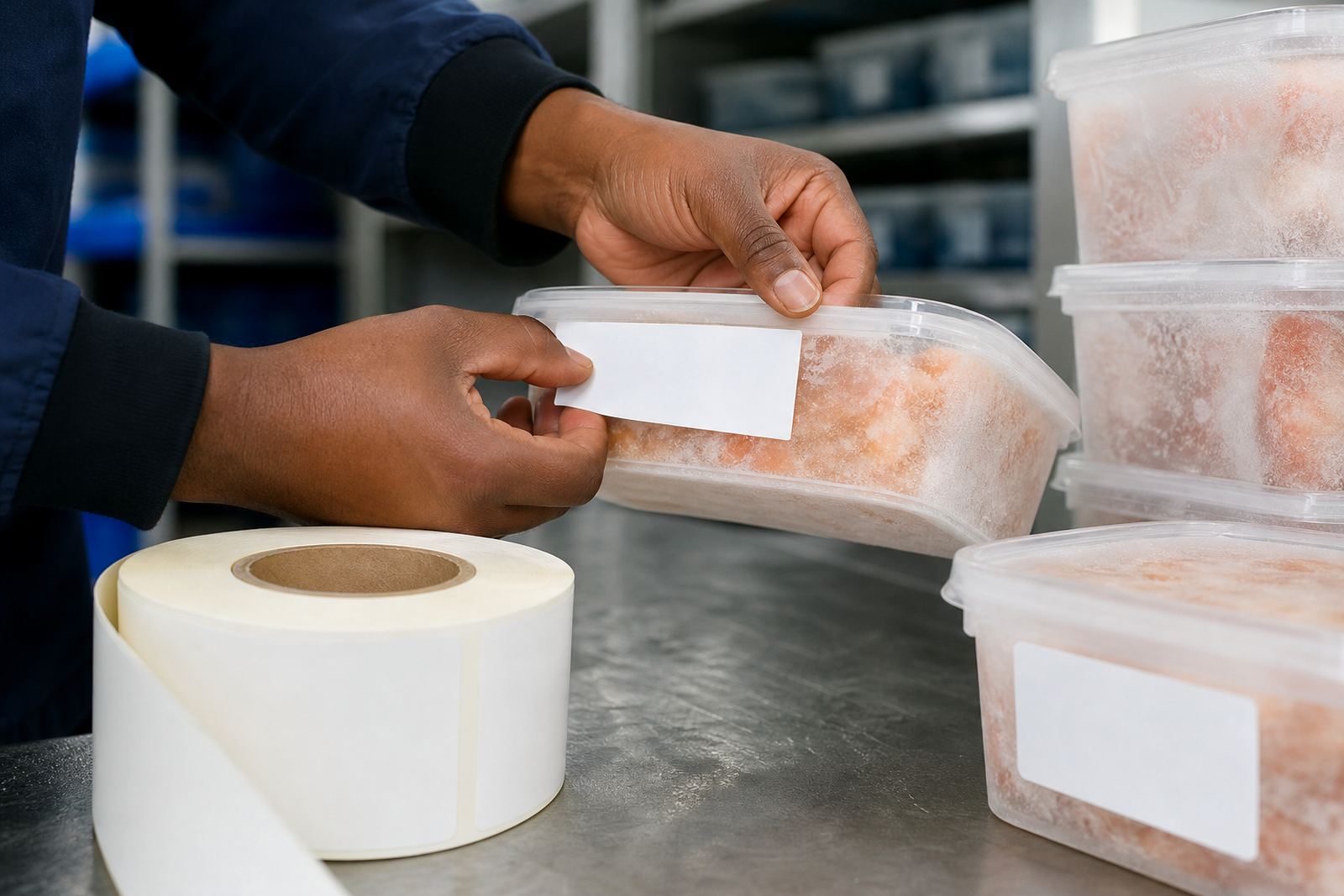
Finishing is not only about appearance. For food labels, it can affect how the pack performs in cold rooms, distribution and retail handling. Depending on the product, converters may need varnish, lamination, die-cutting, slitting or inspection steps that improve durability and keep the label looking sharp on shelf.
We help with finishing setup so the press line matches the product’s actual use. A label for a sauce bottle has different needs from a label for frozen goods or dry groceries. If the finishing stage is set badly, the result can be edge lift, scuffing, poor rewind tension or labels that waste time at packing. Small issues like that quickly add up in a busy plant.
Our team supports finishing setup together with plate mounting help and anilox care, because print quality and finishing quality are closely linked. If one is off, the whole job suffers.
Common mistakes that cost money on food label runs
Most waste on food label work comes from avoidable setup problems rather than the job itself. Incorrect web tension, rushed plate mounting, poor ink matching and weak operator handover all create scrap. In South African plants, another common problem is not planning for power interruptions, so the line restarts with the wrong settings or without checking registration first.
Another mistake is buying a press for today’s work only, then finding it cannot handle the next product range. Food converters often need flexibility for label shapes, foil details, security marks and seasonal artwork. If your equipment set is too narrow, you will spend more time outsourcing than printing. That is why production consulting matters before a purchase is signed off.
- Skipping proper commissioning after installation
- Using the wrong anilox or plate setup for the job
- Overlooking training for new operators and relief staff
- Ignoring humidity, static and storage conditions in coastal areas
Budget ranges for food label production in Rand
There is no single price for food label production because the budget depends on press size, finishing needs, support level and how much work is done in-house. A converter entering narrow-web flexo usually needs to budget for the press itself, setup time, operator training, finishing equipment and ongoing parts support. For some businesses, phased spending is better than trying to do everything at once.
As a working guide, smaller setup projects may start in the lower hundreds of thousands of Rand, while a fuller production line with installation, commissioning and more complex finishing can move into higher budget bands. The key is to match spend to expected label volumes, product mix and turnaround times. We help businesses assess that early so they do not underbuy or overbuy.
It is also worth allowing for preventive maintenance, spare parts support and breakdown support. A press that sits idle for a day can cost more than the monthly maintenance plan, especially during peak food production periods.
Support from Kempton Park to plants nationwide
Based in Spartan, Kempton Park, we support label converters across Gauteng and beyond, including Johannesburg, Pretoria, Durban, Cape Town, Gqeberha, East Rand and Centurion. Our team includes Thabo Mokoena, Aisha Patel, Johan van der Merwe, Lerato Ndlovu, Sibusiso Khumalo and Megan Naidoo, with each person focused on a practical part of the production process.
If you are setting up food label work or trying to improve an existing line, we can assist with press installation, commissioning, operator training, startup production support, preventive maintenance, remote support, spare parts support, anilox care, plate mounting help, finishing setup and production consulting. Clients reach us through the enquiry form on our contact page when they need a clear response and a proper plan.
Food labels leave very little room for error. The right press setup and the right support keep the line moving and the packs looking right.