What frozen food labels must handle on the line
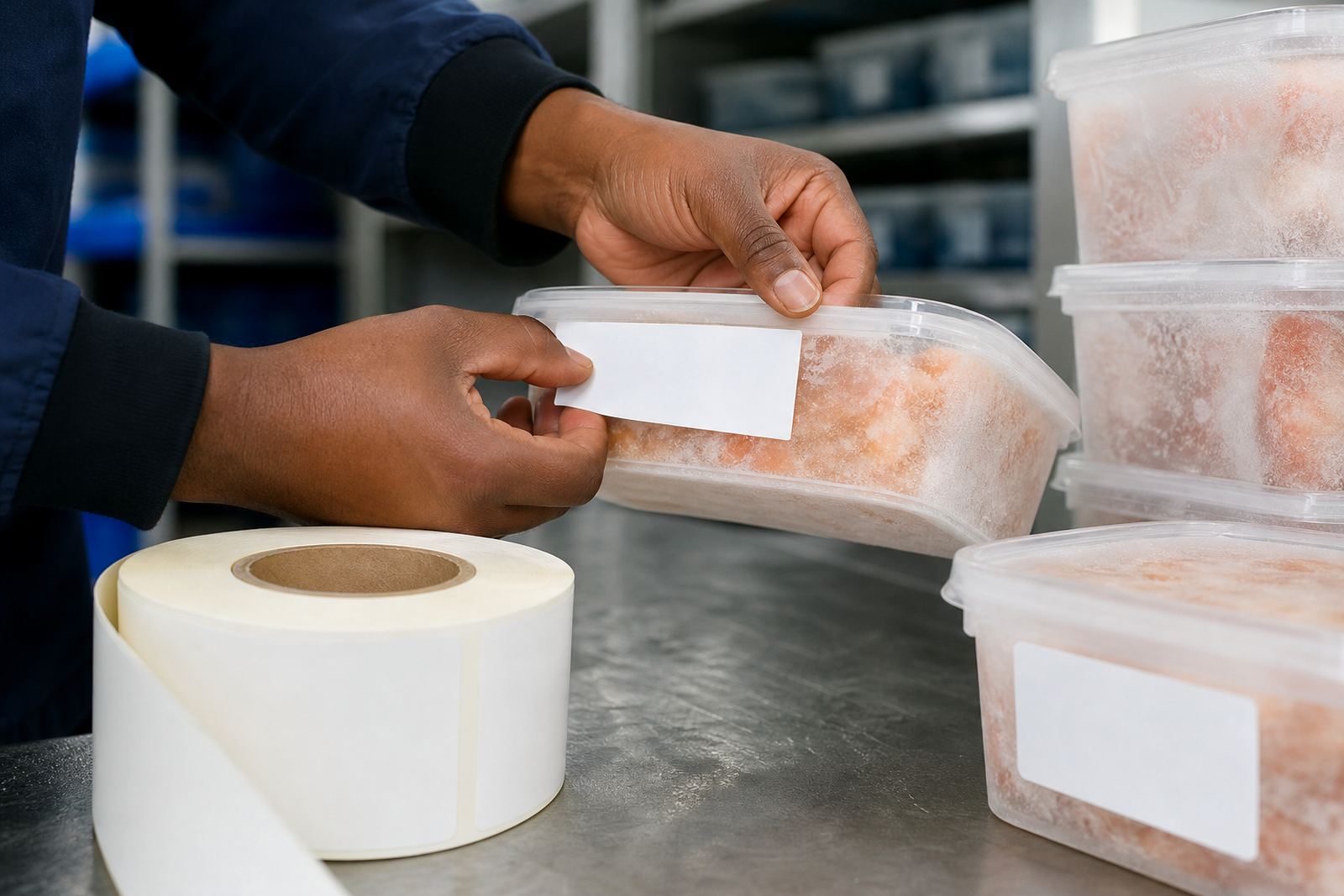
Frozen food packaging puts labels through more than a normal ambient run. Packs often move from warm packing areas into chilled stores, then into deep freeze or blast freezing, and that change in temperature can cause condensation on the pack surface. If the label stock, adhesive and print process are not matched properly, edges can lift, corners can curl, and barcodes may become hard to scan once the product is in circulation.
For converters serving frozen meals, vegetables, poultry, seafood and bakery products, the main aim is not only good print. It is also reliable adhesion, legible variable data and a finish that stays intact when cartons and trays are handled in cold rooms, humid docks and retail freezers. Many South African packers also work around load-shedding, so the label setup must be practical with repeatable register, stable curing where needed, and quick changeovers.
In our experience, frozen food labels usually need careful attention to substrate choice, surface energy, storage conditions and application method. A label that looks fine on a bench can behave very differently on a wet tub or a chilled tray, so testing on actual packs is worth the time.
Typical narrow-web flexo setup for chilled and frozen packs
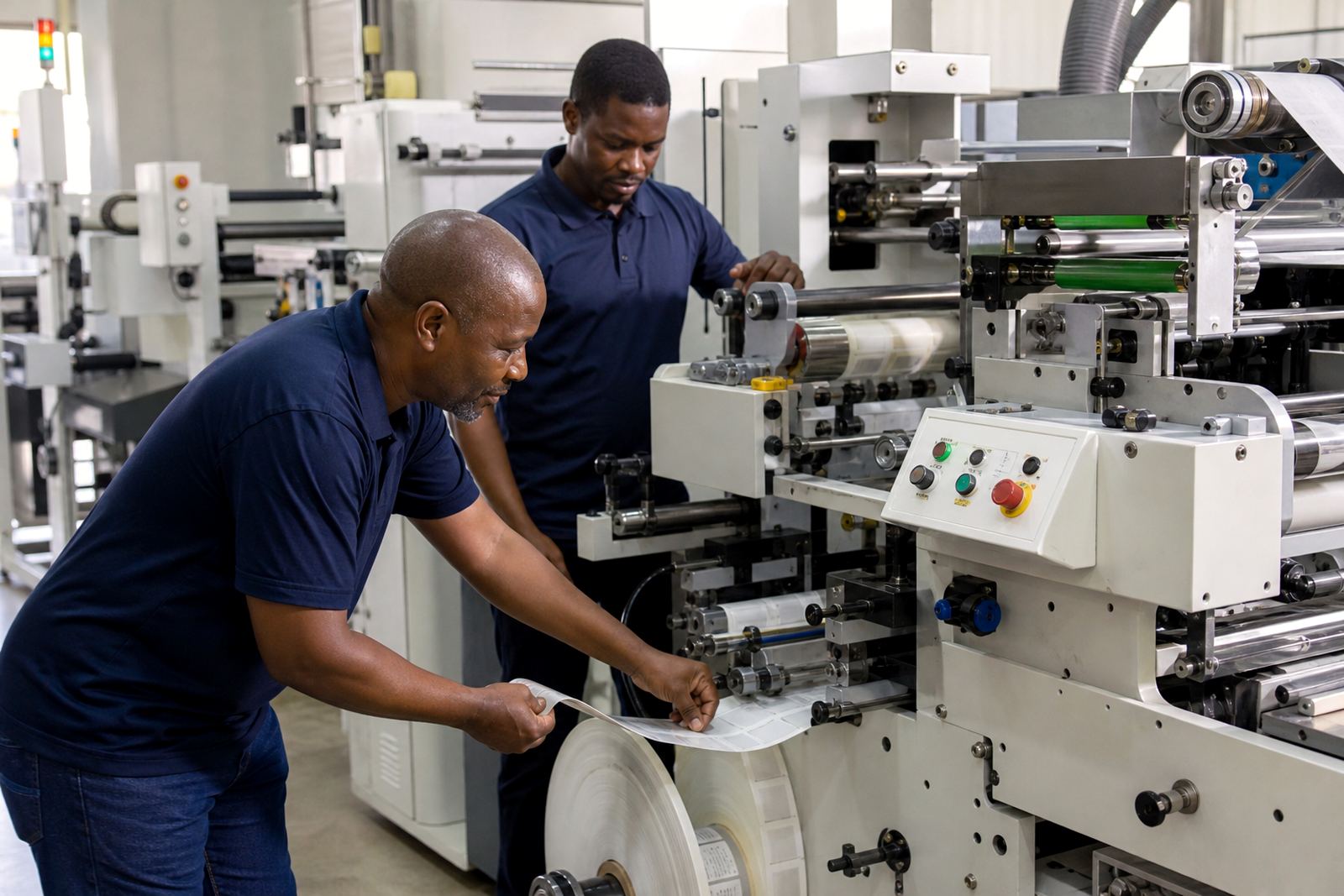
A narrow-web flexo press is a practical fit for frozen food labels because it handles shorter runs, multiple artworks and frequent seasonal changes. For this type of work, converters often need accurate web control, consistent registration and a layout that supports several decorating and finishing steps in one pass. The exact press set varies, but the line normally includes unwind and rewind sections, print units, drying or curing equipment, inspection, slitting and a finishing area.
Depending on the label format, the set-up may also include plate mounting support, anilox care, inline varnish or coating, and die-cutting for final label shape. If the job needs tamper evidence, freezer-grade overlaminates, or a matte finish for easier barcode reading under bright retail lighting, the finishing section has to be planned at the same time as the print sequence.
For converters in Gauteng and along the coast, environmental control matters too. Humidity in Durban or Gqeberha can affect storage and pressroom conditions, while dusty warehouse areas around Kempton Park or the East Rand can affect adhesive cleanliness and web stability. A solid setup reduces waste and gives operators a better chance of keeping production steady.
- Presses should be laid out for clear operator access and quick web path checks.
- Plate storage, substrate storage and finished roll handling should each have their own place.
- Where possible, keep label stock in a controlled room before use to reduce moisture issues.
Planning the label line for cold-chain production
Good planning starts before the press is installed. A converter producing frozen food labels should map the whole process, from incoming material to final packed rolls. This includes floor space, electrical supply, compressed air, ventilation, material flow and the route finished rolls will take to dispatch. If the pressroom is cramped, operators lose time moving stock around and small errors become more common.
It also helps to plan the work around the client’s filling and packing pattern. Frozen food runs may be short seasonal jobs one week and high-volume repeats the next. The press, finishing tools and support setup should allow for both. If a line will be used for many SKUs, make-ready time becomes a cost factor just as much as print quality.
We normally advise label converters to think about training from day one. A press that can produce clean labels is only useful if the team can set up registration, control tension, check print consistency and spot faults early. That applies whether the team is in Johannesburg, Pretoria, Durban, Cape Town or Gqeberha.
- Allow space for substrate storage away from direct sunlight and damp walls.
- Plan for future SKU growth so the line is not outgrown too soon.
- Build in remote support and breakdown response if your production window is tight.
Common mistakes on frozen food label jobs
One of the most common mistakes is choosing the print setup first and the application conditions later. A label may be strong on paper but fail in the cold room if the adhesive is not suited to low temperatures. Another error is leaving testing too late. By the time a problem shows up on the packing line, the converter may already have printed a full run and the waste cost is hard to recover.
Another issue is poor finishing setup. Slitting that is too tight, die-cut pressure that is too heavy, or poor rewind control can all cause edge damage. On chilled and frozen packs, even small edge defects can turn into lifting during transport. Barcode placement is another area that is often rushed. If a code is printed over a seam, a fold line, or a high-gloss area, scan performance can suffer.
Seasonal planning matters too. Food producers often increase volume before holidays, school terms or summer demand. If the label converter has not checked consumables, spare parts and shift training, delays show up quickly. A frozen food customer usually wants stable supply, not repeated corrections.
- Do not skip adhesion testing on the actual pack and at the actual temperature.
- Do not assume a label that works on dry cartons will work on chilled tubs.
- Do not ignore operator training when changing substrates or finish requirements.
Budget ranges for press work, setup and support
Budgets for frozen food label work vary widely because the cost depends on press condition, finishing needs, speed of changeovers and how much support is required after installation. A converter looking at a narrow-web flexo press project may need to budget for the press itself, installation, commissioning, training, start-up production support and ongoing maintenance. For many South African operations, the total project cost can range from a modest entry level spend to a far larger investment once finishing and support systems are included.
As a general guide, smaller set-ups with basic configuration may start in the lower hundreds of thousands of Rand, while more complete production lines with stronger finishing capability, installation work and structured support can move well above that. Spare parts, consumables, plate mounting help and preventive maintenance should also be carried in the budget because frozen food customers often expect continuous supply and few stoppages.
It is usually better to budget for a line that can run consistently than to overspend on one feature and underspend on training or service. In practice, many of the avoidable costs come from poor setup, not from the press itself.
How we support frozen food label converters nationwide
Flexography Printer works with label converters that need narrow-web flexo presses, setup help and practical support for frozen food work. Our support includes press installation, press commissioning, operator training, startup production support, preventive maintenance, breakdown support, remote support, spare parts support, anilox care, plate mounting help, finishing setup and production consulting. We also assist with layout planning so the pressroom and finishing area are workable in real production conditions.
Clients reach us through the enquiry form on our contact page, and we support converters from Kempton Park and surrounding areas through to Johannesburg, Pretoria, Durban, Cape Town and Gqeberha. Our team includes Thabo Mokoena, Aisha Patel, Johan van der Merwe, Lerato Ndlovu, Sibusiso Khumalo and Megan Naidoo, based in Spartan, Kempton Park.
If you are planning frozen food labels for chilled and frozen lines, the right approach is simple: test early, plan the press layout carefully, and make sure the finishing and operator support are in place before the main run starts. That keeps the label line steady and reduces avoidable rework.