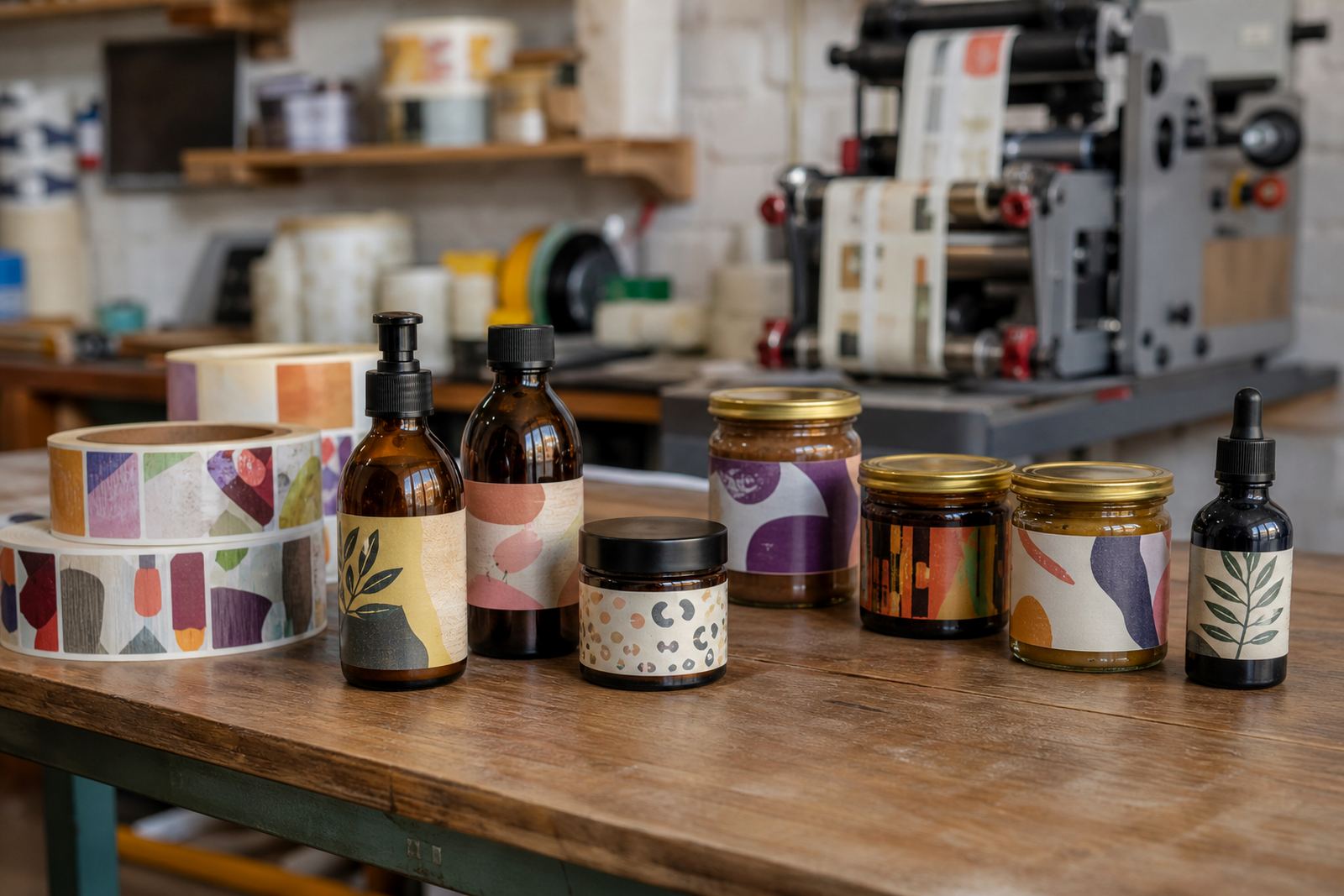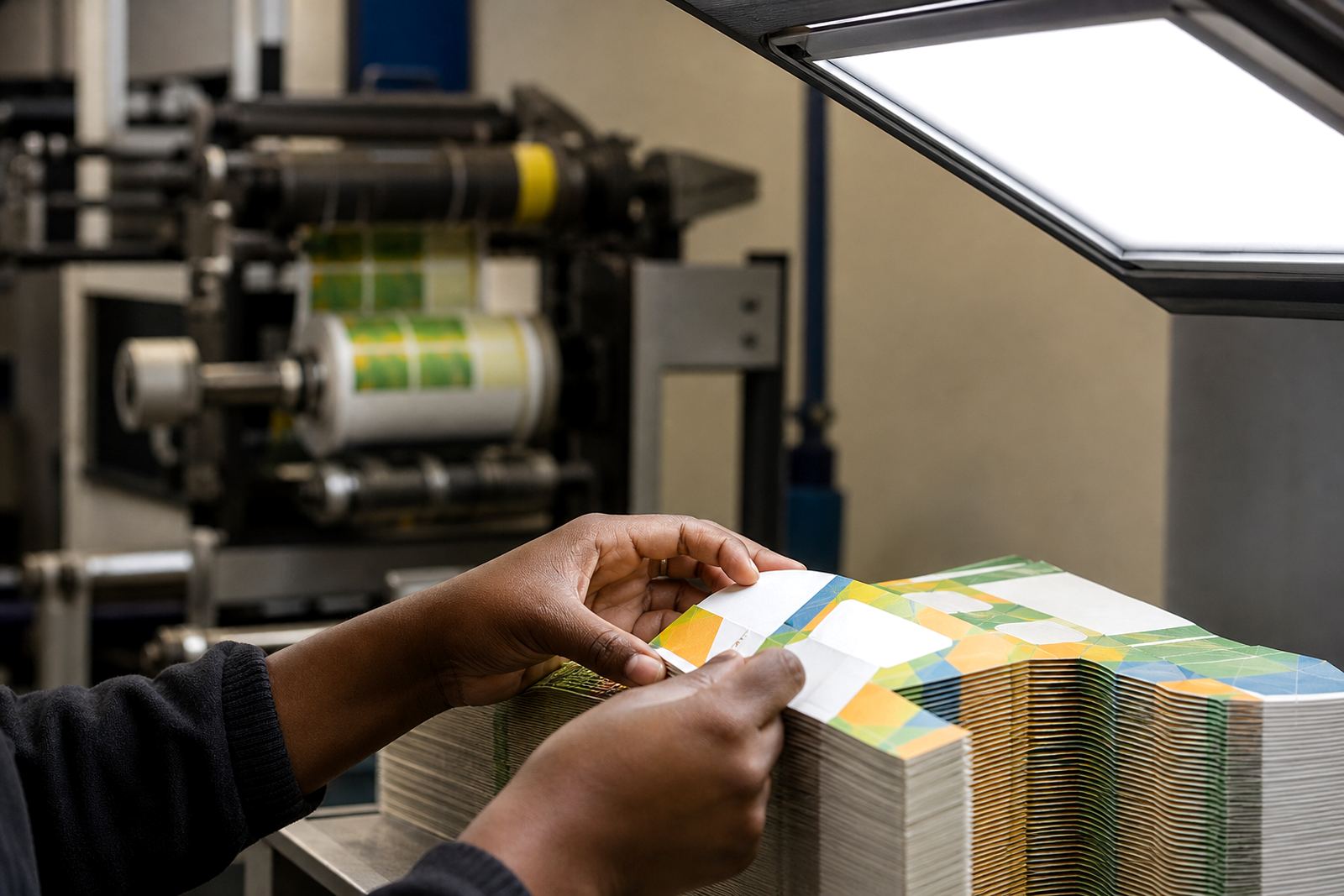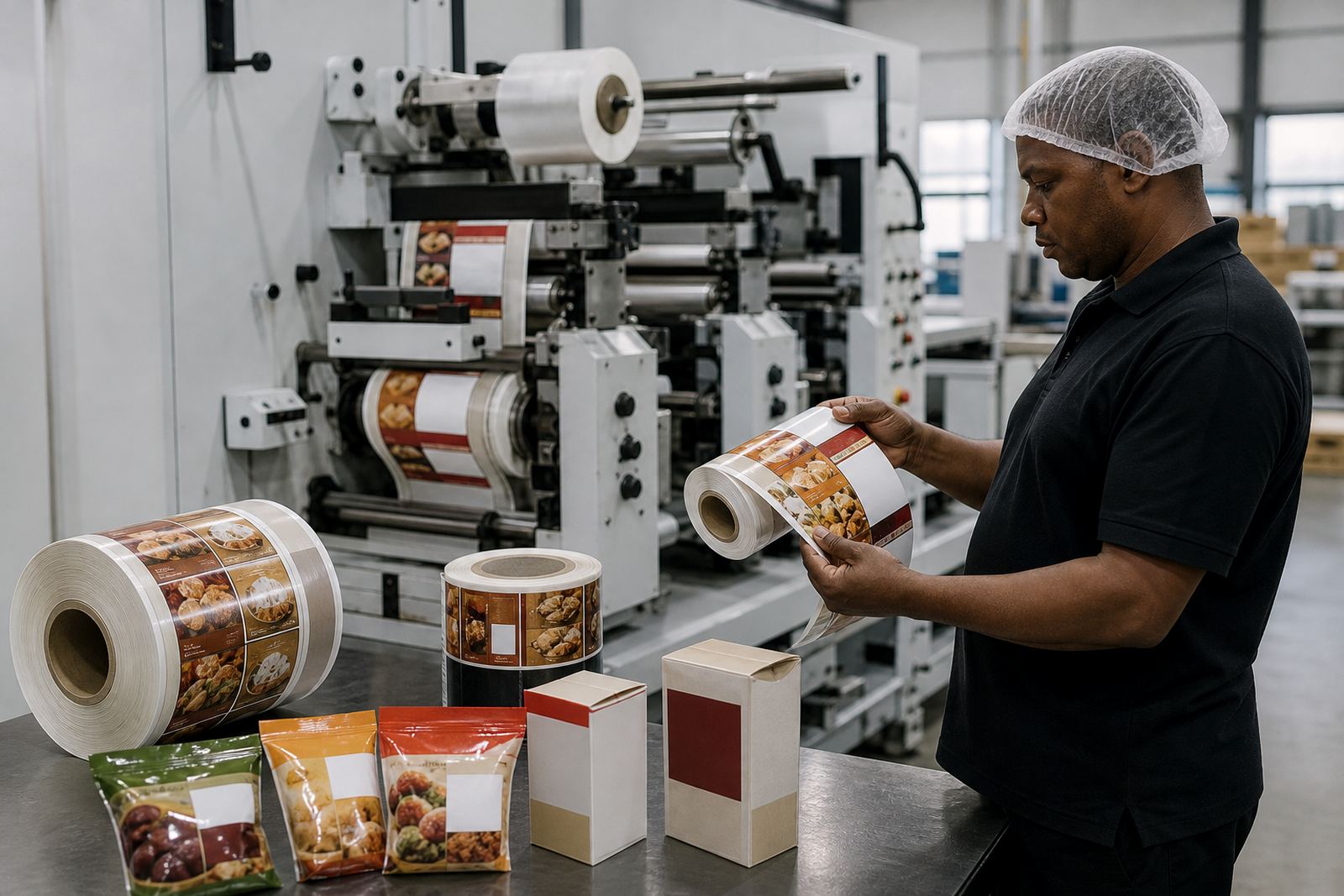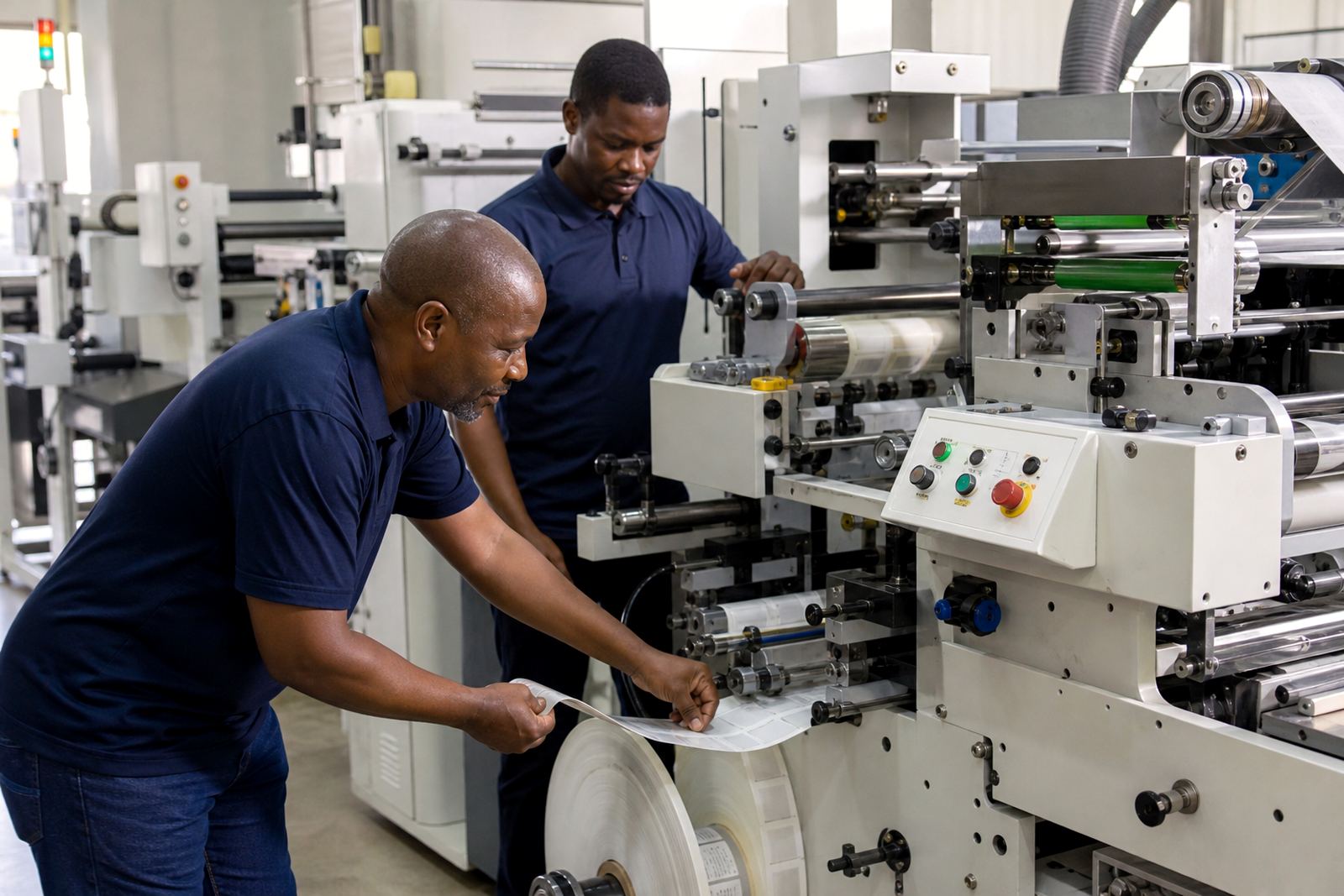
Retail labels need speed, colour control and clean finishing
Retail work is usually where the pressure starts. You are dealing with short runs, frequent artwork changes, tight delivery dates and customers who want every pack to look the same from the first roll to the last. For that reason narrow-web flexo label presses are often the right fit because they handle repeat jobs well and can be set up for different substrates, inks and finishing steps without turning the floor into a bottleneck.
In Kempton Park and across Gauteng, many label converters are supplying food, beverage, cosmetics and general retail pack labels that must look sharp on the shelf. The press set-up matters as much as the machine itself. If registration drifts, the labels look tired. If finishing is not planned properly, you get poor die-cutting, wasted rolls and a lot of handwork at the end.
Typical equipment set for shelf-ready label work
For retail labels, the usual equipment set is built around the press, finishing and handling flow. The aim is to keep the job moving from substrate through print, varnish or coating, die-cutting, slitting and rewinding with as little interruption as possible. We work with converters on the practical side of that setup, including how the press room is arranged and how the operator will handle changeovers.
- Narrow-web flexo label press for short to medium retail runs
- Plate mounting tools and basic inspection aids for cleaner registration
- Anilox care and ink handling procedures to keep colour more consistent
- Finishing setup for die-cutting, varnish and slitting
- Rewind and roll handling points that suit the label size and core used
For many jobs, the issue is not just printing. It is how the press, finishing station and packing area work together. If the labels are going to Johannesburg, Durban or Cape Town retail customers, the final rolls must be packed properly, marked clearly and handled so they do not get damaged in transit.
Planning the layout before the first retail order comes in
A good layout saves money from day one. In a Spartan, Kempton Park factory or anywhere else in South Africa, space can be tight and power interruptions can slow a poorly planned line very quickly. The press should sit where the operator can see the unwind and rewind zones easily, with enough space for plates, inks, tooling and roll movement. If there is no room for proper staging, jobs slow down and mistakes increase.
We often advise converters to think about traffic flow before purchase or installation. Where will raw material arrive? Where will waste be removed? Where will finished rolls wait for packing? Retail labels are usually time-sensitive so the layout should reduce walking and handling as much as possible.
- Keep substrate storage close to the press but protected from dust and moisture
- Allow clear space for roll changeovers and inspection
- Separate clean packing from ink and plate handling
- Plan for load-shedding with the right backup arrangements
Common mistakes on retail label jobs
Retail labels can go wrong in predictable ways. One common problem is choosing a setup that is too slow for the number of repeat jobs expected each week. Another is ignoring finishing until after the press is already running, which leads to poor die-cutting or wasted stock. We also see operators being asked to run several label types without enough training, which often shows up as registration issues, colour variation or extra setup time.
Coastal humidity can affect material handling in places such as Durban and Gqeberha, while dust and dry conditions can affect other sites inland. That is why press care, plate mounting help and anilox cleaning routines matter. Even a small issue on a retail label can mean the product looks off on shelf, and that can reflect badly on the brand and the converter.
- Do not assume one press setup suits every retail label stock
- Do not skip operator training because the press looks straightforward
- Do not leave finishing checks until the end of the shift
- Do not ignore storage conditions for adhesive stocks and printed rolls
Budget ranges in Rand for retail label production
Budgets vary depending on the press condition, level of automation and how much finishing support is needed. A basic entry point for a smaller retail label operation may start at a lower capital level, while a more complete production line with stronger finishing capability, installation and training will cost more. We prefer to discuss the real job list first, then match the equipment and support to that work rather than guessing at a number that does not fit the factory.
As a practical guide, converters should allow for the press itself, installation and commissioning, operator training, spare parts support and maintenance planning. If there is a need for startup production help or remote support during the first retail runs, that should also be included in the budget. Many buyers in South Africa find that under-budgeting for setup leads to more downtime later, which costs more than doing it properly in the first place.
Support for converters across South Africa
From our base in Spartan, Kempton Park, we support label converters in Johannesburg, Pretoria, Centurion, the East Rand, Durban, Cape Town and Gqeberha. Retail label work needs practical help when jobs are tight and the customer is waiting. That includes press installation, press commissioning, preventive maintenance, breakdown support, remote support, spare parts support, anilox care, plate mounting help, finishing setup and production consulting.
The team is led by Thabo Mokoena with Aisha Patel on sales, Johan van der Merwe on technical support, Lerato Ndlovu on training, Sibusiso Khumalo on service and Megan Naidoo on customer support. If you are setting up retail labels or trying to improve an existing line, the best next step is to use the enquiry form on our contact page and tell us what stock, finish and daily volume you are working with.