
What pharma label jobs usually demand
Pharma label work is rarely just about colour on a roll. The label must suit the pack format, the line speed, the dispensing method and the information load that comes with healthcare and medicine packaging. That can include batch details, expiry space, dosage warnings, barcodes and tamper evident elements, all of which need neat placement and steady print registration.
For converters in Johannesburg, Pretoria, Durban, Cape Town and Gqeberha, the first step is usually to match the label construction to the end use. A label that works on a cartons for retail shelves may need a different face stock, adhesive or finish when it is used on vials, bottles or secondary packs. In humid coastal areas, adhesive choice and storage matter more than many teams expect.
Typical narrow-web press setup for medicine labels
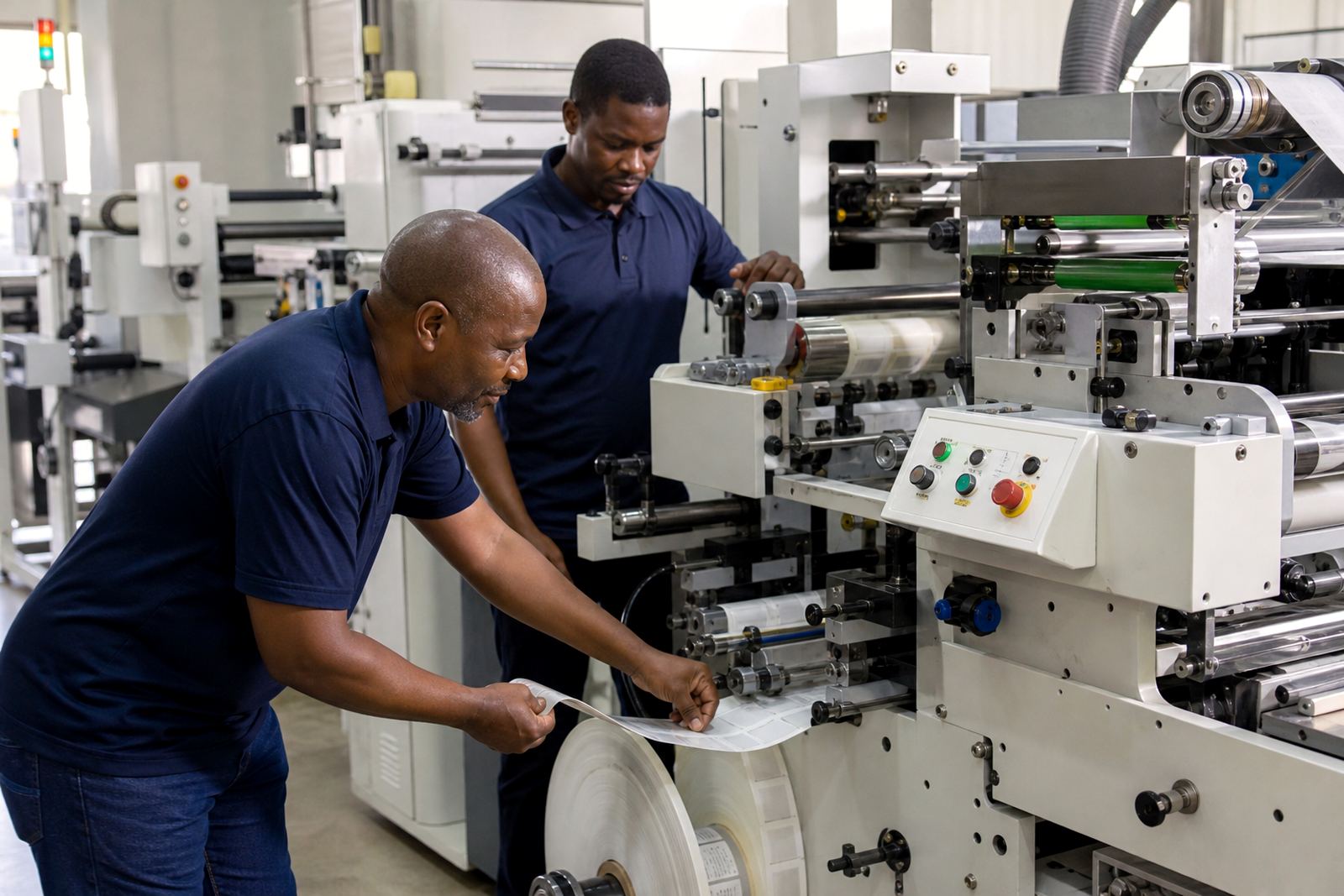
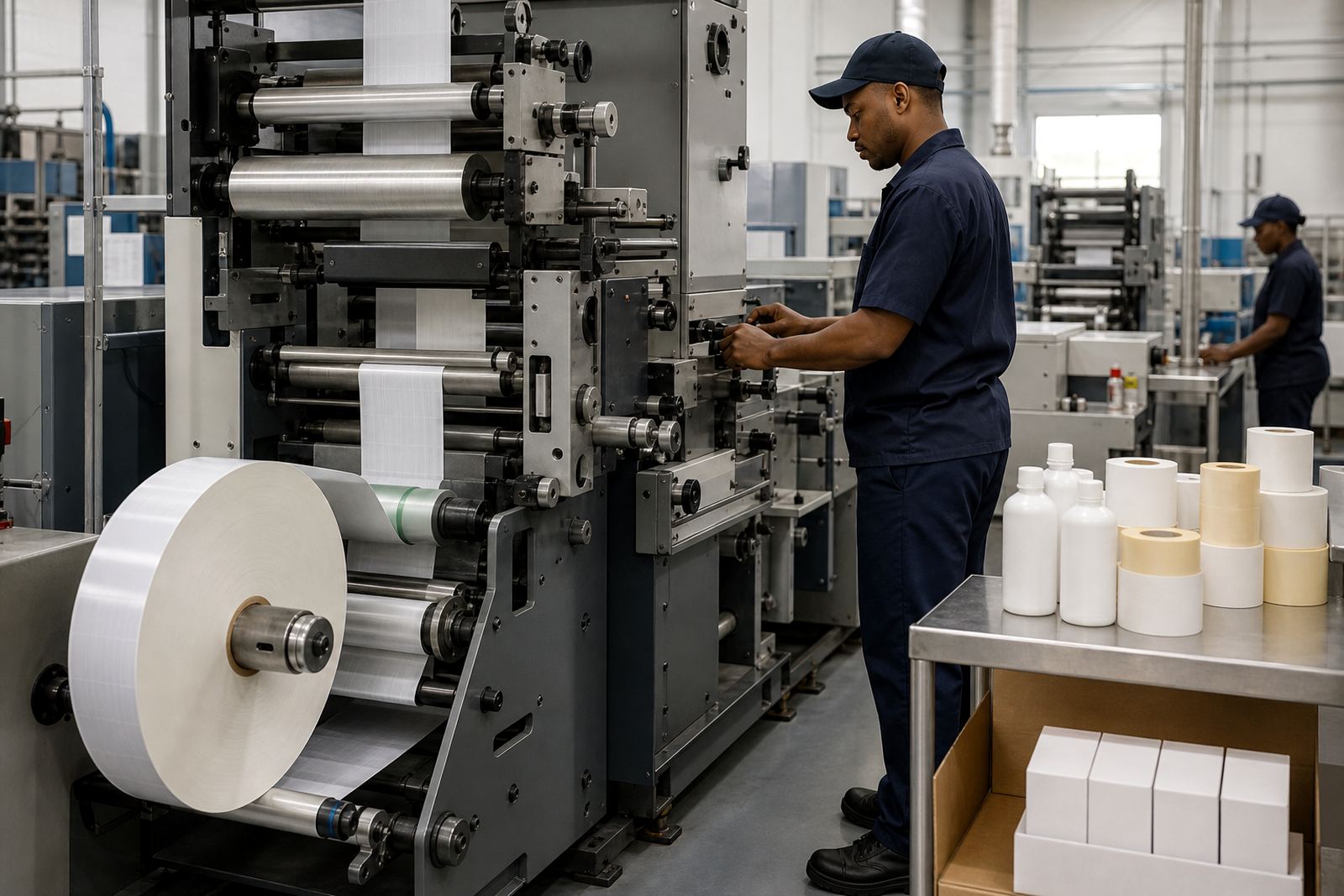
A narrow-web flexo press for pharma labels is usually set up for controlled repeat work, clear text and repeatable finishing. The exact configuration depends on the job mix, but many converters look at a press line that can handle multiple colours, varnish or coating stations, die cutting and clean rewind control. Good setup also means keeping waste low during make-ready, because short changeovers are common in this sector.
- Press setup for fine text, barcode placement and clean solids
- Plate mounting help to keep image position consistent from job to job
- Anilox care to support even ink transfer on small type and line work
- Finishing setup for slitting, die cutting and tidy roll presentation
- Startup production support when a new label is moved from proof to live run
In many plants, the real challenge is not printing one label well, but getting the same result across several shifts. That is where a proper press handover, operator training and repeatable settings make a difference.
Layout planning for compliant, readable labels
Pharma labels have very little room for error. The artwork has to leave enough space for legal copy, machine readable codes, manufacturing data and any local language requirements that apply to the pack. Even when the artwork is approved, the press layout still needs to account for register marks, inspection points, varnish windows and the die line.
When planning the label, it helps to think about the full workflow from job ticket to finished roll. If the barcode sits too close to the edge, or if the copy is squeezed after a late artwork change, the press team has to fight the layout instead of running it. A tidy layout saves time and also reduces rejects on the finishing table.
- Leave practical space for variable data and inspection marks
- Confirm label orientation against the application method before plate making
- Check whether the finish must support overprinting later on the line
- Match the roll direction to the applicator used by the customer
- Allow for clean tear, peel or wrap performance where needed
Common mistakes that cost time and money
One of the biggest mistakes is treating pharma labels like ordinary retail labels. The stock may look similar, but the tolerance for error is much lower. A slight shift in register, weak adhesive on a chilled pack or poor rewind tension can lead to stoppages, rework and returns. Load-shedding also complicates matters, so plants need a restart routine that the team understands well.
Another common issue is skipping preventive maintenance until a press starts giving trouble. In a label environment, small wear points build up quickly. Dirty aniloxes, tired bearings, loose guides and poor plate care can all show up on the print before anyone notices the cause. We often find that a short maintenance routine every shift saves more money than a major repair later. It is a simple thing, but it gets ignored too often.
Budget ranges for pharma label projects
Budget planning should cover more than the press purchase. A converter entering pharma work normally needs to allow for installation, commissioning, operator training, finishing setup and spare parts support. The spend depends on the size of the operation, the press condition and how much of the workflow needs to be adjusted for regulated label work.
As a practical guide, project budgets often fall into a few bands. A smaller setup or line upgrade can sit in the lower hundreds of thousands of Rand, while a fuller production change with installation, commissioning and training can move into a higher band. Ongoing support, spare parts and maintenance should be planned as a separate operating cost so the plant does not run under pressure when production gets busy.
- Entry level support for a limited press upgrade or process correction
- Mid range spend for installation, commissioning and workflow changes
- Higher project spend where multiple stations or finishing steps are added
- Ongoing maintenance and training to protect uptime after handover
How our Spartan team supports pharma label converters
From our base in Spartan, Kempton Park, we support label converters across South Africa with press installation, press commissioning, operator training, startup production support, preventive maintenance, breakdown support and remote support. We also assist with spare parts support, plate mounting help, finishing setup, production consulting and anilox care where the job calls for it.
Our team works with converters in Johannesburg, Pretoria, Durban, Cape Town, Gqeberha, East Rand and Centurion, and we keep the focus on practical shop-floor results. The aim is simple: get the press running cleanly, keep the label line stable and help the operators understand what to watch for on pharma work. When the work is tight and the deadlines are fixed, clear support matters more than talk.
Clients can reach us through the enquiry form on our contact page. From there, we can discuss the press setup, the label range and the support needed for your next pharma job.