What spirit label work asks of a narrow-web press
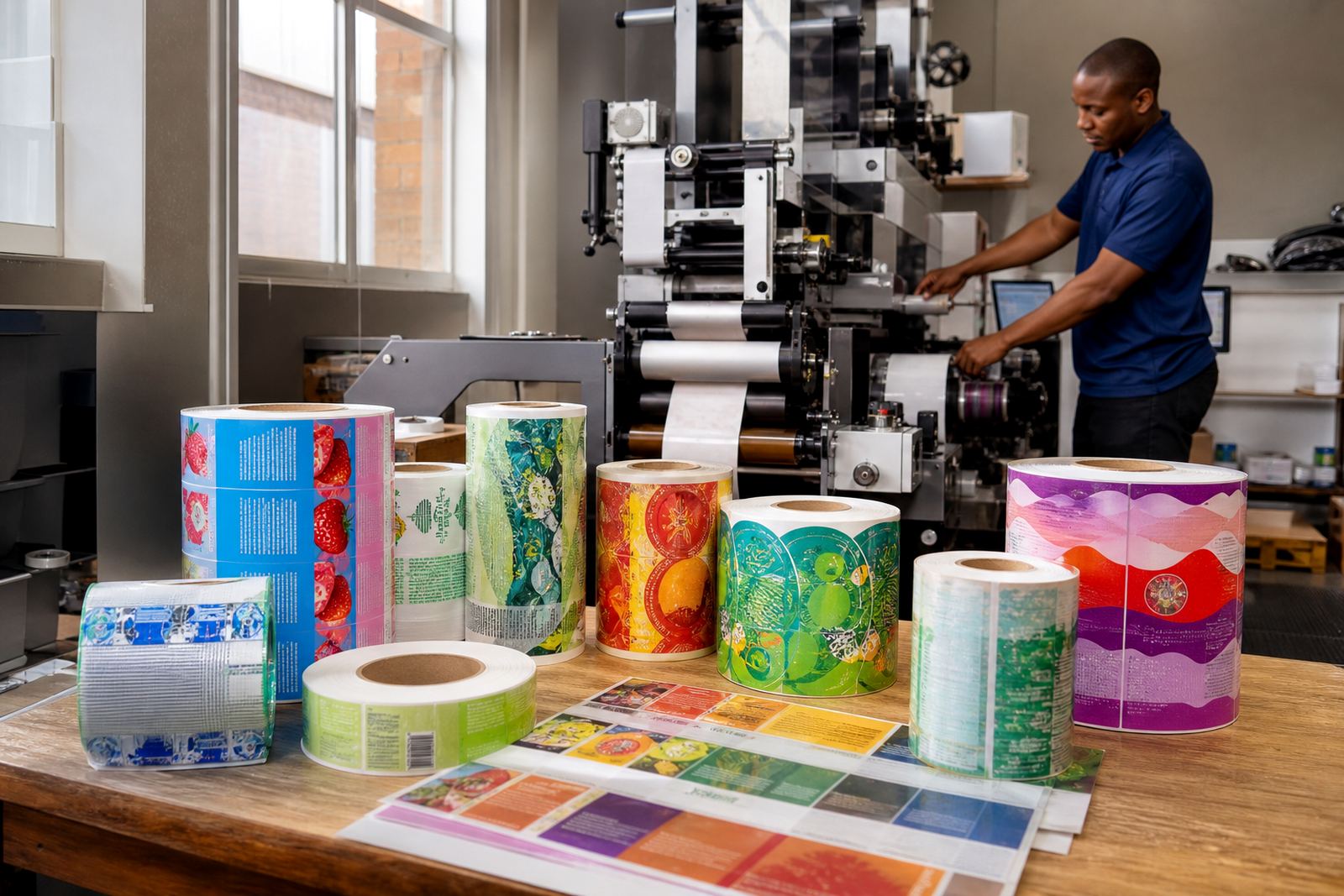
Spirit labels are judged fast. A bottle may sit in a back bar, on a retail shelf or in a cellar room with mixed lighting, so the print has to carry colour, contrast and detail at a glance. For this type of work, narrow-web flexo label presses are often chosen because they handle short to medium label runs, multiple decoration steps and careful finishing without making the line too complicated.
At our Spartan, Kempton Park base, we work with label converters who need a practical setup for whisky, gin, rum, brandy and liqueur labels. The usual brief is simple enough to say but not always simple to produce: sharp type, steady colour and a premium feel on paper or film labelstock. If the bottle has curves, condensation or textured glass, the job becomes more sensitive to adhesive choice, die-cutting and the way the label releases from the liner. That is where proper planning before press time saves a lot of wasted material.
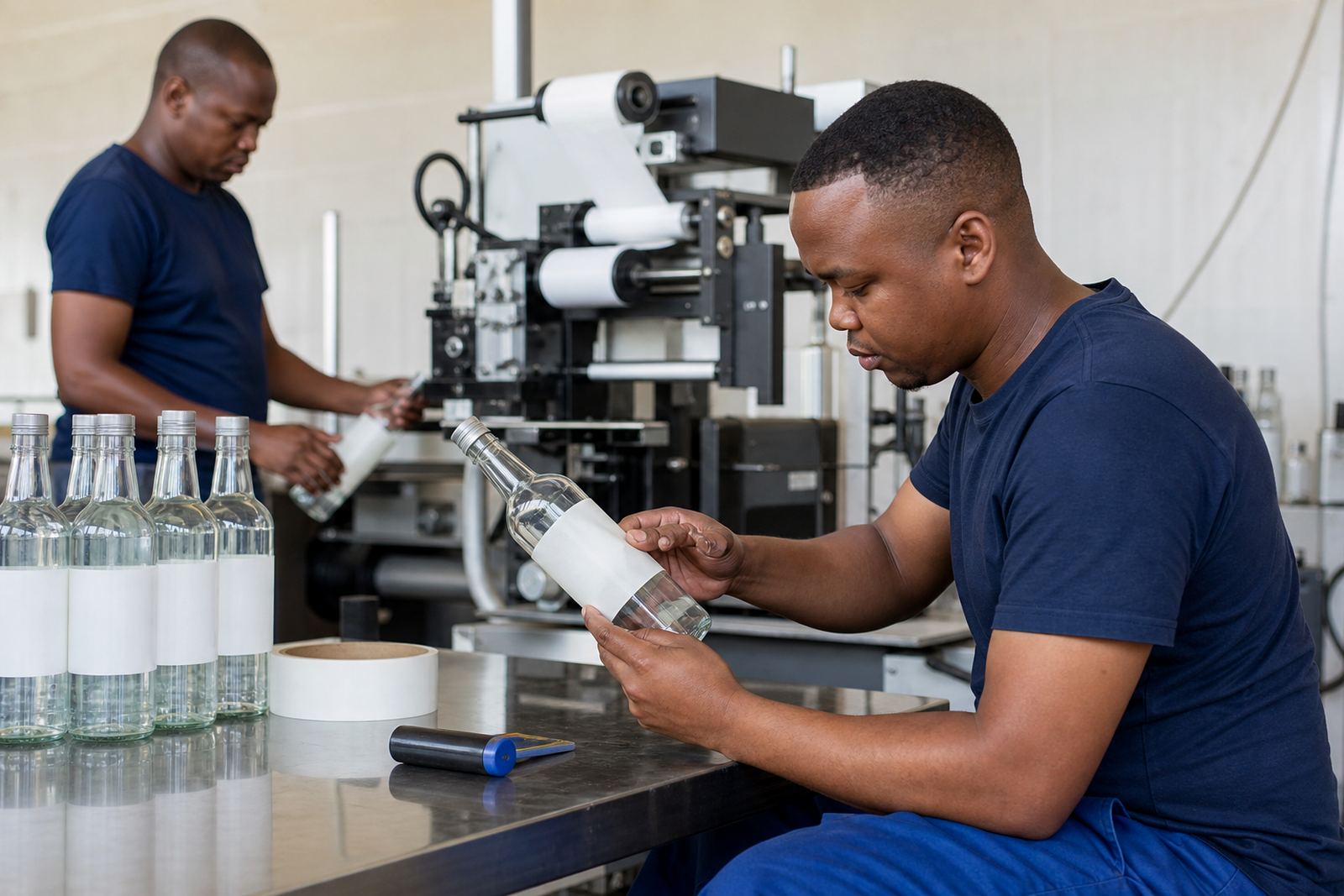
For spirit work, the client usually wants more than a neat print. They want a label that sits straight on the bottle, looks premium under shop lights and survives handling in the packing room. In many cases that means careful setup from the start, then controlled finishing so the job leaves the press ready for bottling, packing and distribution.
Typical press and finishing set-up for premium bottle labels
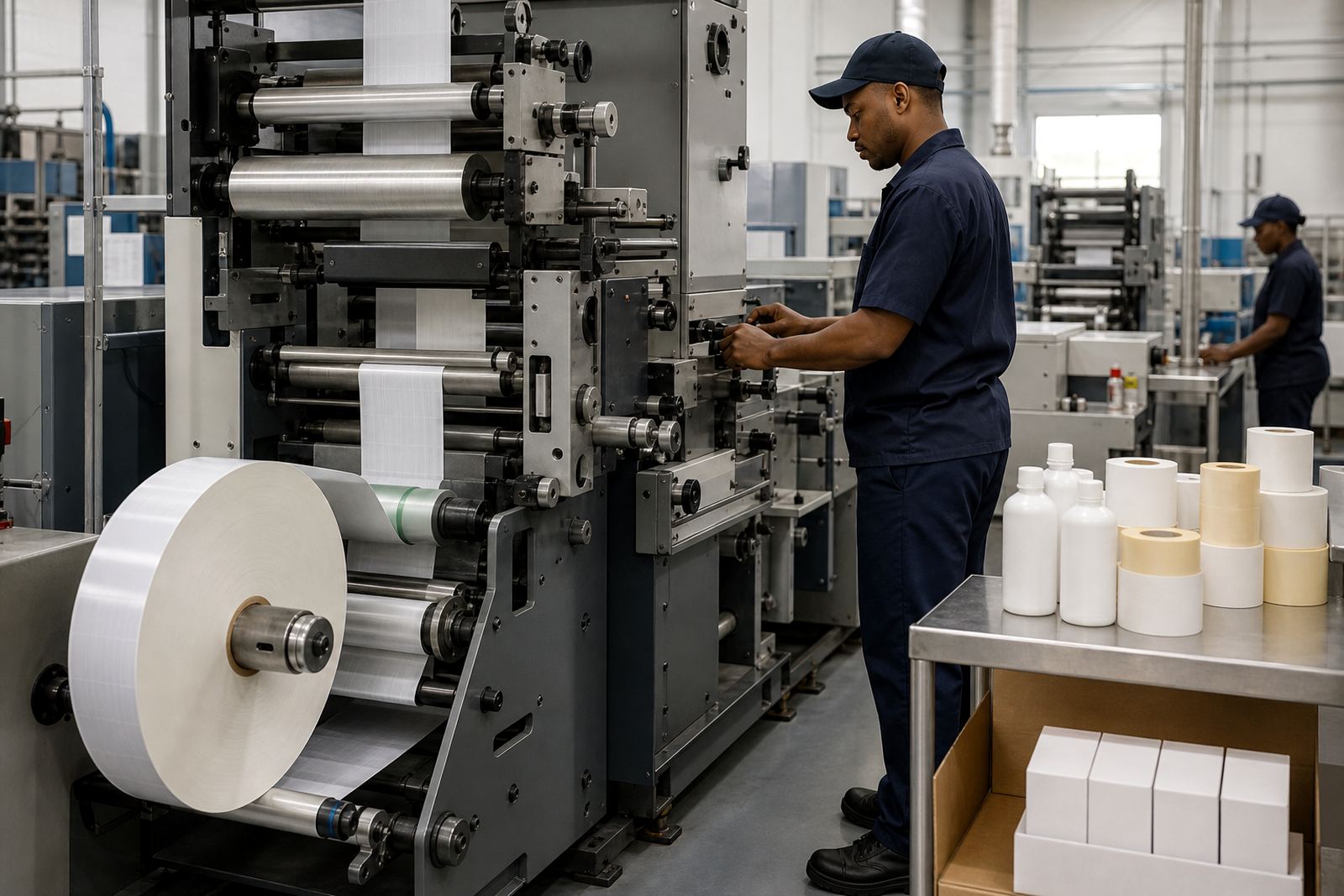
Every converter's line is different, but spirit labels often need a press and finishing path that can handle fine detail, white ink work, spot colour, varnish or other decorative touches. The exact equipment mix depends on the label size, the substrate and how the finished bottle must look on shelf. A narrow-web flexo press is usually paired with practical finishing tools that support die-cutting, slitting, rewinding and inspection.
- Press setup for repeatable colour and accurate register
- Plate mounting help for fine text and brand marks
- Anilox care to keep ink laydown consistent
- Finishing setup for die-cutting, slitting and rewinding
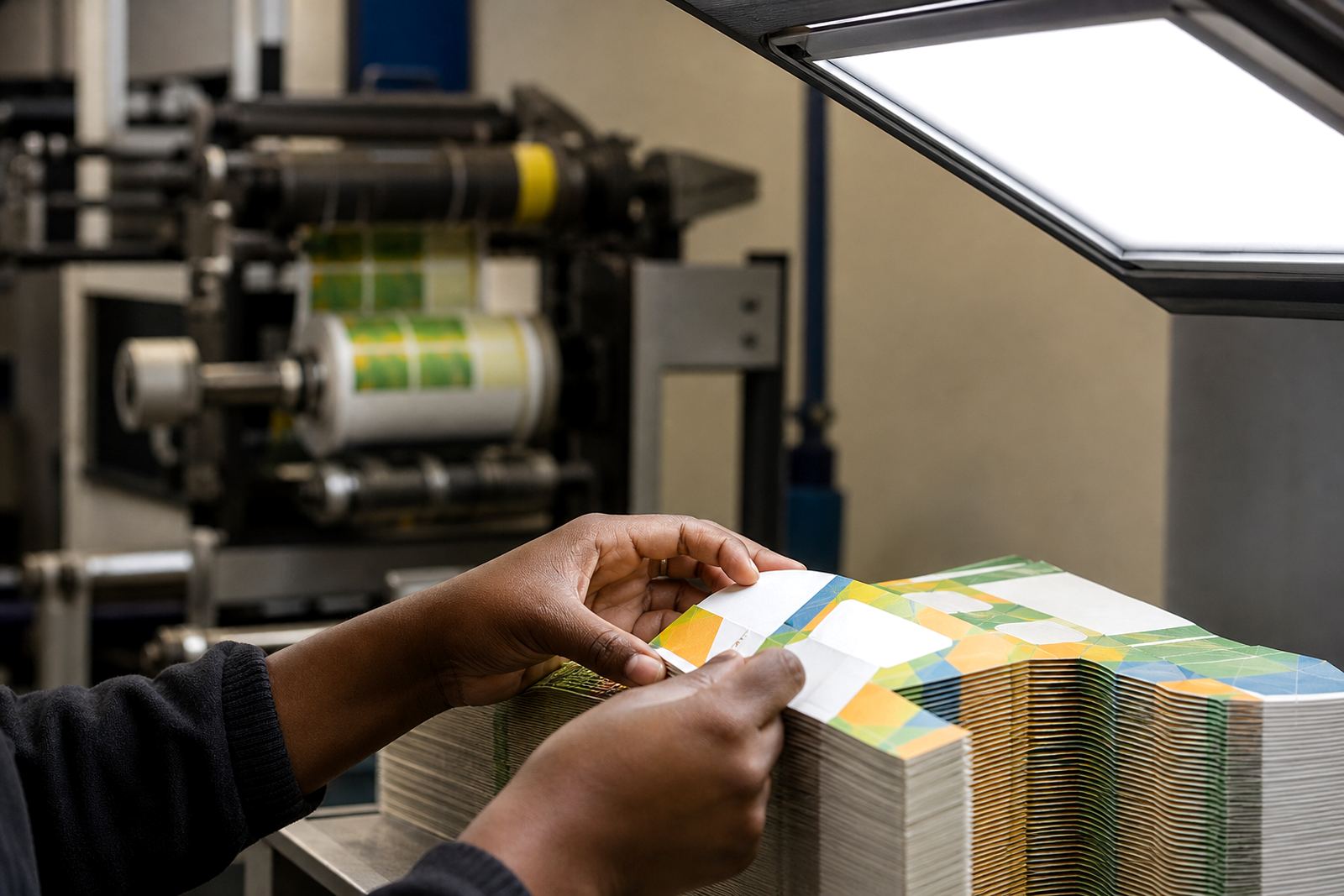
- Inspection and handling checks to reduce waste after press
For spirit labels, many converters also need a neat handover between printing and finishing. If the artwork calls for layered detail or metallic effect, the layout must allow for clean set-up and practical running speed, not just a good-looking proof. A bottle label that looks fine on paper but lifts at the edge or scuffs in packing is a problem that shows up later and costs more to fix. We often help teams think through that before production begins.
How to plan layout, stock and finishing before the first run
Good planning starts with the bottle, not the press. Measure the label area on the bottle shape, check the curve and confirm where the front panel will sit after application. Spirit bottles often have a tapered shoulder or heavy glass base, so small errors in height or wrap position can make the label look uneven. In humid coastal areas such as Durban and Gqeberha, material choice and storage conditions also matter because labelstock can behave differently if it has picked up moisture.
Before a run, it helps to confirm the following:
- Label dimensions and placement on the bottle
- Substrate choice for the look and handling required
- Whether the job needs varnish, foil effect or other finishing work
- Line speed expectations and operator skill level
- Storage conditions in the print room and finished goods area
For many converters in Johannesburg, Pretoria and the East Rand, load-shedding planning is part of the conversation too. If power interruptions are common, it is worth checking what can be safely paused and restarted, which steps need a clean stop, and where backup support is needed. A press that stops mid-run without a plan can waste stock and time, especially on premium label work where consistency matters.
Common mistakes on spirit label jobs
Spirit labels are not usually difficult because they are large. They are difficult because the finish has to look controlled. One of the most common mistakes is starting production before the artwork, plate mounting and finishing sequence have been agreed. If the label is intended to shine under retail lighting but the varnish or other finish is not matched to the substrate, the result can look flat or patchy. Another issue is poor waste allowance, which becomes expensive when the job uses premium stock.
Common mistakes we see in setup and production include:
- Register not checked carefully enough before the main run
- Anilox or ink handling not matched to the artwork needs
- Finishing planned after printing instead of before the job starts
- Poor label storage in heat or humidity
- Operators not trained to spot early sign of drift or damage
A second issue is overcomplicating the run. Some jobs need more decoration, but not every spirit label needs every effect available. If a converter chases too many steps, the line slows down and the risk of error rises. A better approach is to match the equipment set to the bottle range, the market position and the actual production volume.
Budget ranges in Rand for setup, support and maintenance
Budgeting for spirit label work should cover more than the press itself. Setup, training, plate mounting help, finishing setup and maintenance all influence the real cost of production. Because every converter's line is different, budgets can vary widely, but it helps to plan by activity rather than only by machine price.
For a typical spirit label project, the cost discussion often covers press installation, commissioning, operator training, startup production support and ongoing maintenance. Preventive maintenance and breakdown support should also be allowed for, because any stop on a premium label line can delay packing and dispatch. If a converter needs spare parts support, remote support or production consulting, those items should be built into the working budget early.
As a practical guide, smaller support visits and training sessions may be budgeted in the tens of thousands of Rand, while larger installation, commissioning and line setup projects can move into higher figures depending on the extent of work and travel required. The best approach is to budget by scope, then separate once-off setup from ongoing support. That makes it easier to compare options and keep production costs under control.
Support for label converters across South Africa
We support label converters in Kempton Park, Johannesburg, Pretoria, Durban, Cape Town, Gqeberha, Centurion and across the East Rand. The work usually starts with the enquiry form on our contact page, then we look at the plant layout, the production aim and the support needed for spirit label work. From there, we can assist with installation, commissioning, operator training, startup support and ongoing technical help.
Our team is led by Thabo Mokoena, with Aisha Patel handling sales, Johan van der Merwe on technical matters, Lerato Ndlovu coordinating training, Sibusiso Khumalo on service and Megan Naidoo leading customer support. For converters producing premium bottle labels, it helps to have one team that understands the practical side of setup, finishing and day-to-day production pressure. Good labels still depend on good running, and good running depends on the people who set the line up properly.
In spirit packaging, the details are easy to miss until the bottle is in hand. A label that prints well but finishes badly is not a finished product. That is why we focus on practical setup, clean handover and support that keeps the line moving without unnecessary drama. If you are planning a new spirit label range or tightening up an existing one, the right support can save material, time and a few headaches too.