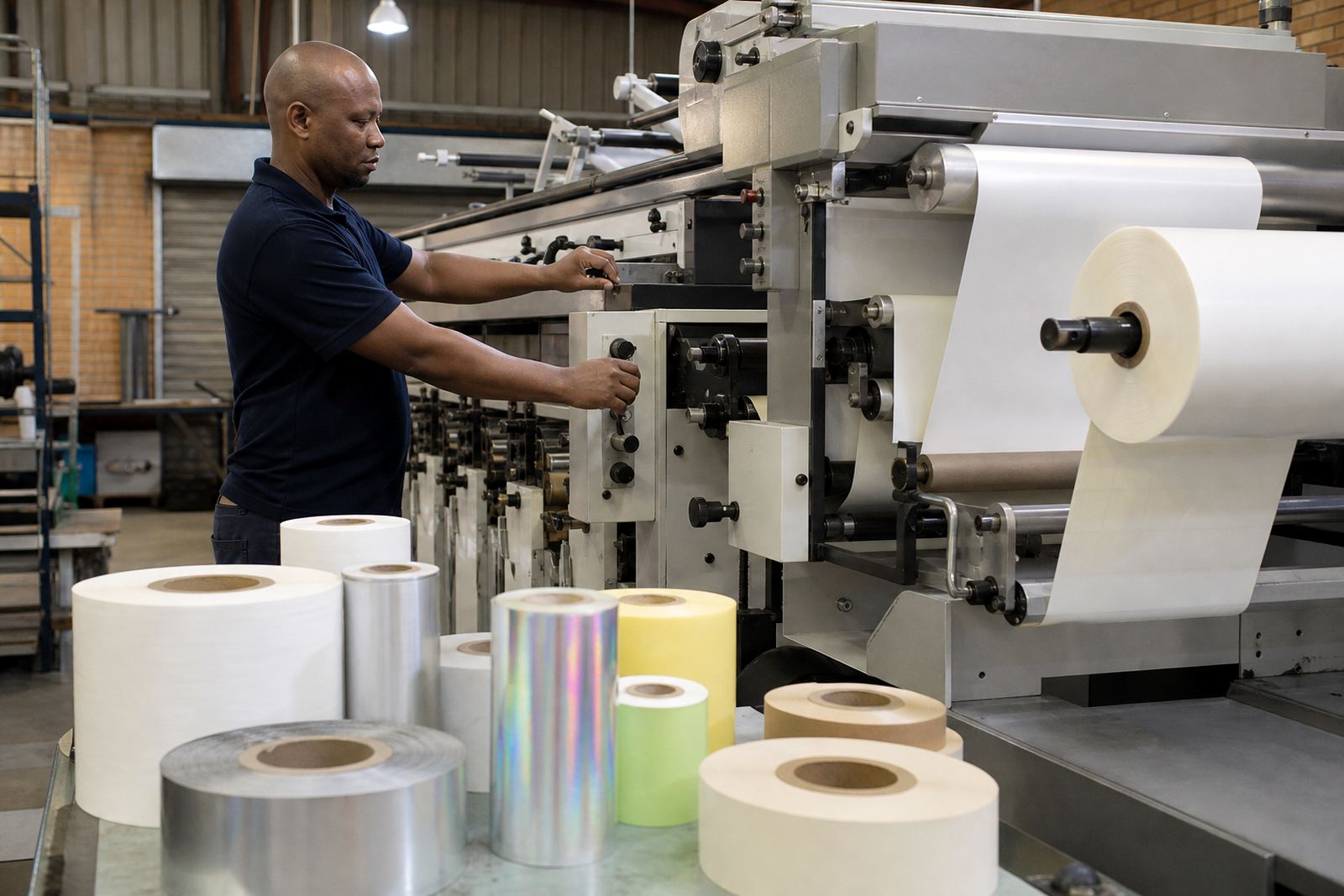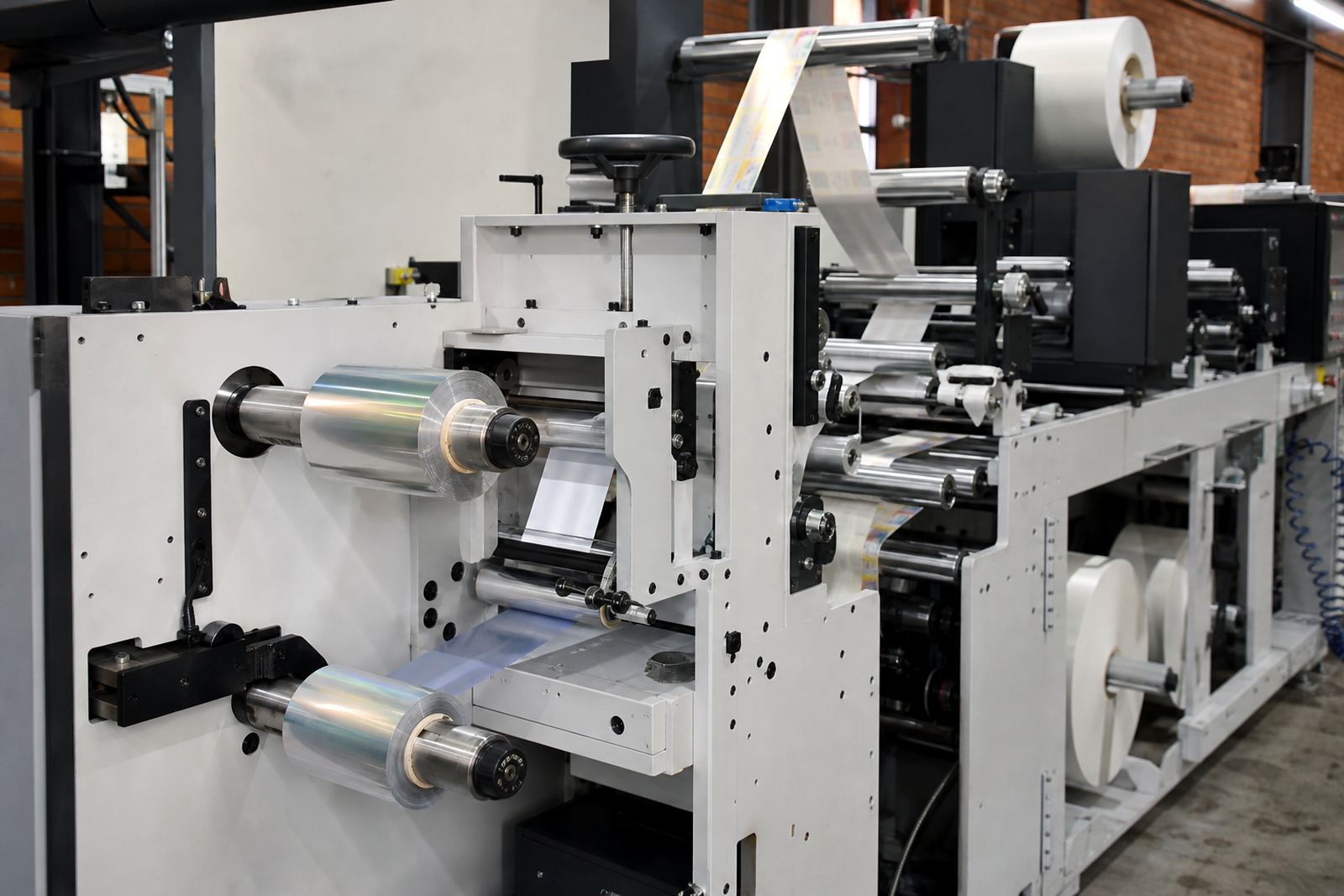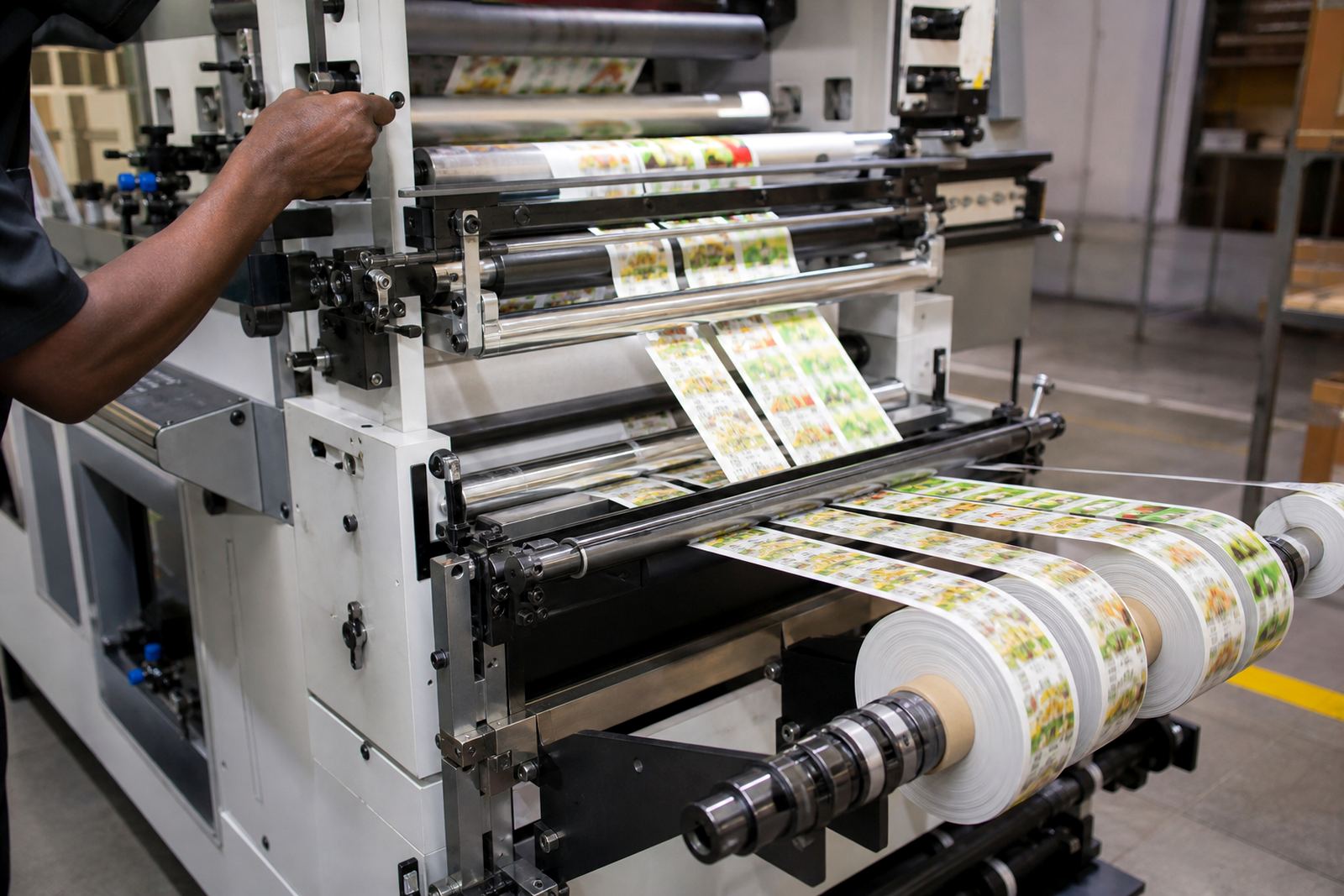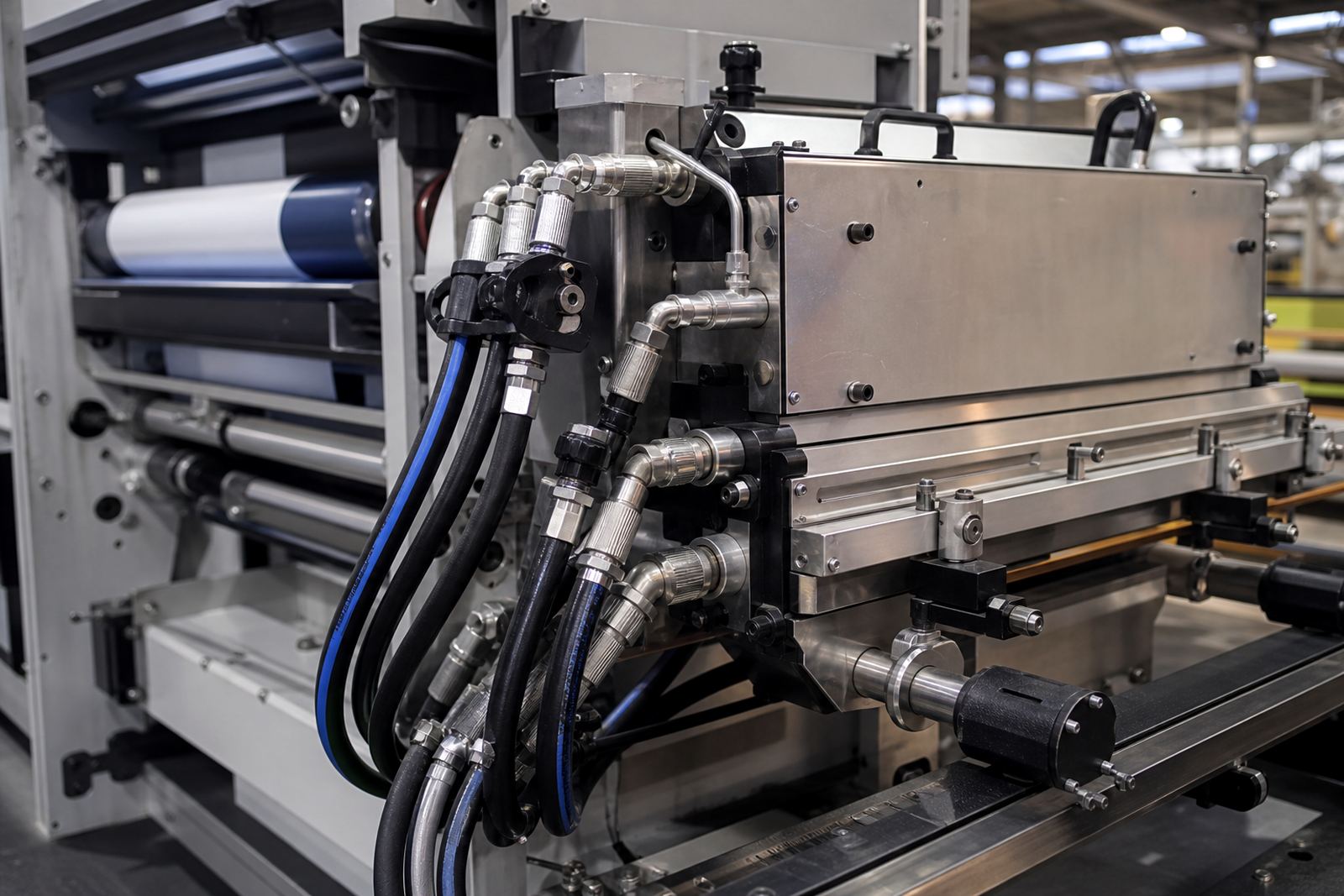
What a doctor blade system does on a narrow-web press
A doctor blade system sits at the print station and works with the ink chamber or open inking arrangement to control how much ink stays on the anilox roll. In simple terms, it helps the press lay down the right amount of ink, keep solid areas even, and reduce mess around the print unit. On narrow-web label work, that matters when you are printing fine text, solid colours, barcodes and small reverse type on different substrates.
The system normally includes a blade holder or chamber body, sealing parts, adjustment points and the blade itself. The exact layout depends on the press design and the print station it is fitted to. For converters in South Africa, the main goal is steady metering during a full shift, even when room conditions change with heat, dust or coastal humidity.
Options, widths and setup choices for different press lines
Doctor blade systems are selected to suit the press width, the print station format and the inks being used. For narrow-web label presses, common choices are matched to short run work, repeat jobs and frequent changeovers. Some units are built for quick blade replacement, while others focus on longer production cycles with easier cleaning between jobs.
- Widths matched to the press web width and print station layout
- Single blade or chamber-style arrangements
- Manual adjustment or assisted adjustment points
- Stainless or coated parts for wet ink environments
- Seal types suited to solvent, water-based or UV ink systems
When selecting the right unit, we look at the label stock, ink type, line speed, wash-up routine and how often the converter changes artwork. A system that suits a food label line may not be the best fit for a cosmetics job with frequent colour changes and tighter finish requirements.
Where this component suits best in South African label production
This product suits label converters and packaging printers working on narrow-web flexo lines in Johannesburg, Pretoria, Durban, Cape Town, Gqeberha and the East Rand. It is especially useful where print consistency is needed across carton labels, self-adhesive labels, promotional wraps and short-run retail packaging. Plants working near the coast often need better corrosion resistance and proper wash-down routines because damp air can shorten the life of seals and metal parts.
It is also a practical choice for sites that run in stages, with load-shedding backup plans, shared air systems and a busy changeover schedule. A well matched doctor blade system helps operators get the press back to stable production faster after power interruptions or stop-start shifts, without wasting substrate and ink.
Installation, power needs and what the press must have
A doctor blade system is usually installed as part of the print station fitment or as an upgrade during press commissioning. It must sit squarely on the station, seal correctly and be aligned to the anilox roll. Poor alignment can cause streaking, blade wear or ink leakage, so installation should be handled by a technician who knows narrow-web flexo setup.
Most doctor blade assemblies do not require dedicated electrical power or gas. They are mechanical and fluid handling components. The press itself still needs the normal plant services, including a stable electrical supply for the press, clean compressed air if the station design uses air-assisted features, and proper ink handling space. For setup work, we also check access around the print unit, safe blade change clearance and whether the operator can reach the adjustment points without strain.
- Install on a clean, stable press station
- Check alignment against the anilox roll before production
- Confirm compatibility with ink system and wash-up process
- Allow enough space for blade changes and cleaning
Care, cleaning and servicing between production runs
Good care starts with cleaning the system before ink dries in the chamber or on the seal edges. Operators should use the correct wash method for the ink type and avoid scraping parts with hard tools that can mark the surfaces. On busy lines, routine checks at shift change help catch wear early, before it turns into striping or leakage.
We recommend regular inspection of blade condition, seal wear, fasteners and any adjustment points that have loosened over time. If the press runs on coastal sites like Durban or Gqeberha, parts should be dried properly after cleaning to reduce corrosion. Where the line runs through mixed humidity and temperature, small changes in blade pressure can affect print quality so it is worth checking after every major job change.
What to check before you order a replacement or upgrade
Before ordering, it helps to confirm the exact press model, print station type and the current doctor blade arrangement. If the system is being replaced, we also need to know whether the press uses a chamber, an open blade setup or a special mount. The more detail you can give at enquiry stage, the easier it is to supply the right part and avoid delays on the floor.
- Press make and model, plus the print station width
- Ink system type and blade mounting style
- Web width, repeat work and substrate range
- Whether you need a full unit, blades only or seals only
- Any current issues such as leakage, streaking or uneven metering
- Preferred delivery site in Gauteng, KZN or the Western Cape
If you are unsure, send the details through the enquiry form and we can talk through the options with your maintenance or production team. We also help with plate mounting, finishing setup and startup production support where a new metering system is part of a wider press improvement plan.
Key facts
| Product type | Doctor blade system for narrow-web flexo print stations |
|---|---|
| Use | Ink metering and print consistency control |
| Typical fitment | Label and light packaging presses |
| Configuration options | Single blade, chamber-style or station-specific arrangement |
| Materials | Metal body, seals and replaceable blade elements |
| Supply and support | Installation, commissioning, training and servicing across South Africa |