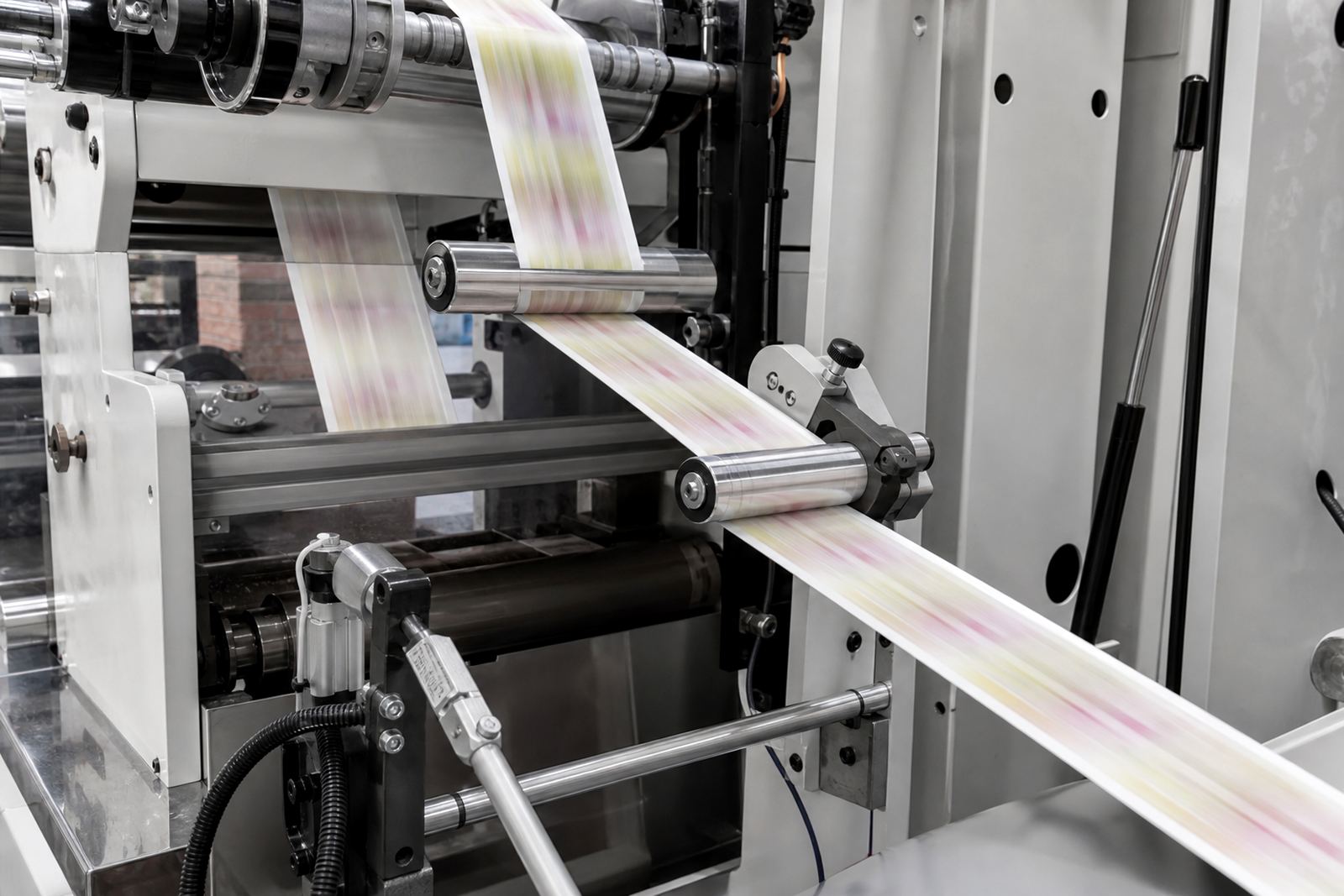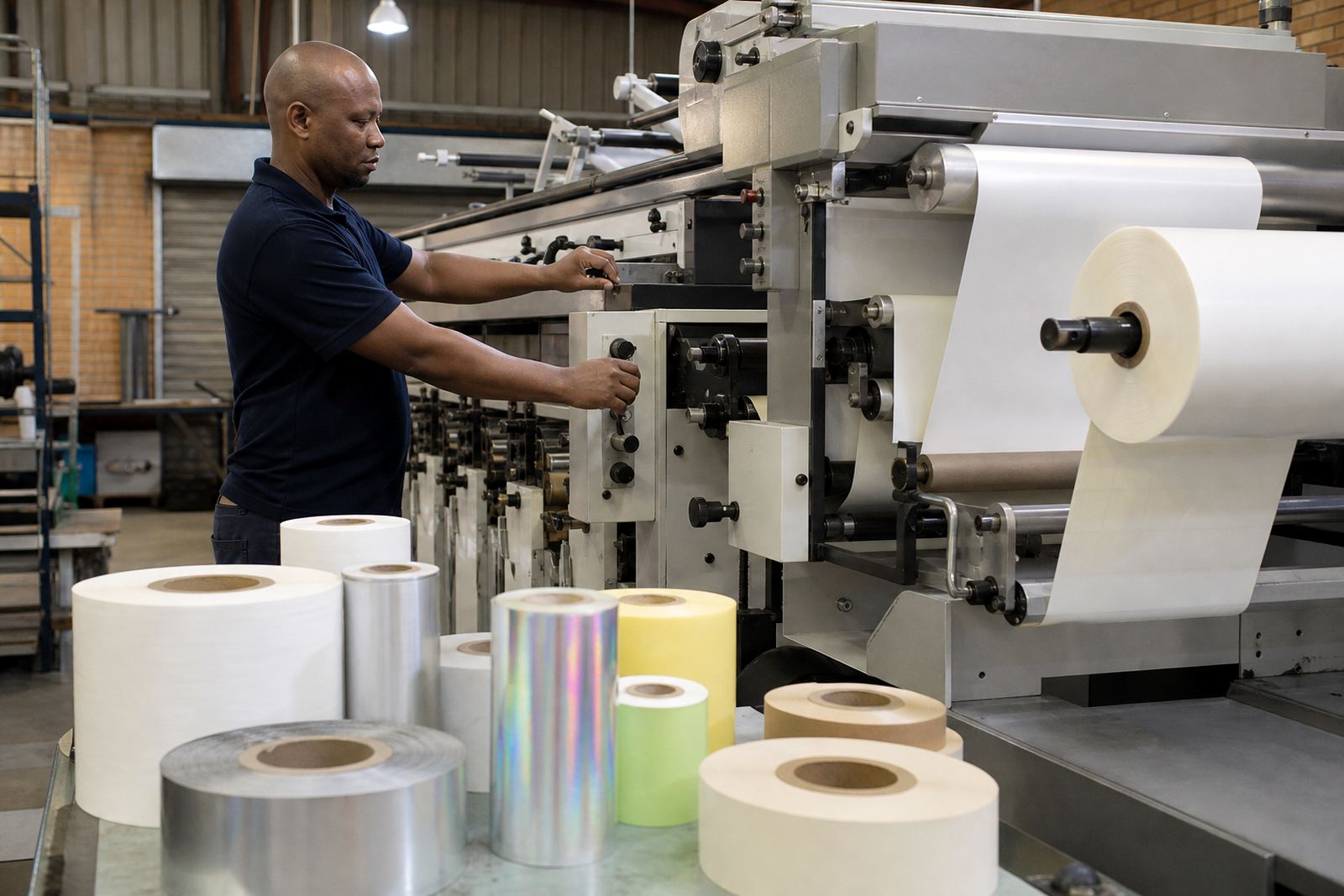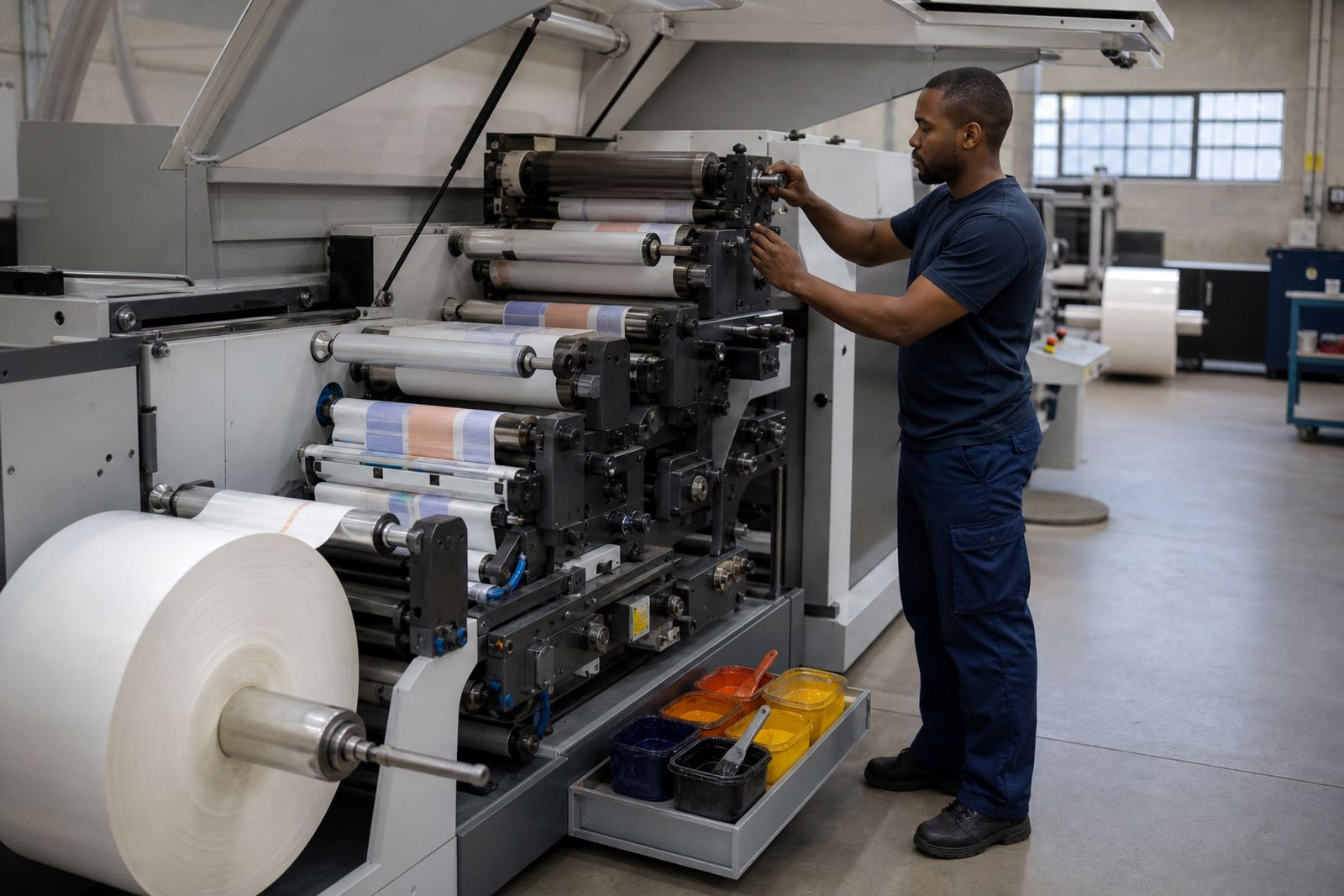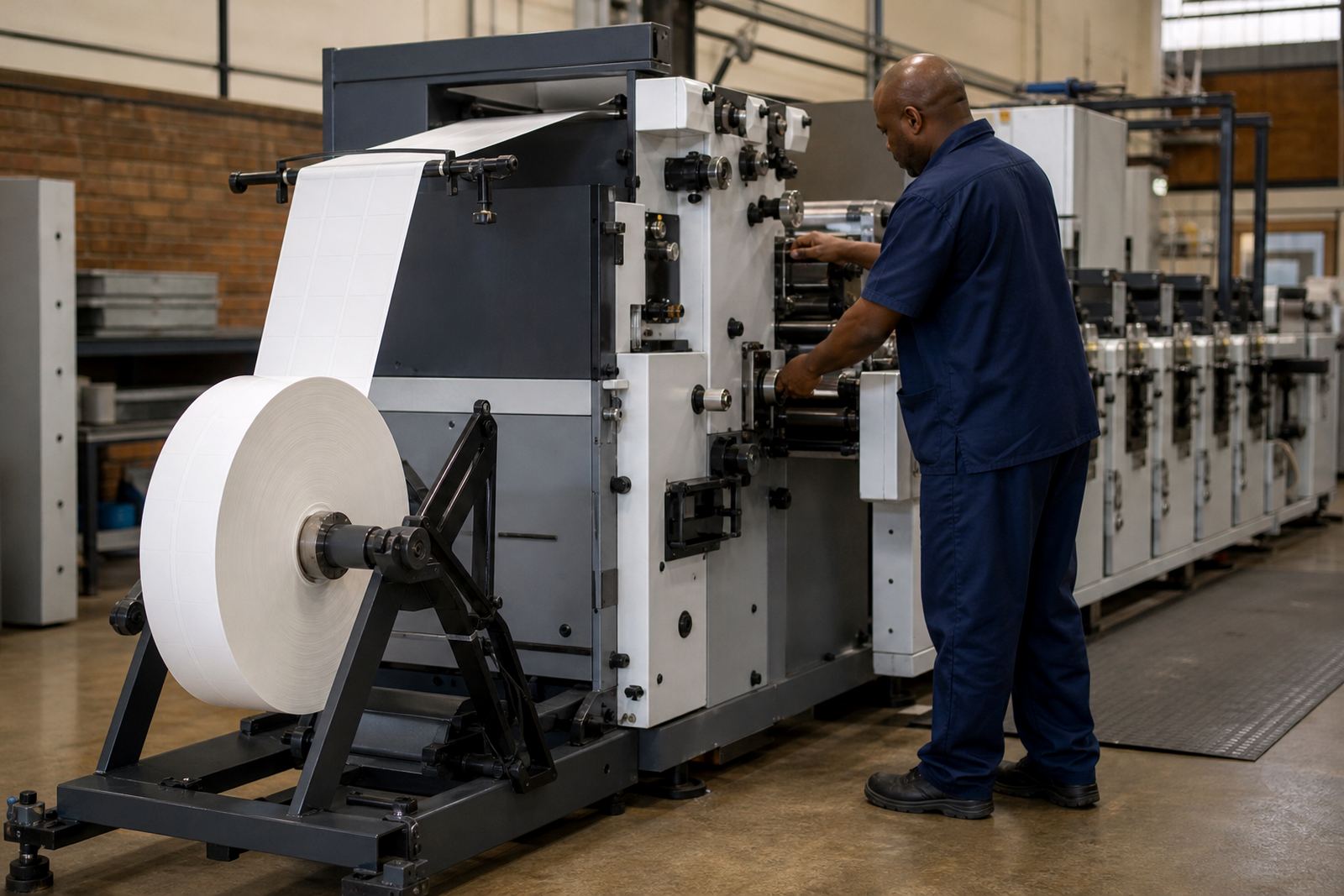
What a pressure sensitive press does in label production
A pressure sensitive press is arranged for self-adhesive label work, where the printed face stock is later converted with release liner and adhesive layers already part of the label construction. In day to day production, the press needs stable web control, accurate registration and dependable drying or curing so the label can move through slitting, die-cutting and rewinding without problems.
For South African converters, this format suits labels that must perform in retail, food and beverage, cosmetics, chemicals and general product marking. It is also a practical choice where customers want neat branding, batch changes and shorter lead times. On busy sites in Johannesburg or Durban, operators often need a press that can handle frequent changeovers and keep waste low, especially when power interruptions or load-shedding affect production planning.
Typical sizes and options for narrow-web setups
Pressure sensitive presses are usually specified around the web width, print stations, drying method and finishing layout. The right setup depends on label size, the number of colours, foil or varnish requirements and whether the line must include die-cutting or inspection in one pass. A converter running small promotional labels in Pretoria may need a different arrangement from a plant supplying pallet labels or premium cosmetic labels in Cape Town.
- Web widths commonly suit narrow-web label work from compact runs to larger rolls.
- Presses may be configured for multiple print stations and inline finishing.
- Drying options can include UV or hot-air systems, depending on inks and substrate.
- Core holders, unwind and rewind units should match the roll sizes used on site.
- Inspection, slitting and waste removal can be added where the job mix needs it.
We help check whether the press matches the label size, production pace and finishing needs before a commitment is made. That avoids a line that is too small for growth or too large for the actual workload.
Where this press suits best in South African converter plants
This arrangement suits label converters that produce pressure sensitive labels for food jars, bottled drinks, personal care items, household goods and retail packaging. It can also work well for businesses serving contract packing, warehouse marking and branded stock control labels. In Gauteng, many operations need a machine that can move between different SKUs without long stops, while coastal plants may place more weight on corrosion resistance and consistent drying in humid conditions.
If the site handles both short runs and steady repeat work, a pressure sensitive press can be configured to support practical throughput without overcomplicating the line. It is also suitable where operators need a clear workflow for setup, print, finishing and rewind, with support available when a job changes at short notice.
- Best for self-adhesive labels and related narrow-web work.
- Useful for converters with mixed artwork and frequent changeovers.
- Suitable for plants that need in-line finishing and controlled waste.
- Works well where repeat orders must print consistently across batches.
Installation, utilities and plant requirements
Before installation, the floor space, access route and utility points must be checked carefully. A press of this type needs a level foundation, suitable electrical supply and enough room for reels, ink handling, maintenance access and finished roll movement. On some sites, the practical issue is not the press itself but the route into the press room through tight doors, low ceilings or busy warehouses.
Electrical requirements depend on the exact configuration, but the site should be prepared for the drive system, drying equipment, controls and auxiliary units. Some setups may also need compressed air for certain functions. Where gas is used for drying or related process support, the supply, ventilation and compliance requirements must be checked before delivery. For factories in industrial areas such as Spartan, Kempton Park, it is worth confirming 3 phase availability, back-up power planning and whether the building can support safe cable routing and maintenance clearances.
- Check the floor load capacity and machine footprint before delivery.
- Confirm electrical supply, breaker sizing and earthing at the site.
- Plan for compressed air if the configuration uses it.
- Allow service access around unwind, rewind and finishing sections.
- Make sure ventilation and any gas related requirements are reviewed early.
Care, servicing and operator support after commissioning
Like any narrow-web press, a pressure sensitive line needs regular care if it is to hold registration and produce clean, saleable labels. Anilox care, plate mounting, tension checks, bearing inspection and cleaning routines all affect the final result. If the press is not maintained properly, operators may see inconsistent print, poor rewind quality or problems at the finishing stage.
Our support includes startup production help, preventive maintenance, breakdown support, remote assistance and spare parts support. We also assist with finishing setup, because a good label does not stop at print quality, it must slit, die-cut and rewind correctly too. In practice, this means training operators to spot wear early and handle the machine in a way that protects uptime. A small issue left too long can become a full shift delay.
- Keep print units, rollers and web path clean on a fixed routine.
- Check tension settings and rewind quality during every job change.
- Schedule maintenance before peak season, not after a fault appears.
- Use trained staff for plate mounting, setup and basic fault finding.
- Record repeat issues so they can be traced during service visits.
What to confirm before you order a pressure sensitive press
When ordering, it helps to define the label products clearly so the press can be matched to the work. Start with substrate type, web width, repeat length, print colours, finishing needs and expected run lengths. Also check whether the line must handle varnish, foil, die-cutting, inspection or special rewinding. If the plant supplies multiple customers, it is better to specify the hardest job first, not the easiest one.
You should also confirm the site conditions, power availability and operator skill level. A press can be a good fit on paper but still slow in practice if the team has not had proper training or if spare parts support is difficult. For converters across Johannesburg, Pretoria, Durban, Cape Town and Gqeberha, local support and response time can matter as much as the machine choice itself.
- Label size, web width and repeat length.
- Substrate type, adhesive build and liner format.
- Print colours, curing method and finishing steps.
- Changeover frequency and expected production volume.
- Site power, air and floor space availability.
- Operator experience and service access needs.
Key facts
| Product type | Pressure sensitive narrow-web label press arrangement |
|---|---|
| Web width | Specified to suit the label format and press layout |
| Print stations | Configurable to suit the job mix and colour count |
| Finishing | Inline options may include slitting, die-cutting and inspection |
| Utilities | Electric power required, with compressed air or gas where the configuration calls for it |
| Support | Installation, commissioning, training, maintenance and remote assistance |