What a shrink sleeve press does on the shop floor
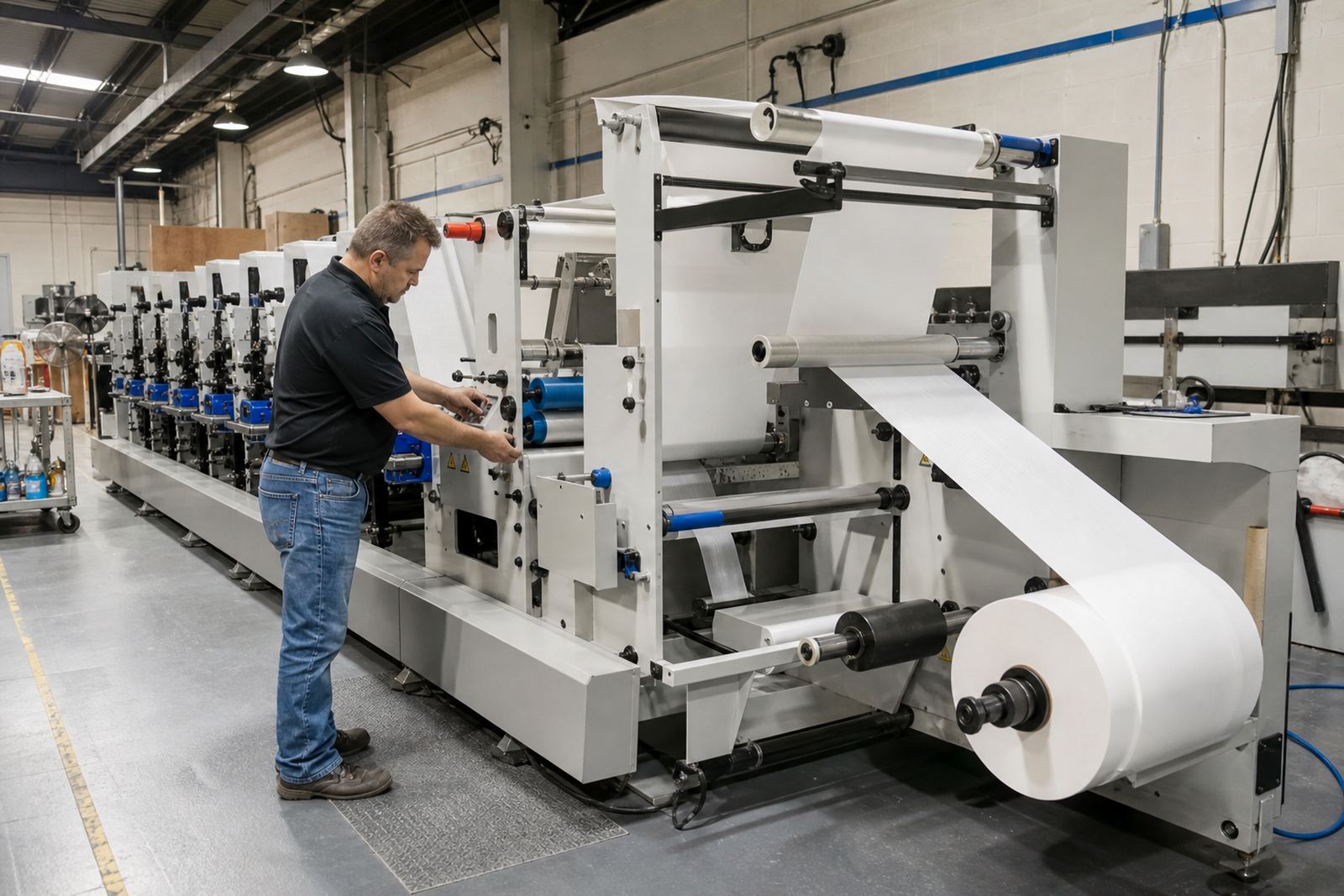
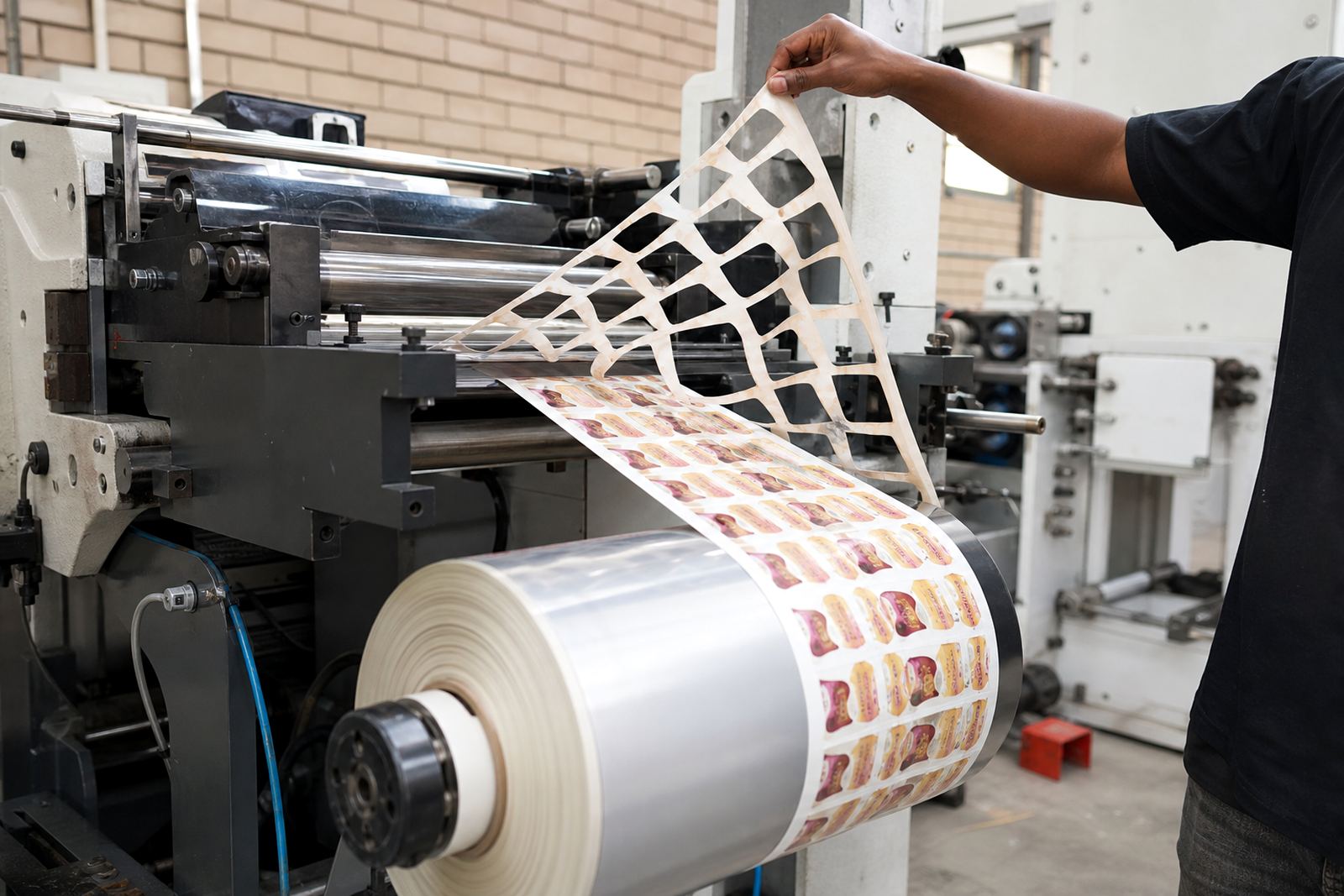
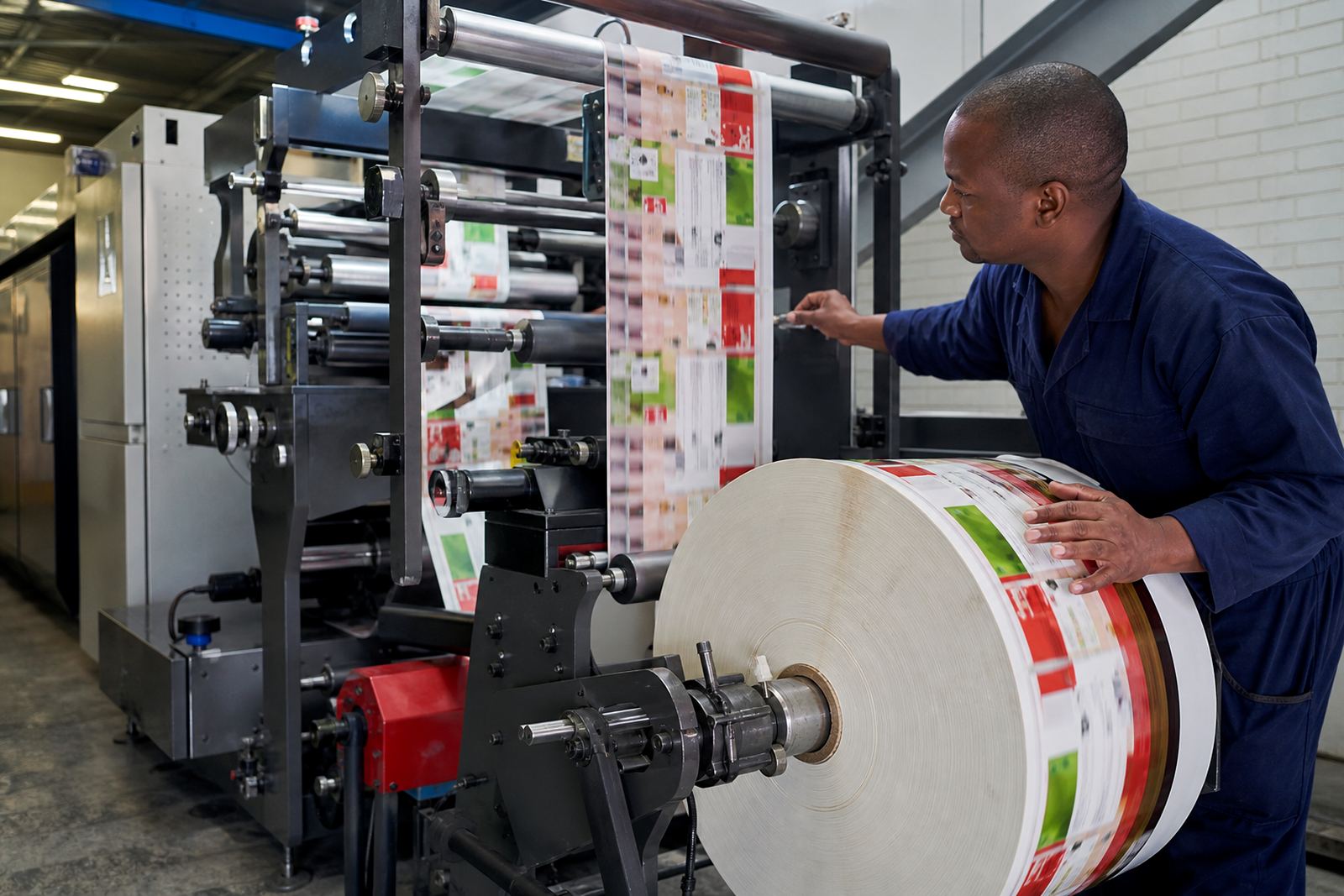
A shrink sleeve press is set up to print on sleeve film, then prepare it for the finishing line so the sleeve can be formed, cut and packed with consistent results. The press must handle the material gently while still holding register, colour and tension through each station. For South African converters, that matters when a customer wants strong shelf impact on bottles, jars, tubs or containers that get handled in warm stores, cold rooms or humid coastal depots.
In practice, the press is part of a wider production flow. Artwork, plate mounting, web tension, drying, slitting and finishing all need to line up. If one step slips, the sleeve can misfeed, scuff or finish out of square. That is why the operator training and startup support around the machine are just as important as the press itself. We support installations from Spartan, Kempton Park into Johannesburg, Pretoria, Durban, Cape Town and Gqeberha, with remote help where needed.
- Built for narrow-web sleeve work where registration matters
- Used with sleeve-style packaging that later goes through forming and application
- Needs careful tension control from unwind to rewind
- Works best when setup, finishing and inspection are planned together
Sizes, press options and line configuration
There is no single shrink sleeve press size that suits every converter. The right setup depends on web width, repeat requirements, sleeve format and the finishing method used after printing. Some businesses need a compact press for shorter runs and seasonal work, while others need a wider configuration that can carry more stations and handle more demanding job changes. We advise on what is practical for your line, your team and your premises.
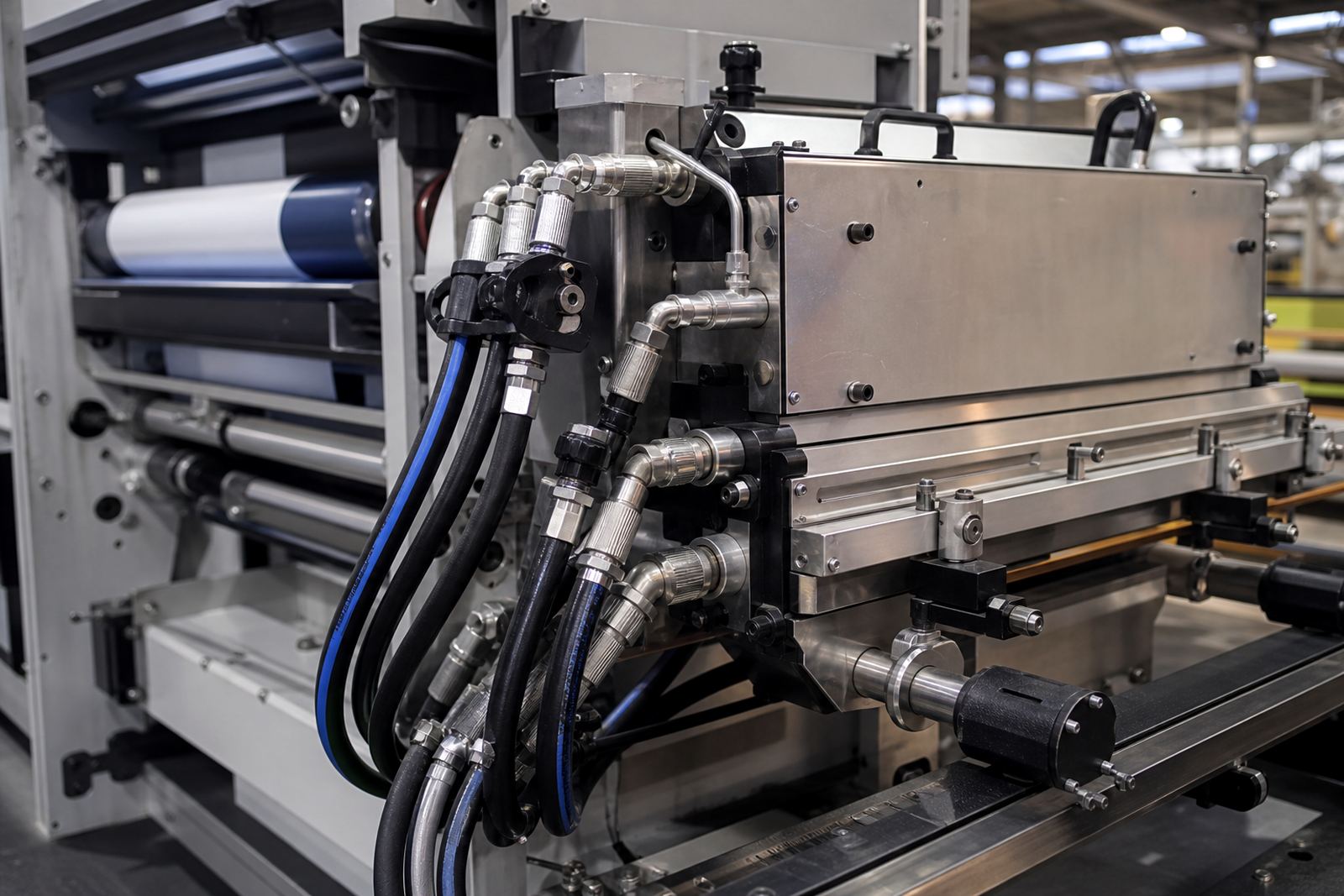
Typical options to consider include unwind and rewind arrangement, number of print stations, curing method, web guide controls, inspection aids and the type of finishing tools used after printing. If the line has to run during load-shedding, you also need to plan what can be supported by backup power, what must be shut down safely and what can be restarted without wasting material. Coastal humidity in Durban or Cape Town can also affect film handling and storage, so the whole line needs to be planned with local conditions in mind.
- Common web widths range from narrow compact lines to wider converter setups
- Options can include extra print stations, web guiding and inspection tools
- Configuration should match sleeve format, changeover frequency and finishing method
- Space, power stability and operator access all affect the final choice
Where a shrink sleeve press suits best
This type of press suits label converters that work on sleeve graphics for drinks, household products, personal care ranges and other packed goods where the container shape makes the label part of the presentation. It is a good fit where the sleeve has to wrap a curved surface, carry strong artwork and still finish cleanly for downstream application. It also suits businesses that already handle flexo label work and want to add sleeve capacity without losing control of daily production.
In South Africa, many converters need a press that can handle mixed demand. One week it may be a retail promotion, the next a food or beverage order with different artwork and finishing requirements. A sleeve line has to support that pace without making maintenance complicated. That is why we focus on practical setup, startup production support and production consulting, not just the machine on its own. If your operation is in Centurion, the East Rand or the greater Johannesburg area, the same principle applies: keep the line simple enough for the team to run well, but precise enough to keep waste down.
- Suitable for food and beverage, cosmetics, household and retail packaging
- Works well where package shape affects how graphics are seen
- Useful for converters adding sleeve work to existing label production
- Can be matched to short runs, repeat work or mixed job schedules
Power, drying and site preparation needs
Before installation, the site must be checked for floor space, machine access, ventilation, electrical supply and the finishing area that will follow the press. The exact power and drying needs depend on the configuration chosen, but the site should allow for stable supply, safe isolators and enough room for operators to move around the line. If a dryer or curing unit is part of the setup, that must be planned from the start so the plant does not overdraw or run inconsistently during production.
Gas needs, where applicable, should be assessed with the same care as electrical needs. Safe storage, ventilation and compliance with local rules matter, especially in municipal or industrial parks where inspections can happen without much notice. We also advise on power recovery after interruptions, because a line that restarts badly can waste film, plates and time. A clean installation should leave the machine level, accessible and easy to maintain from day one.
- Check available electrical supply before delivery and commissioning
- Allow space for safe loading, access and material staging
- Plan ventilation and heat control around the drying or curing section
- Consider gas safety and compliance where the line requires it
Servicing, care and breakdown support
A shrink sleeve press needs regular care if it is going to stay accurate. Web paths, rollers, bearings, guides, mounting points and finishing tools should be inspected on schedule. Dust, adhesive residue and film scraps build up quickly in a busy plant, so housekeeping is not just about appearance, it affects feed quality and print consistency. Preventive maintenance also helps the team spot wear before it turns into a production stop.
Our service support covers maintenance planning, breakdown assistance, remote support and spare parts support, with help from technical staff who understand narrow-web production. We also assist with anilox care, plate mounting help and finishing setup, because problems often start in those areas rather than in the main press frame. If a line goes down in Durban, Cape Town or Gqeberha, the goal is to get the converter back into production with as little waste as possible. A proper service routine also makes training easier, since operators learn the machine in a controlled way and not only when something has already gone wrong.
- Schedule cleaning and inspection around production demand
- Keep critical wear parts identified and on hand
- Use remote support for first checks before a call-out
- Update operator training when job types or materials change
What to confirm before you order
When ordering a shrink sleeve press, the first step is to match the machine to the real work you want to run. Confirm your web width, repeat range, number of print stations, finishing method and whether the line must connect to existing equipment. Also confirm how often the team changes jobs, how much floor space is available and whether the plant has stable power or backup arrangements. If the press will serve multiple sites, that should be clear from the start too.
It helps to have the following points ready before you send an enquiry through our contact page. That lets us advise properly on installation, commissioning and support. We work with label converters across South Africa and keep the advice practical, from Kempton Park and Johannesburg to Pretoria, Durban, Cape Town and Gqeberha. The more clearly you define the job, the easier it is to match the press to the production plan.
- Web width and label or sleeve format
- Expected run lengths and changeover frequency
- Power availability and any backup power plan
- Finishing method and downstream handling needs
- Training, service and spare parts expectations
Key facts
| Machine type | Narrow-web shrink sleeve press for label and packaging work |
|---|---|
| Use case | Sleeve-style graphics where print, tension and finishing must stay controlled |
| Typical configuration | Customised by web width, print stations and finishing layout |
| Site needs | Level floor, safe access, ventilation and suitable power supply |
| Support available | Installation, commissioning, operator training, maintenance and breakdown support |
| Service region | Kempton Park, Johannesburg, Pretoria, Durban, Cape Town, Gqeberha and surrounding areas |