Start With The Labels You Print Most Often
Before you compare presses, write down the jobs that will fill most of your shifts. A press for short food labels, cosmetic wrap labels, or retail sticker work will not be set up the same way as one running larger mixed-volume orders. Look at substrate types, repeat lengths, ink coverage, die-cutting needs and whether the work changes often through the week.
It also helps to note the parts of the job that cause delays now. That may be frequent plate changes, too much setup waste, or too many manual steps between printing and finishing. If you know where time is lost, you can judge whether the press line should prioritise quick changeovers, easier registration, or better finishing control.
- List your top 10 label jobs by volume
- Note substrate types such as paper, film or specialty stock
- Record average run length and how often jobs repeat
- Identify where waste, delays or rework happen now
Choose A Press Width That Matches Your Work Mix
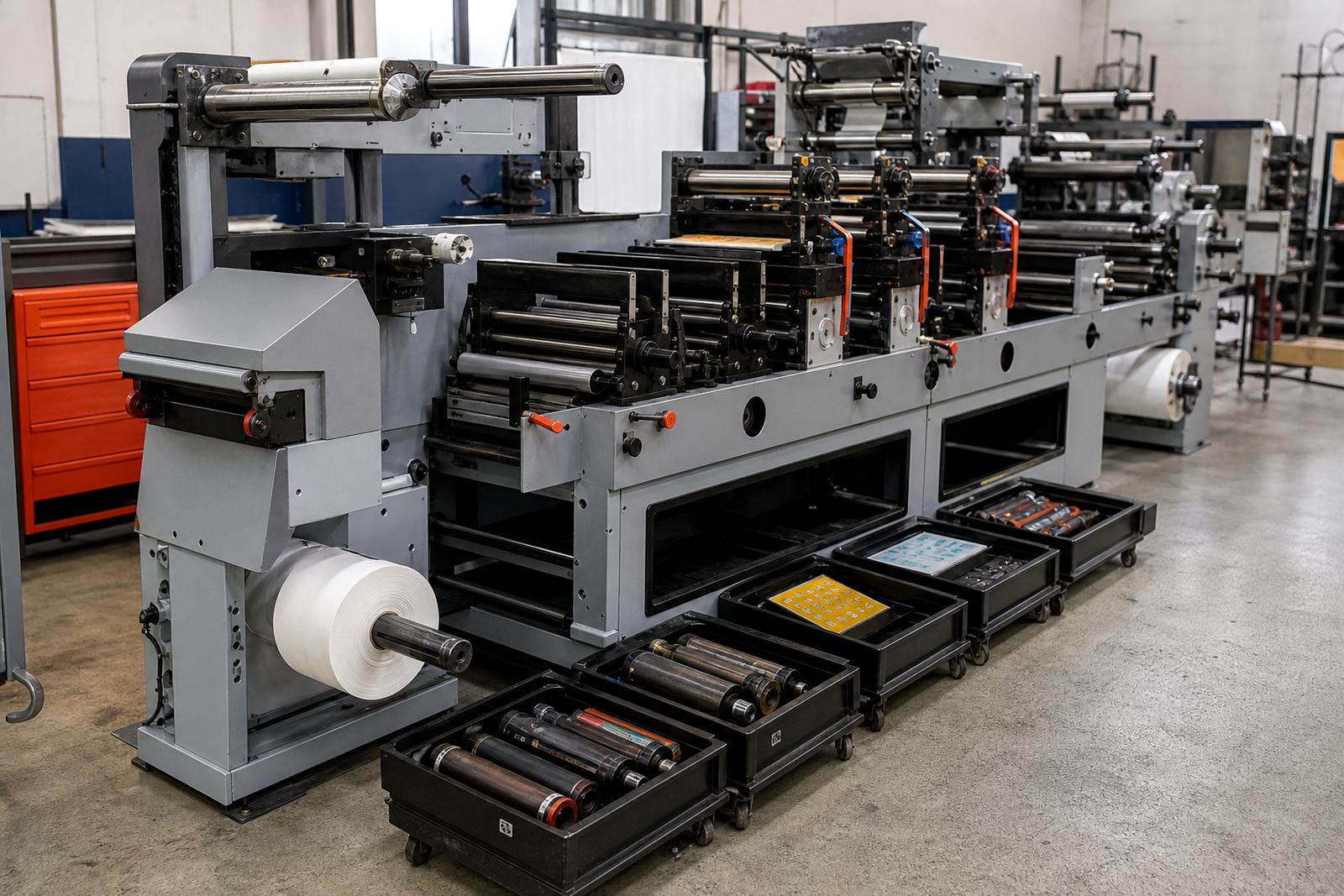
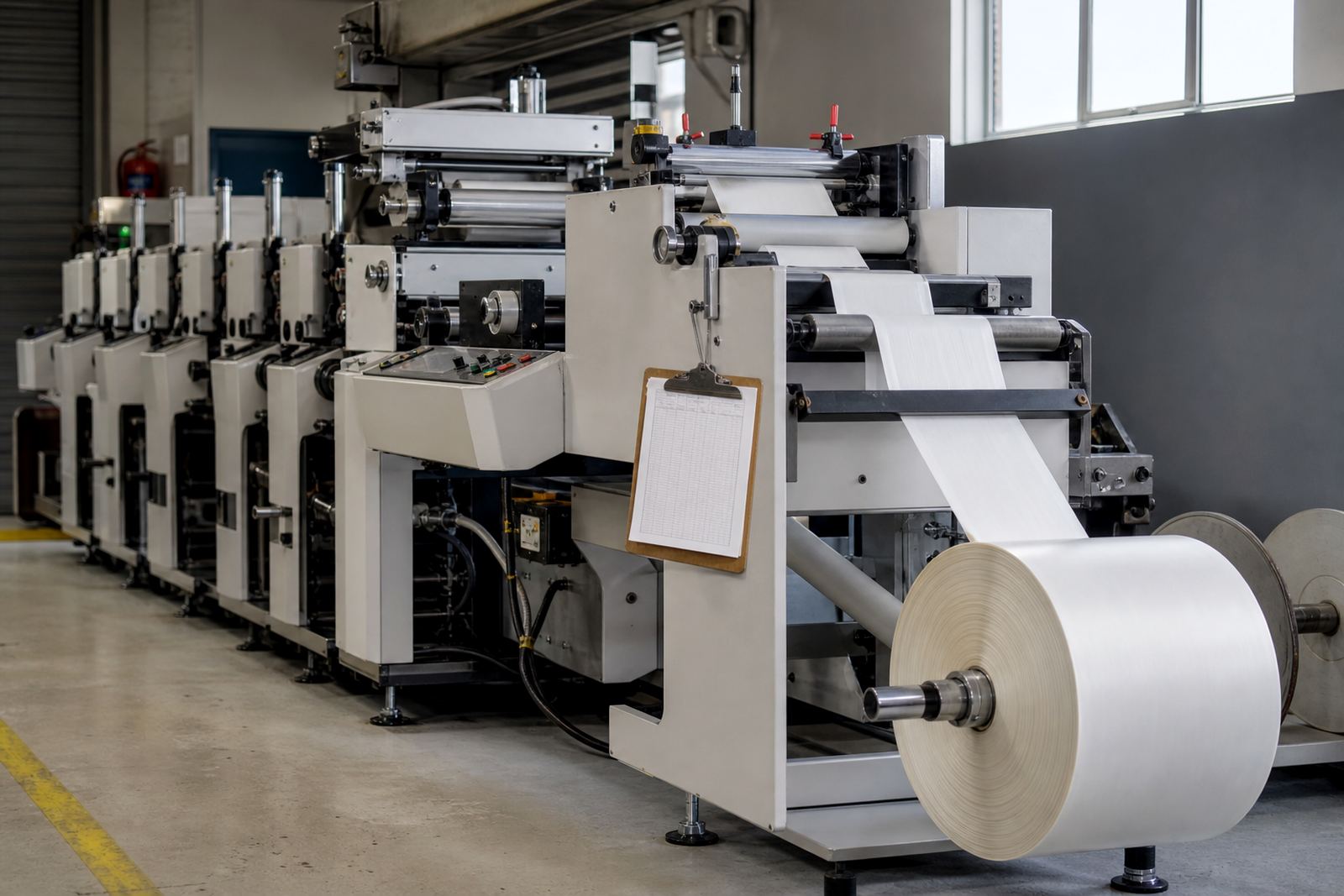
Narrow-web flexo presses are chosen for the job mix they can carry through a year, not just the biggest label you may print once in a while. A wider configuration can give more room for multiple units, in-line finishing and future product lines, but it can also bring higher capital cost and a bigger footprint in the factory. A tighter setup may suit focused label work, especially where the same formats repeat often.
Measure the space in your plant properly. In places like Spartan, Kempton Park or any busy industrial unit in Johannesburg, access for delivery, maintenance and reel handling matters just as much as the print line itself. Check ceiling height, floor condition, power supply, compressed air availability and the route between storage, press and finishing areas.
- Confirm the maximum web width you actually need
- Allow space for roll loading, walking clearance and maintenance access
- Check whether the machine will fit your current material flow
- Plan for power stability during load-shedding and restart procedures
Plan The Setup Around Finishing And Converting
A press should not be chosen as if printing and finishing are separate worlds. In label production, the press, die-cutting, varnishing, slitting and rewinding must work together. If your jobs leave the press and wait for a second step with too much handling, you will spend more time correcting registration and roll quality later.
Think through the finishing methods you need on day one and the methods you may add later. Some converters focus on simple print and slit work, while others need more inline handling for premium labels or short-run promotional packs. If you run jobs for food and beverage, cosmetics or retail, the finishing finish has to look clean and stay consistent from the first roll to the last one.
- Decide which finishing steps must be in-line and which can be off-line
- Check compatibility with your current slitting and rewinding process
- Allow for plate mounting accuracy and repeatable setup
- Keep a record of the rolls that need special handling for moisture or heat
Look At Operator Training Before You Sign
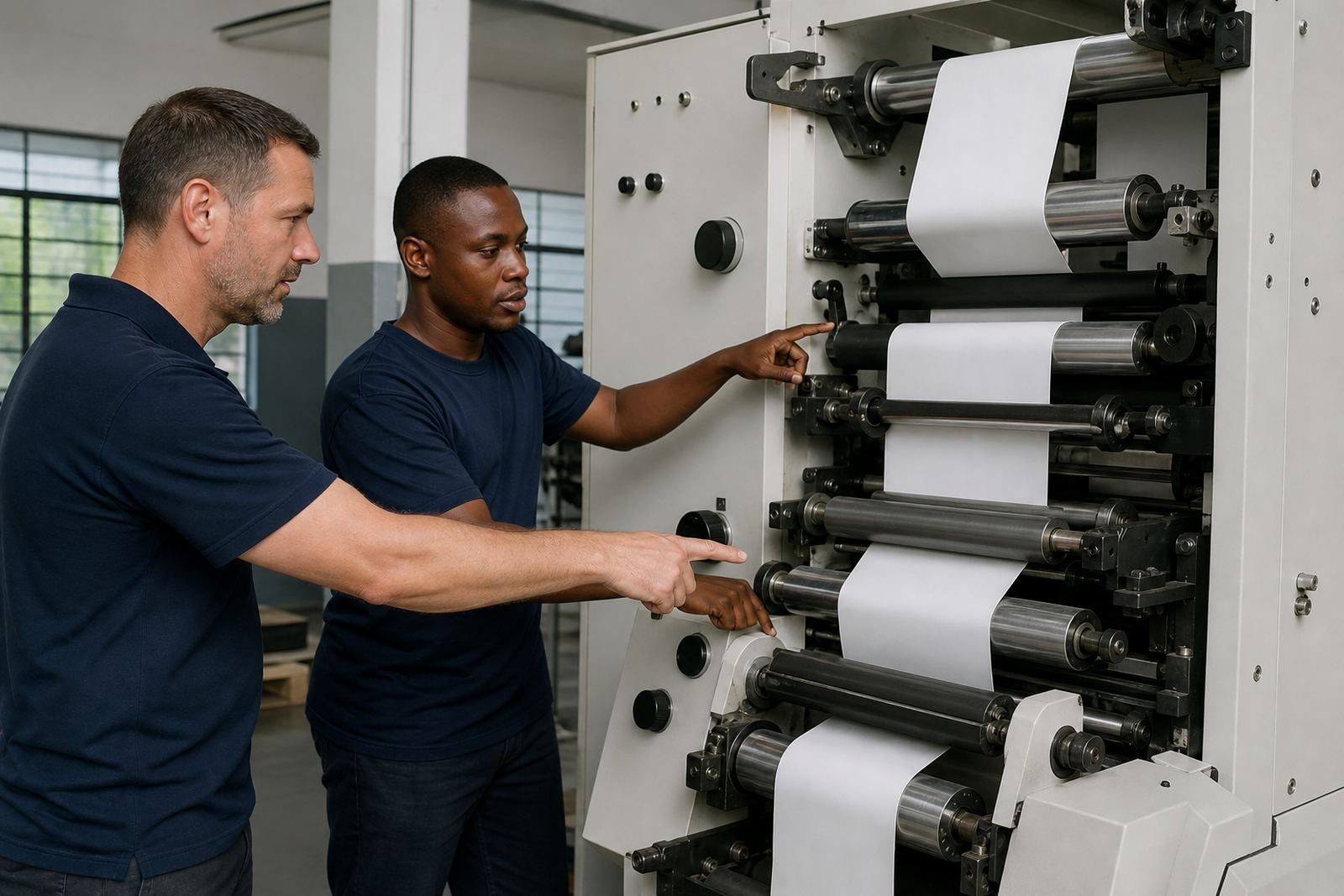
Even a good press can underperform if the team is not trained properly. Ask how much time will be spent on press setup, registration, waste control, cleaning, finishing setup and fault finding. Training should be practical and matched to the people who will run the machine on an ordinary Monday, not just during commissioning week.
In South Africa, labour teams often work across different shifts and skill levels, so the machine must be easy to hand over between operators. That matters in production sites where load-shedding, urgent orders and last-minute artwork changes can interrupt the day. A clear operating method helps keep the press moving when conditions are not ideal.
- Confirm who needs training: operators, supervisors, maintenance and finishing staff
- Ask for training on setup, cleaning, safety and routine checks
- Make sure the team knows how to restart after power interruptions
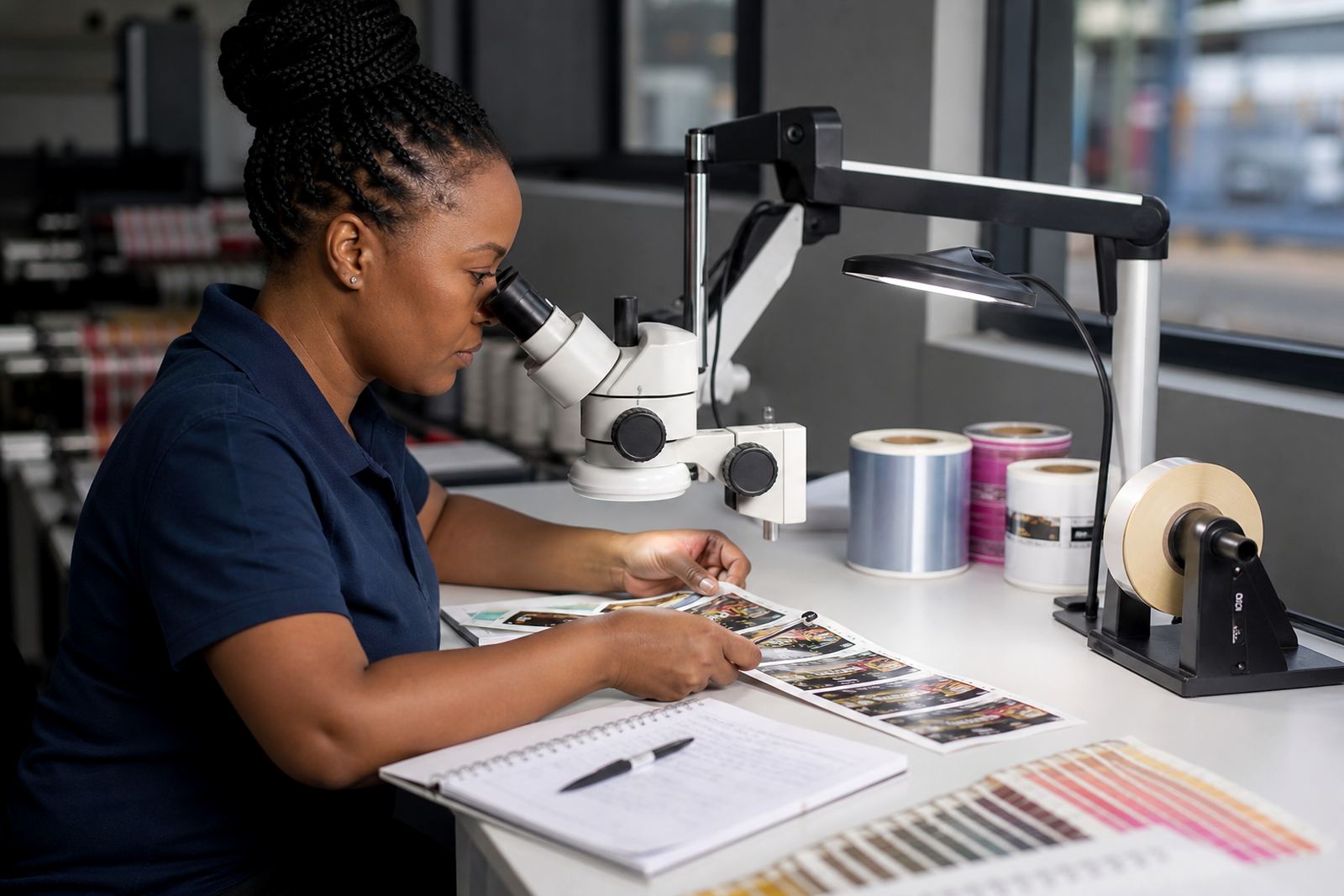
- Keep a simple checklist for first article approval and run changes
Compare Support, Spare Parts And Maintenance Planning
Buying a press is only part of the decision. You also need to know who helps when a fault happens, how quickly spare parts can be supplied, and what type of preventive maintenance the machine needs. A converter in Durban may deal with humidity and salt air, while a plant in Cape Town may focus on different storage and corrosion concerns. The support plan should fit the site, not a generic promise.
Ask how breakdown support works, whether remote support is available, and which items should be checked routinely by your own staff. Anilox care, plate mounting help and regular inspection of wear points all affect print consistency. If the press sits idle after a missed service step, the true cost of ownership rises fast.
- Ask for a clear maintenance schedule
- Confirm spare parts support and lead times
- Check what can be handled remotely and what needs a site visit
- Record service intervals for rollers, bearings, electrical items and finishing units
Use A Simple Purchase Checklist Before You Decide
Once you have compared the work mix, press width, finishing needs, training and support, bring the decision back to numbers and practical fit. A press should suit your present volume, but it should also leave room for future labels without forcing a full replacement too soon. The right choice is usually the one that keeps setup waste low, gives a predictable finish and can be supported well in your region.
For converters across Johannesburg, Pretoria, Durban, Cape Town and Gqeberha, the final check is often about uptime and local support more than theory. If the team on the floor understands the machine and the service plan is realistic, production becomes easier to control. That is usually what matters most when you are quoting jobs and trying to keep lead times steady.
- Does the press suit your main label sizes and repeat lengths?
- Will it fit your site, power supply and material flow?
- Can your team operate and maintain it with confidence?
- Is support available for installation, commissioning and ongoing production?
If you are planning a new label line or replacing older equipment, Flexography Printer in Spartan, Kempton Park works with label converters across South Africa on press installation, commissioning, operator training, startup production support, preventive maintenance, breakdown support, remote support, spare parts support, finishing setup and production consulting. Enquiries come through the contact page form.