1. Confirm the job order before anything moves
Start with the basics and make sure the printed order matches the spec sheet, sample, and customer sign-off. Check substrate type, repeat length, colours, quantities, finishing steps, and any special notes for food, beverage, cosmetics or retail labels. It sounds simple, but most first-run problems begin with a missed detail on the paperwork.
Confirm who is responsible for each part of the run. One person should control material release, one should watch registration and colour, and one should log changes. If your team is split between two shifts or working with load-shedding windows, write down the handover points clearly so nothing gets missed.
- Job ticket matches the approved artwork and finishing notes
- Correct substrate, ink set, plates and tooling are on hand
- Waste allowance and target quantity are agreed
- Changeover notes are signed off by the team leader
2. Check the press, utilities and setup area
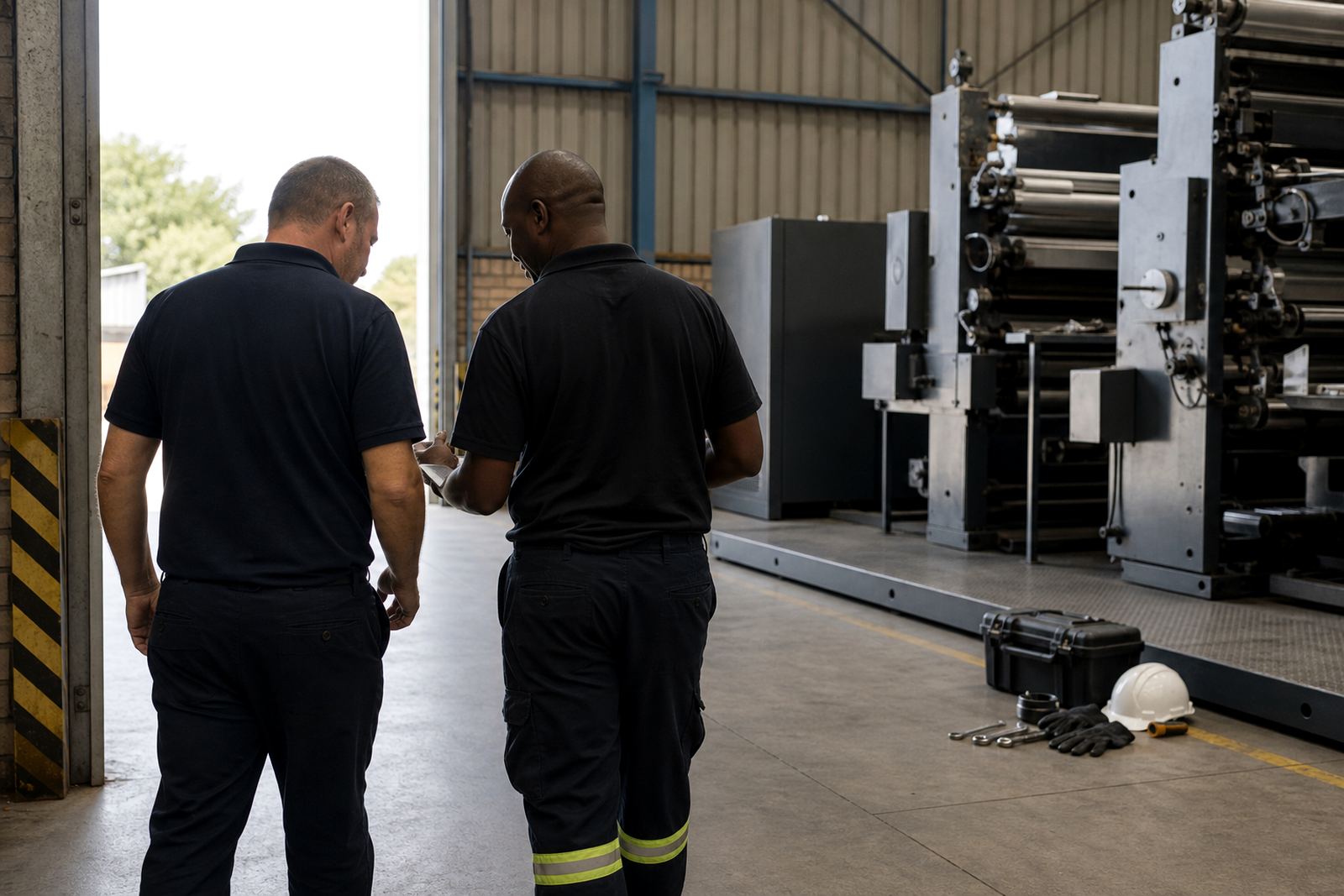
Before the first roll goes on the press, walk around the machine and the work area. Make sure the press is clean, guards are in place, emergency stops work, and the path for material feed and rewind is clear. In Spartan, Kempton Park and other industrial areas, dust and humidity can affect sensitive parts, so it helps to wipe down surfaces and keep consumables sealed when not in use.
Check power supply, air supply, and any support systems the press depends on. If your site is affected by municipal restrictions or scheduled outages, confirm that your restart plan is ready. A quick check now saves time later when the job is already live and the clock is running.
- Press area cleared of pallets, offcuts and loose tools
- Air lines, electrical supply and safety systems checked
- Ink trays, doctoring components and web path clean
- Any guarding, sensors or alarms tested before startup
3. Prepare materials for a stable first run
Good production starts with good preparation. Inspect the substrate rolls for damage, telescoping, edge crush or moisture pickup. For coastal deliveries headed to Durban or Gqeberha, allow enough time for materials to settle in the room before running, especially where humidity is high. The same applies to plates, inks and finishing items that may have been stored in a different temperature.
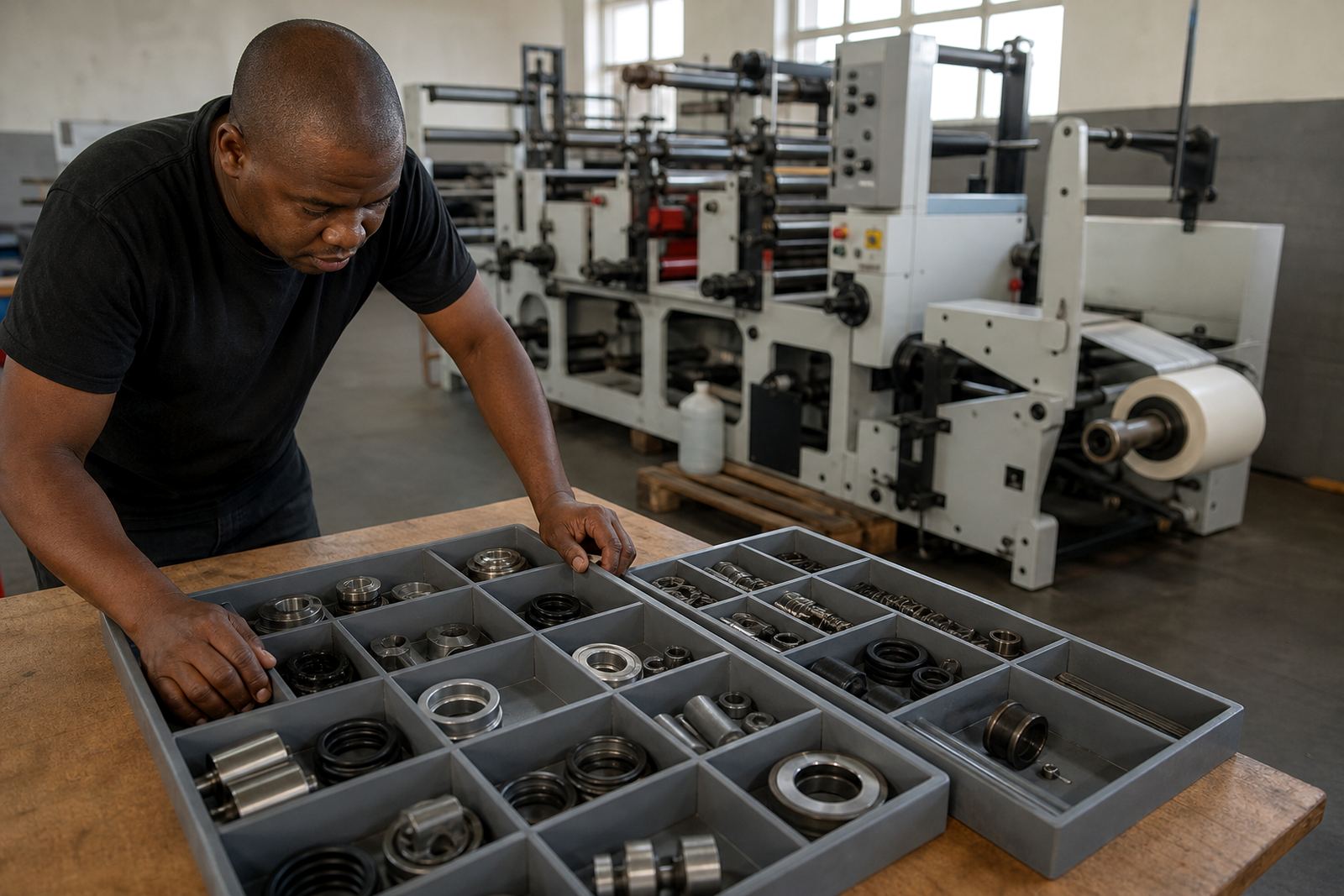
Keep all job components together and labelled. Plates, cylinders, sleeves, anilox rolls, dies, laminates and finishing tools should be grouped by station or process stage. If materials are scattered across the floor or on multiple trolleys, the first run can become a search exercise instead of a controlled setup.
- Substrate checked for width, core size and surface condition
- Plates and mounting items matched to the correct units
- Inks mixed, labelled and covered when not in use
- Finishing materials ready for die cutting, slitting or rewinding
4. Run a controlled startup and print the first samples
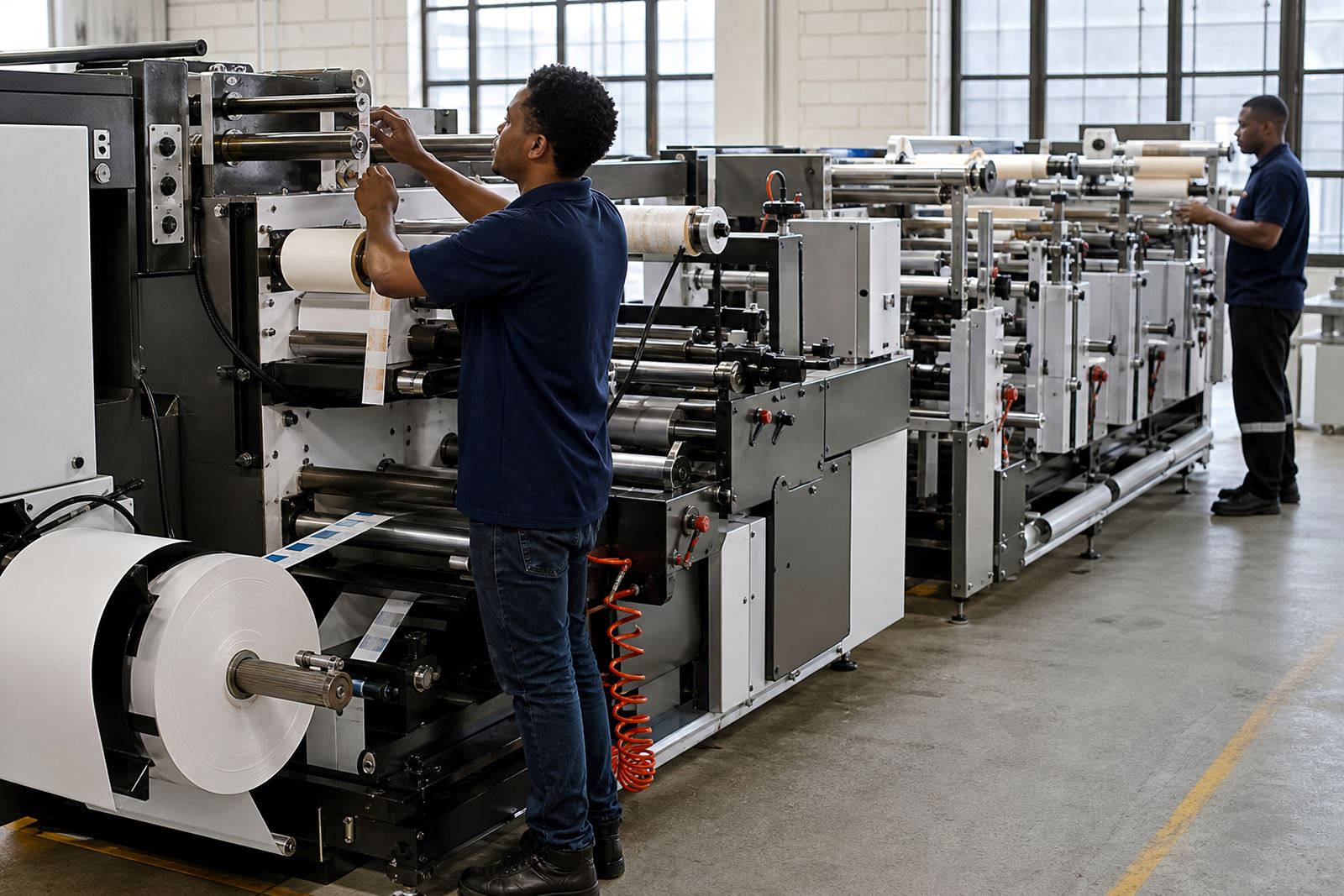
Bring the press up slowly and watch the web through each section. The first metres are for checking tension, registration, print density and colour balance. Do not chase speed too early. A controlled start lets the operator see how the substrate behaves and whether any adjustment is needed before the job settles.
Pull samples as soon as the print is readable and compare them to the approved standard. Check text clarity, solids, barcodes, overprint, trimming and any special finishing marks. If the job includes multiple colours or fine copy, it is better to adjust in small steps than to make one big change that affects every station.
- Web tracking stable through the full press path
- Registration and colour checked at the first sample point
- Waste pieces separated from acceptable samples
- Any setting changes recorded by unit and time
5. Set up finishing, slitting and rewind without rushing
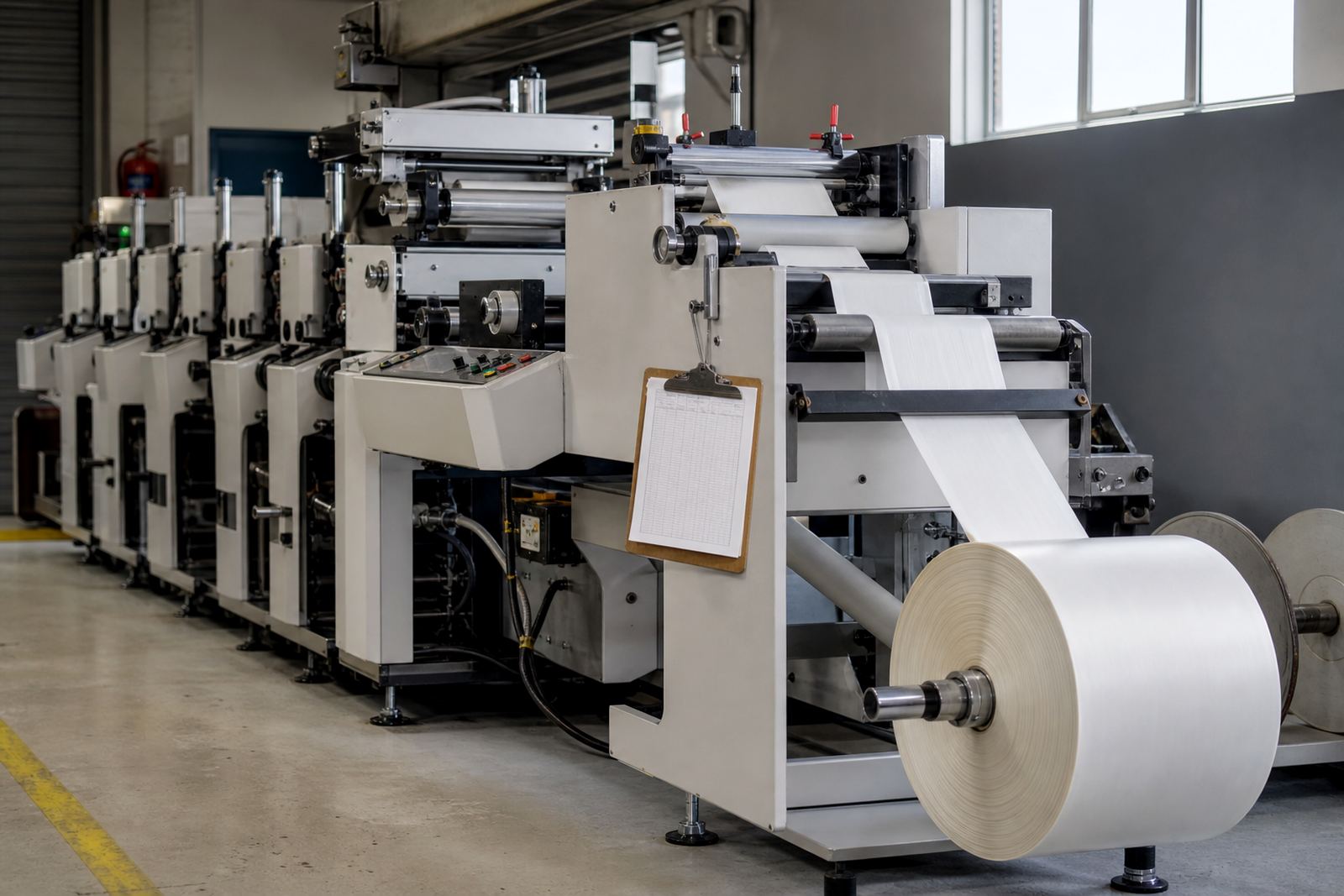
Many first jobs are lost in the finishing section rather than on the print units. Check that the slitter, rewind tension, die cutting or any special finishing process is matched to the material and label size. If the product must fit a dispenser, carton or application line, confirm roll direction and rewind count before a full run starts.
Watch for edge curl, poor cut quality, loose rewind or marks from handling. In some cases the print is acceptable but the finish is not, and that can still reject a batch. A neat final roll matters just as much as the image on the label.
- Slit width and rewind direction confirmed
- Die cut or finishing setup checked against the job spec
- Final roll build neat, tight and easy to handle
- Samples approved before extended production begins
6. Record the lessons before the next shift starts
Once the first job is complete, capture what worked and what needed adjustment. Note the substrate behaviour, the useful press settings, cleaning points, and any support you needed from installation or training staff. These notes become valuable on the next repeat order, especially when different operators are on shift or when the job returns months later.
Good records also help with preventive maintenance and spare parts planning. If a part showed wear, if setup took longer than expected, or if the team needed remote support, write it down while it is fresh. A short, clear handover is worth more than a long memory.
- Final sample and approval note filed with the job
- Any faults, delays or adjustments recorded
- Cleaning and shutdown completed properly
- Next-run improvements shared with the team