Start with a Clean Pressroom Before the Shift Begins
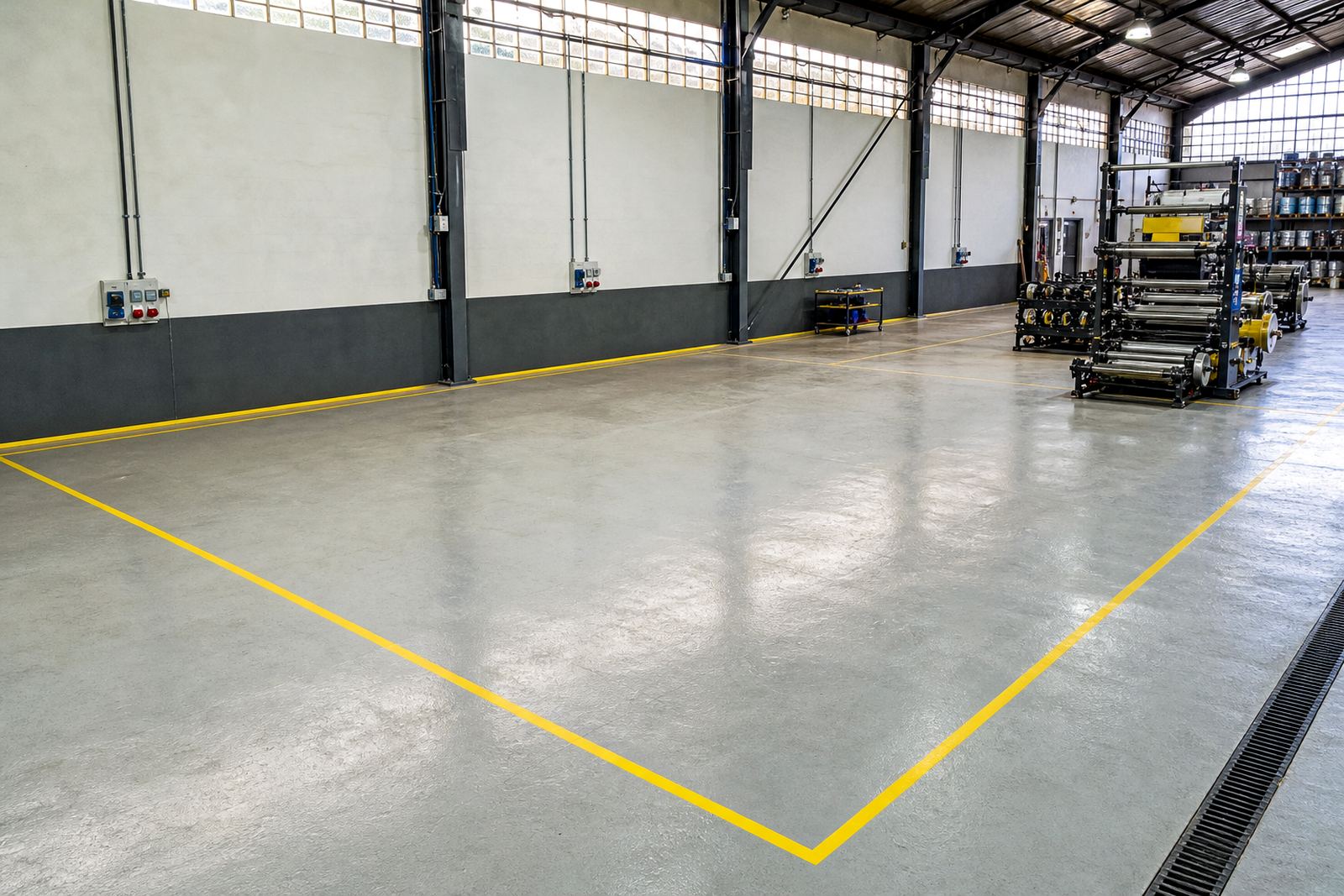
Good cleaning starts before the first roll goes on the press. Walk the line and remove loose trimmings, dust, old labels and wrap scraps from around the unwind, rewind, tables and floor. In Kempton Park and other industrial areas, fine dust builds up quickly, especially when doors are open for deliveries or the weather is dry. A tidy floor also lowers slip risk when operators move between the press and finishing area.
Check that the area around the press is clear of open pallets, empty cores and chemical containers. Keep cleaning cloths, approved wipes and waste bins in one marked place so the team is not hunting for them during changeover. If your site uses compressed air for cleaning, use it carefully and only where suitable, because blowing dirt around can push debris into bearings, sensors and web paths.
- Remove loose waste from the pressroom floor.
- Empty waste bins before the shift starts.
- Keep cleaning materials close to the press but off the walkways.
- Confirm the work area is dry and safe to enter.
Daily Wipe-Downs That Protect Print Quality
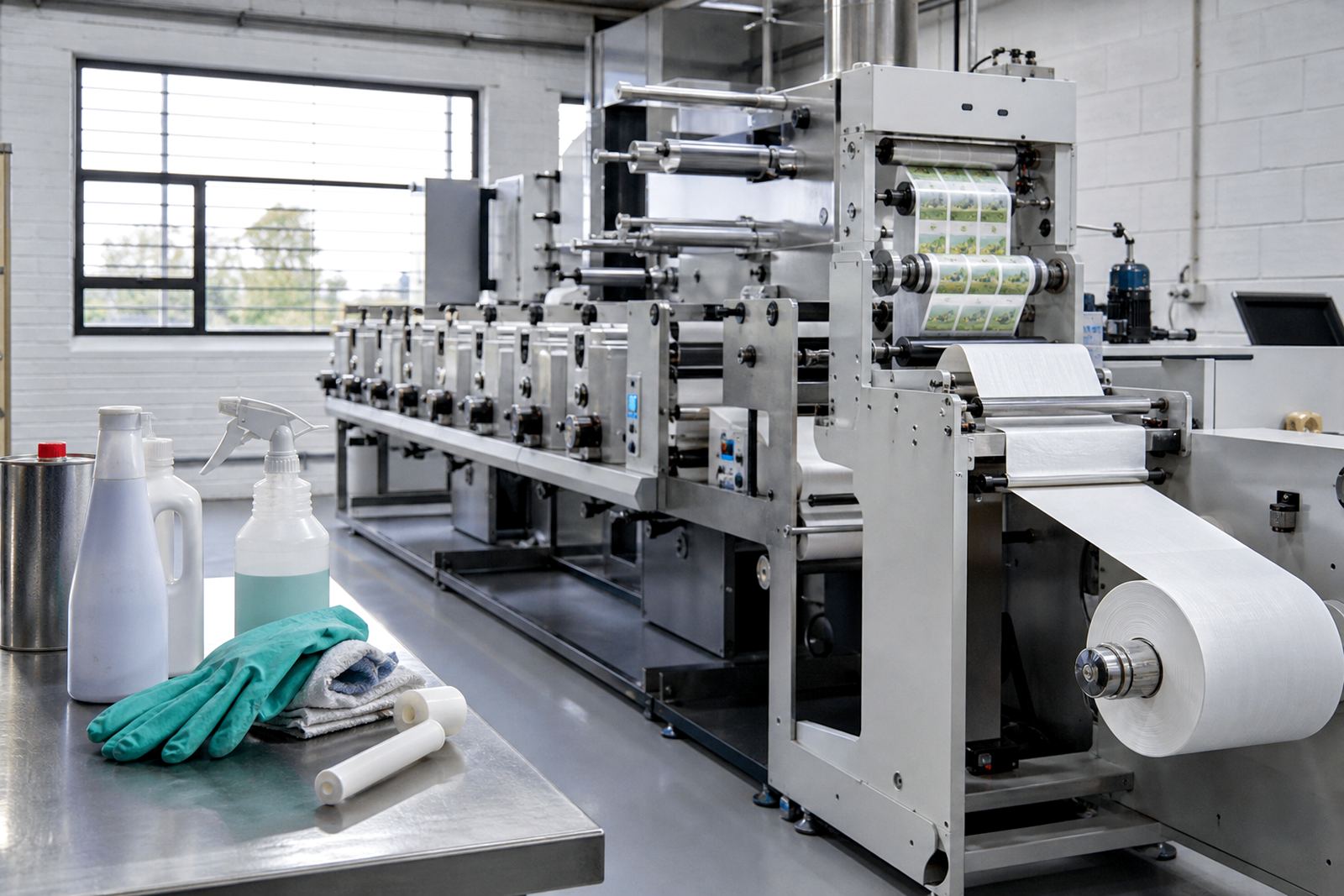
Daily cleaning should be light, regular and focused on the parts that touch ink, adhesive and web material. Wipe down guards, frames, control surfaces and accessible covers with a clean cloth. On the press itself, remove ink smears before they dry because dried residue takes longer to clear and can spread onto rollers or plates. For water based systems, keep an eye on dried build-up around trays and transfer points. For UV jobs, watch for cured residue near lamps and shielding.
Pay extra attention to the anilox area, doctoring zones, plate cylinders and guides. These parts need gentle handling, not scraping. Use the cleaning method that suits the material in use and follow the pressroom’s approved cleaning process. A rushed wipe can do more harm than good, especially on fine parts where a small mark can show on repeat jobs. If the press has been idle overnight, check for dust settling on exposed surfaces and remove it before start-up.
- Wipe visible ink splashes before they harden.
- Check plate and cylinder areas for residue.
- Clean guides, sensors and touch points carefully.
- Do not use rough tools on coated surfaces.
Weekly Cleaning for Ink, Adhesive and Dust Build-Up
Once a week, set aside time for a more thorough clean. This is the point to inspect hidden corners, under guards and around service access points. Look for dried ink around pumps, hoses and trays, and remove light build-up before it becomes a bigger job. On sites near the coast such as Durban or Gqeberha, humidity can make residue stick faster and can affect exposed metal if cleaning is left too long. In inland areas, dust often settles on fans, panels and open edges, so those need attention too.
Use the weekly clean to check the condition of blankets, rollers and mounts. If a part is showing wear, cleaning will not fix it but it can make the fault easier to see. Keep notes of areas that repeatedly gather dirt. That can point to a web tracking issue, a splash point or a poor seal that needs sorting. This is also a good time to inspect the finishing area, where cut waste and trim dust often collect around slitter units or folding guides.
- Clean under covers and behind accessible panels.
- Check for build-up around hoses, trays and pumps.
- Inspect high-dust areas such as fans and vents.
- Record repeat problem spots for follow-up.
Clean Changeovers Without Slowing Production
Changeover time is when cleaning discipline matters most. The aim is not just to make the press look neat, but to prevent cross-contamination between jobs. Clear out leftover labels, cores, backing waste and ink containers before the next set-up begins. If a job change involves a different adhesive, substrate or print finish, make sure the transfer points, guides and nearby surfaces are clean before the new material goes through.
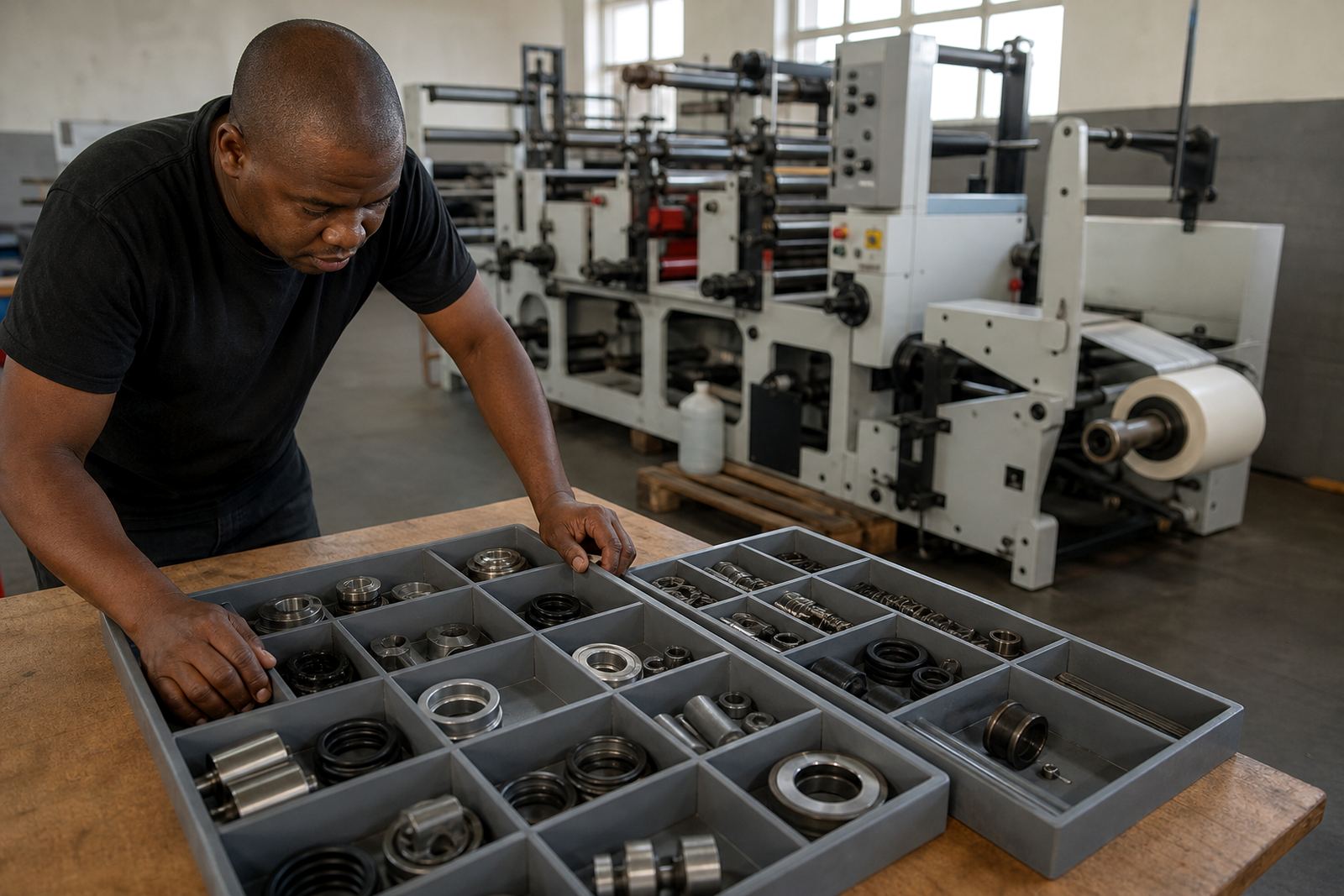
Keep separate cloths or wipes for dirty removal and final clean-down. That helps stop grime from one area ending up on another. Make sure new plates, mounts and finishing parts are stored off the floor and protected from dust. On smaller converters in Johannesburg or Pretoria, space is often tight, so a clean staging area is important. It reduces mistakes when the team is working quickly and helps the next job start without avoidable stops.
- Remove leftover material before loading the next job.
- Use separate cloths for heavy dirt and final wipe-downs.
- Keep new plates and tooling covered until needed.
- Check guides and web paths before running the new reel.
Keep the Finishing Area as Clean as the Press
Label work does not end at the print units. The finishing area needs the same care because dust and trim waste can spoil a good run. Clean around slitting stations, rewinds, inspection points and any creasing or die-cutting area connected to the line. Small offcuts can get into rollers and create marks, so sweep them out often rather than waiting until the end of the day.
Check that finished stock is stacked neatly and protected from floor dust, moisture and handling damage. In coastal towns, humidity can affect stored reels and finished packs if they are left open too long. In Gauteng winter mornings, static can make light waste cling to surfaces and covers, so a quick wipe may be needed. A clean finishing area supports better pack presentation and reduces the chance of labels being rejected later.
A Simple Operator Checklist for Each Shift
Operators do not need a long routine to keep a press in good shape. A short, repeatable checklist works better because it gets done every time. Keep it printed near the machine and tick it off during start-up, lunch break and shut-down. The cleaner the routine, the easier it is to spot leaks, loose fittings, unusual noise or a part that needs service.
Use this as a basic daily guide for the team:
- Inspect the pressroom floor and remove waste.
- Wipe visible ink and adhesive marks.
- Check web paths, guides and exposed surfaces.
- Clear the finishing area of trim and offcuts.
- Log any repeat dirt points or machine faults.
- Leave the press safe and covered at shut-down.
When Cleaning Turns into Maintenance Work
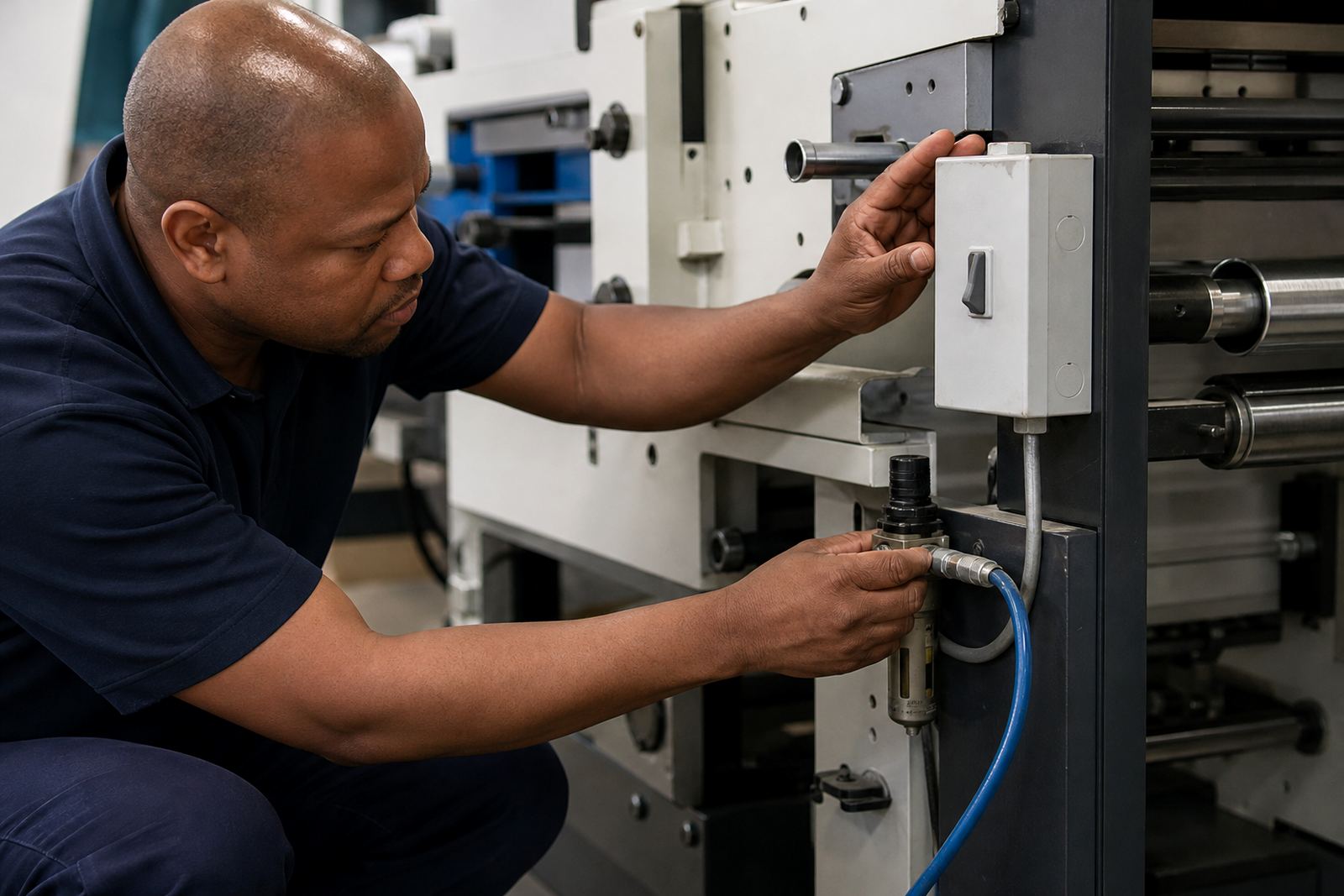
Cleaning should reveal problems, not hide them. If you keep finding the same ink build-up, oil mist, dust path or residue line, treat it as a sign that something needs attention. It may be a worn part, a blocked vent, a misaligned guide or a process setting that is not right. Do not keep scrubbing the same area without checking the cause.
That is where support from an experienced flexo team helps. A good routine, backed by proper installation, operator training and preventive maintenance, keeps the press running better for longer. For converters in Kempton Park, Johannesburg, Pretoria, Durban, Cape Town and Gqeberha, a clean machine is easier to service and easier to run when load-shedding, humidity or production pressure puts the shift under strain. Small habits done daily often save a full stop later.
If your team needs help setting up cleaning routines, finishing setup or maintenance plans, it is worth building the process into the pressroom from the start.