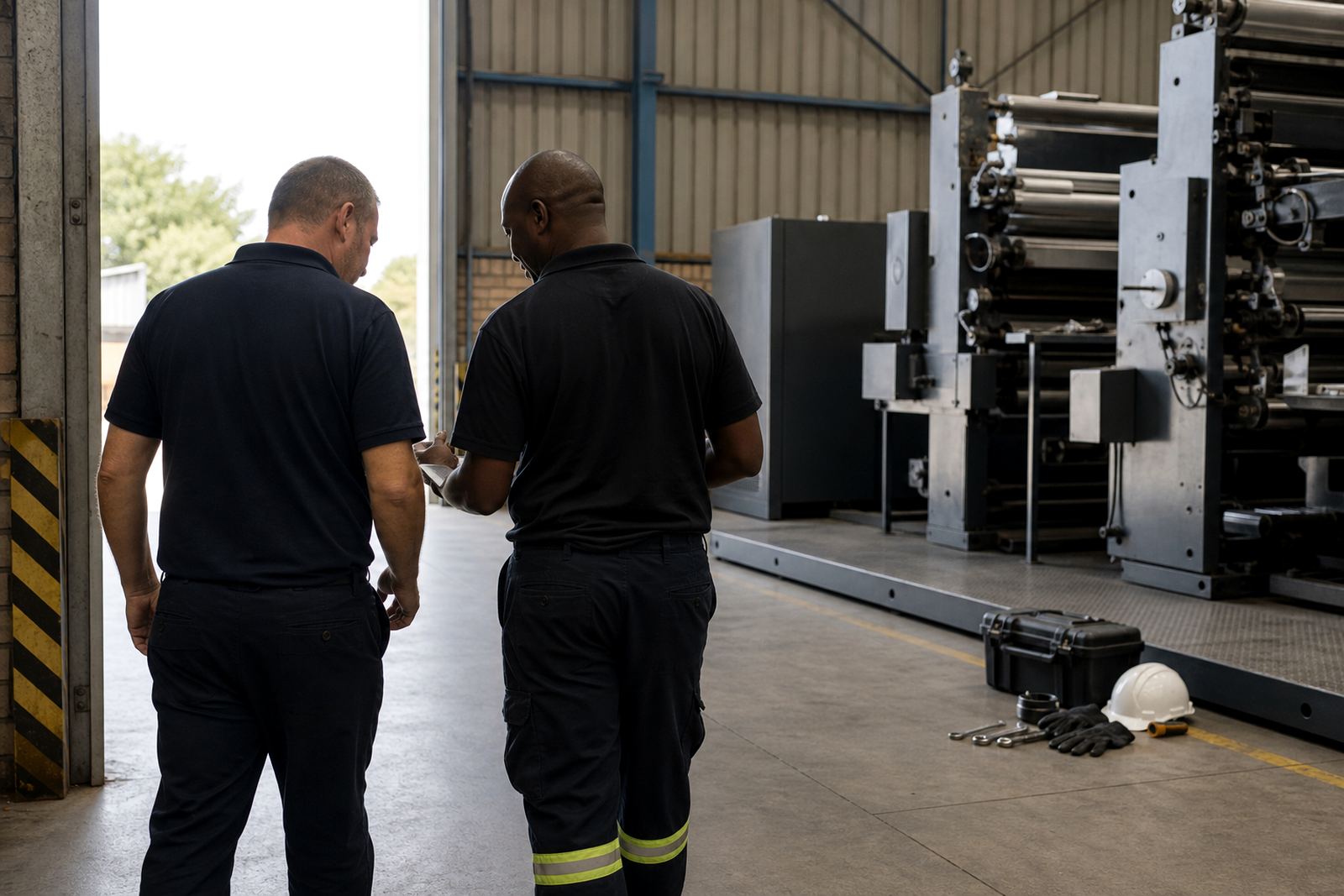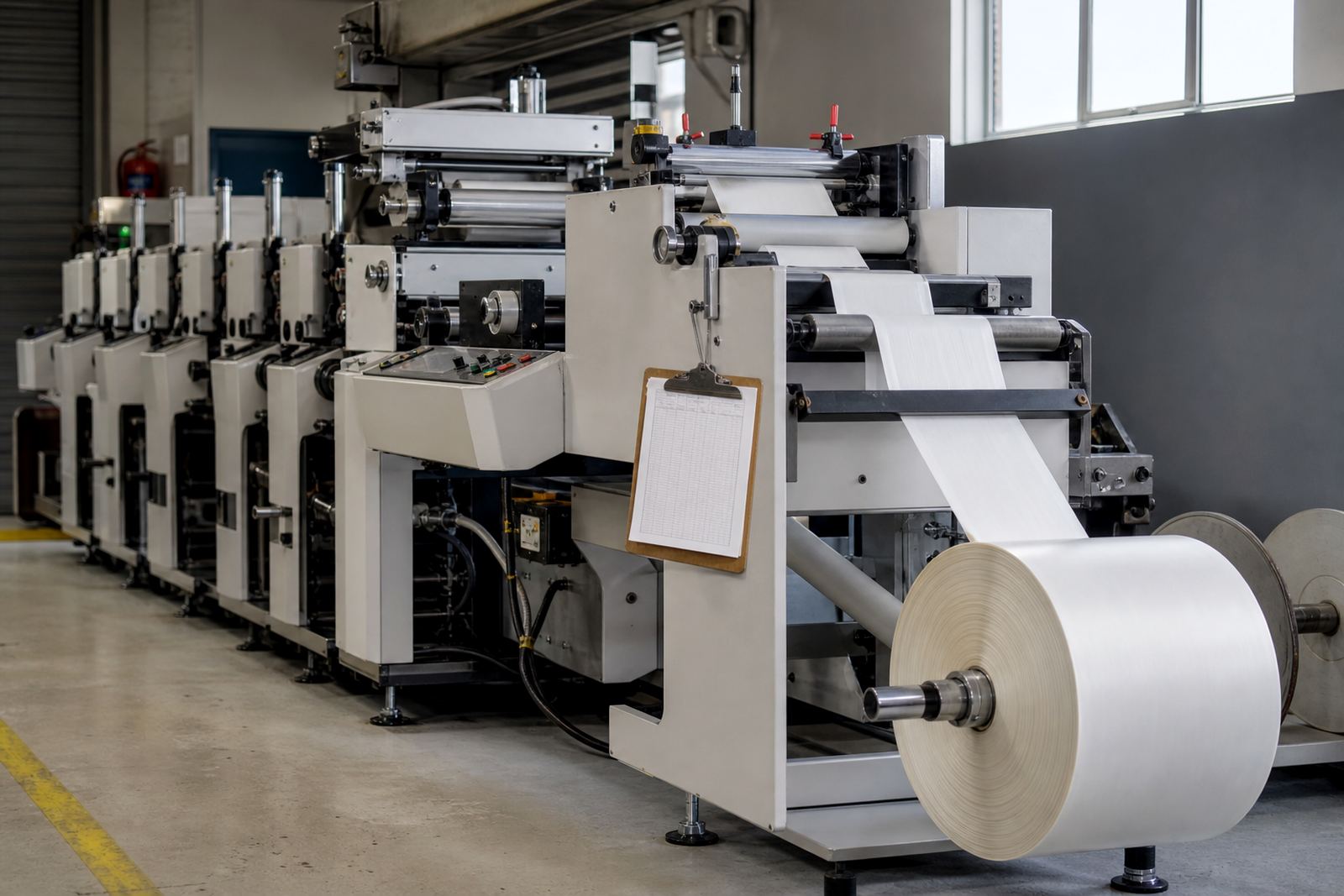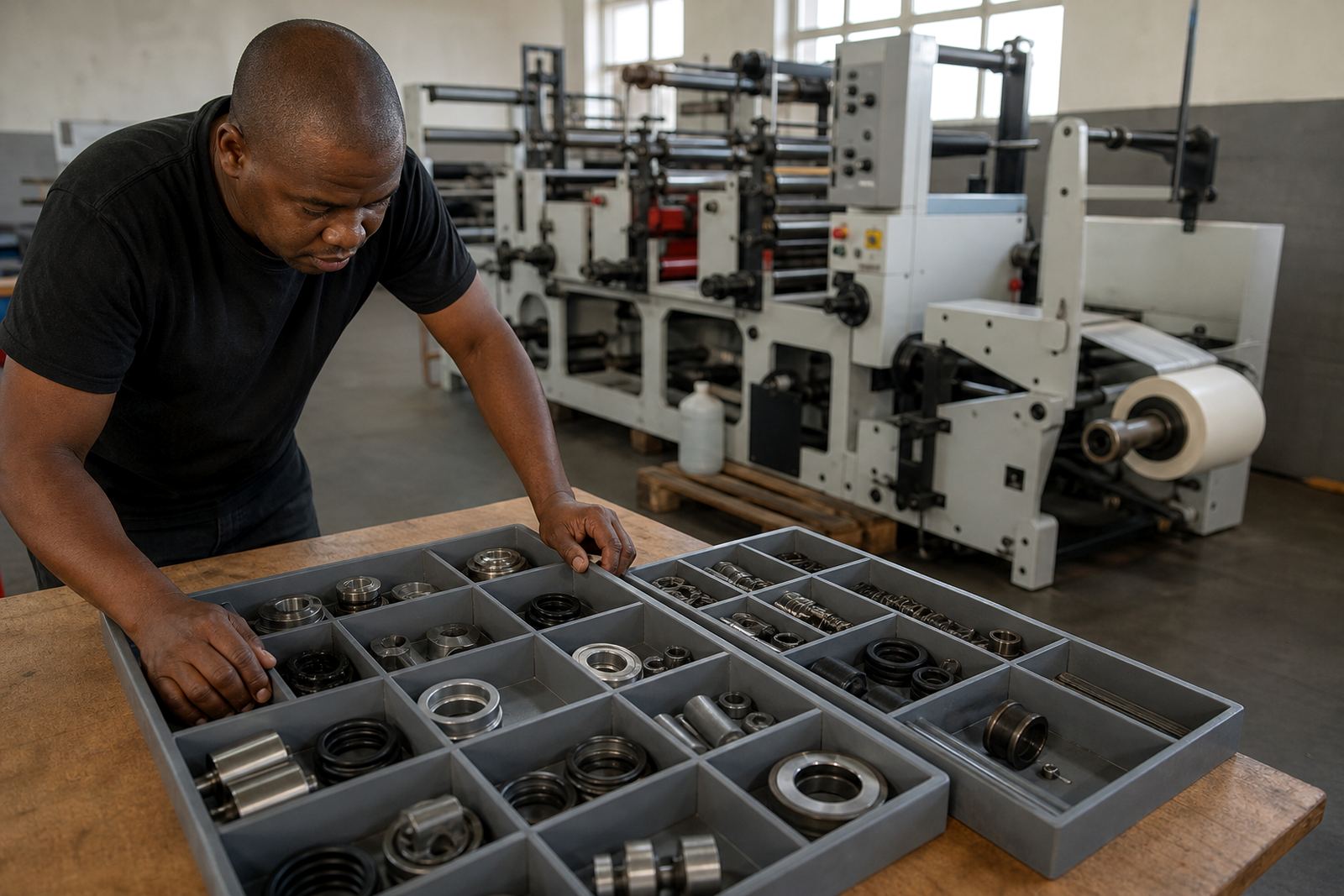
Start with the parts that stop production first
When building a starter stock, begin with the items that can halt a job in minutes. On a narrow-web flexo line, that usually means wear items, small electrical parts, and components that take time to source from the right supplier. In Kempton Park and other busy print areas, a small delay can push a customer order into the next shift, so the aim is not to overbuy, but to keep the press running when a common failure happens.
Look at the parts that are used during setup, cleaning, daily running and finishing. If a part is adjusted often, exposed to ink or solvent, or fitted and removed during changeovers, it deserves a place on the shelf. Keep a simple record of what has failed before, what took the longest to replace, and what caused the most downtime.
- Parts that wear during regular operation
- Small electrical items that are easy to replace on site
- Consumables used during setup, cleaning and changeover
- Items that affect registration, web handling or finishing
Build a starter list by press area
A useful spares list is easier to manage when it follows the machine layout. Group items by the part of the press they support, rather than storing everything in one mixed box. That way the operator or technician can find what is needed fast, even during load-shedding or after hours work.
For many converters, the list starts with parts for infeed and web guiding, print stations, drying or curing units where fitted, rewind and finishing sections, and the control side of the machine. If you run multiple widths or several jobs a day, keep extra care around the parts that take more handling. The goal is not to keep a full workshop inventory, but a sensible starter stock that matches your actual production mix.
- Web path and tension control items
- Print station wear parts and seals
- Drying, curing or airflow components where fitted
- Rewind, slitting and finishing spares
- Control panel consumables and signal parts
Check what your jobs and substrate mix put under pressure
Not every label plant needs the same stock. A converter running short labels for food and beverage will put different pressure on the press than a plant doing cosmetics, retail or industrial labels. Substrate type, adhesive build-up, washdown routines and changeover frequency all affect which parts need attention most often.
If you work in coastal areas like Durban or Gqeberha, humidity can influence storage and wear. Inland, dust and temperature swings can create different issues. Keep spares in a clean, dry place and protect sensitive items from moisture, sunlight and contamination. A part that sits correctly in a sealed box is far more useful than one that rusts or picks up dirt before it is needed.
Do not forget the finishing side. Slitting, die-cutting, inspection and rewinding all need their own small set of replacement items. A neat print is only half the job if the finishing section cannot keep pace.
Keep a sensible minimum and reorder point
A good starter stock needs rules. Pick a minimum level for each part, then choose a reorder point before you run out. This is especially useful when lead times vary or the part has to be matched carefully to a specific press setup. If a part is only used once in a while, one spare may be enough. If it is used every week, you may need a small working stock.
The best method is simple: note what the part costs, how long it takes to arrive, and how much downtime it causes when missing. That gives you a practical view of whether to hold one, two or more units. Do not tie up too much cash in slow-moving stock, but do not cut it so fine that a breakdown leaves you waiting on the next delivery.
- Set a minimum stock level for each part
- Choose a reorder point before the last unit is used
- Review stock after major changeovers or maintenance
- Separate fast-moving items from slow-moving items
Store, label and track spares properly
Even a good spare part becomes a problem if it cannot be identified quickly. Store parts in clearly marked containers and keep the press model, section and part name on the label. Where there are left and right hand versions, or size differences between machines, make that clear. A neat shelf system saves time and avoids mistakes when the team is under pressure.
Use a simple stock sheet or digital record to track what came in, what was fitted, and what should be reordered. Include the date received, date used, and the machine it was fitted to. This helps with warranty questions, service planning and future buying decisions. If the same part keeps failing, that is a sign to inspect the setup or operating conditions, not just replace the part again.
Use service support to refine the list over time
A starter list should never stay fixed. As your press load changes, the stock should change with it. After a new installation, during operator training, or following preventive maintenance, review the parts that were touched most often. A technician can help you decide what is worth keeping on site and what can be ordered only when needed.
At Flexography Printer, we support label converters across South Africa with press installation, commissioning, operator training, startup production support, preventive maintenance, breakdown support and spare parts support. That makes it easier to build a list that fits your exact press setup, your finishing line and your production schedule. If you want a practical spares plan for your site in Kempton Park, Johannesburg, Pretoria, Durban, Cape Town or Gqeberha, send an enquiry through the contact page and we will work through it with you.