
Start With A Site Utility Walkthrough
Before installation day, walk the plant and map where the press will sit, where the compressor lives, and how cables and air lines will run. In Spartan, Kempton Park and other industrial areas, the practical issues are often not the press itself but the route to get stable services to it. Leave enough space for access panels, maintenance work, and safe movement of reels, plates and finishing materials.
Check the incoming electrical supply, the main isolation point, and whether the site has enough capacity for the press and any support equipment. If the building also runs finishing units, compressors, extraction, lighting and office loads from the same board, the supply can become tight very quickly. The aim is to understand the whole picture before commissioning starts, not after the first alarm sounds.
- Confirm the available supply voltage and phase arrangement with the landlord or electrician.
- Identify the main distribution board and the isolation point for the press bay.
- Measure the route for power cables and air lines, including doorways and overhead runs.
- Check floor condition, clearance, and whether the area stays dry during rain or wash-downs.
- Note any existing machines that may cause voltage dips when starting up.
Plan Power For The Press And Support Equipment
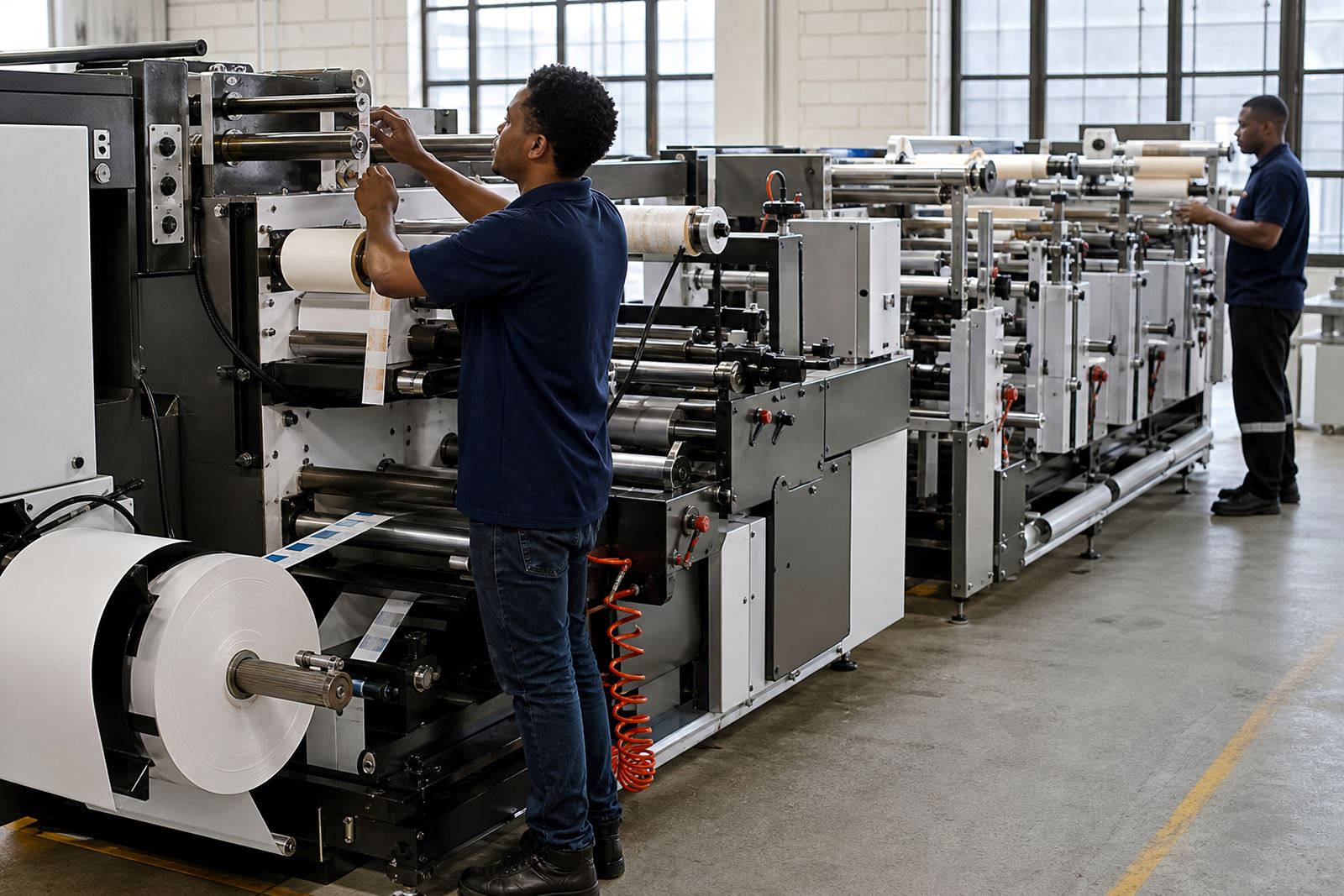
Narrow-web flexo label presses need steady power for consistent setup, registration and production. The press itself is only part of the load. Add any ancillary items such as air handling, vacuum systems, drying or curing equipment where applicable, and the board can be under pressure if it was never sized for a print room.
A proper plan should include a qualified electrician who understands industrial equipment and local compliance requirements. In South Africa, many sites have had changes over time, so old wiring, undersized breakers or improvised extensions are common problems. These can cause nuisance tripping, warm terminals or voltage drop, especially when production starts early and the site is already carrying other loads.
Where possible, give the press its own protected supply path. If the site shares power with heavy machinery, ask whether load separation is possible. That small step can save time during startup and make fault-finding much simpler later on.
- Use a dedicated circuit where practical, sized by a competent electrician.
- Check that protection devices match the load and cable length.
- Keep cable runs neat, labelled and protected from pallet movement.
- Allow for future accessories or finishing equipment that may be added later.
- Test for voltage stability before running full production shifts.
Keep Production Moving During Load-Shedding
Load-shedding changes the way a plant should think about utility planning. A press that comes back on to unstable power can lose setup time, and the restart can interrupt registration, drying or finishing steps. Even a short outage may mean wasted material if the line is in the middle of a changeover.
The first decision is whether the site will use backup power, controlled shutdown procedures, or both. A generator or other backup source must be matched to the real load, not a guess. If the supply is too small, operators may have to choose what stays on and what must wait. That is manageable if it is planned, but troublesome if everyone is reacting under pressure.
Also consider the return-to-production routine. After an outage, operators should have a simple checklist for restarting systems in the right order. This reduces unnecessary wear and helps avoid sudden faults that look like machine problems but are actually supply issues.
- Write a shutdown and restart sequence for planned outages.
- Decide which systems are essential and which can remain off during backup operation.
- Check whether the backup supply handles starting current, not just running load.
- Keep a torch, basic tools and fault record sheets near the press bay.
- Train operators to report recurring dips, resets or alarm patterns immediately.
Set Up Compressed Air The Right Way
Compressed air is often treated as a minor utility, but on a label press it can affect control, consistency and day-to-day reliability. If the air is wet, dirty or unstable, operators will notice it in cylinders, valves and other moving parts. In coastal towns such as Durban or Gqeberha, moisture control matters even more because humidity can work against the system throughout the year.
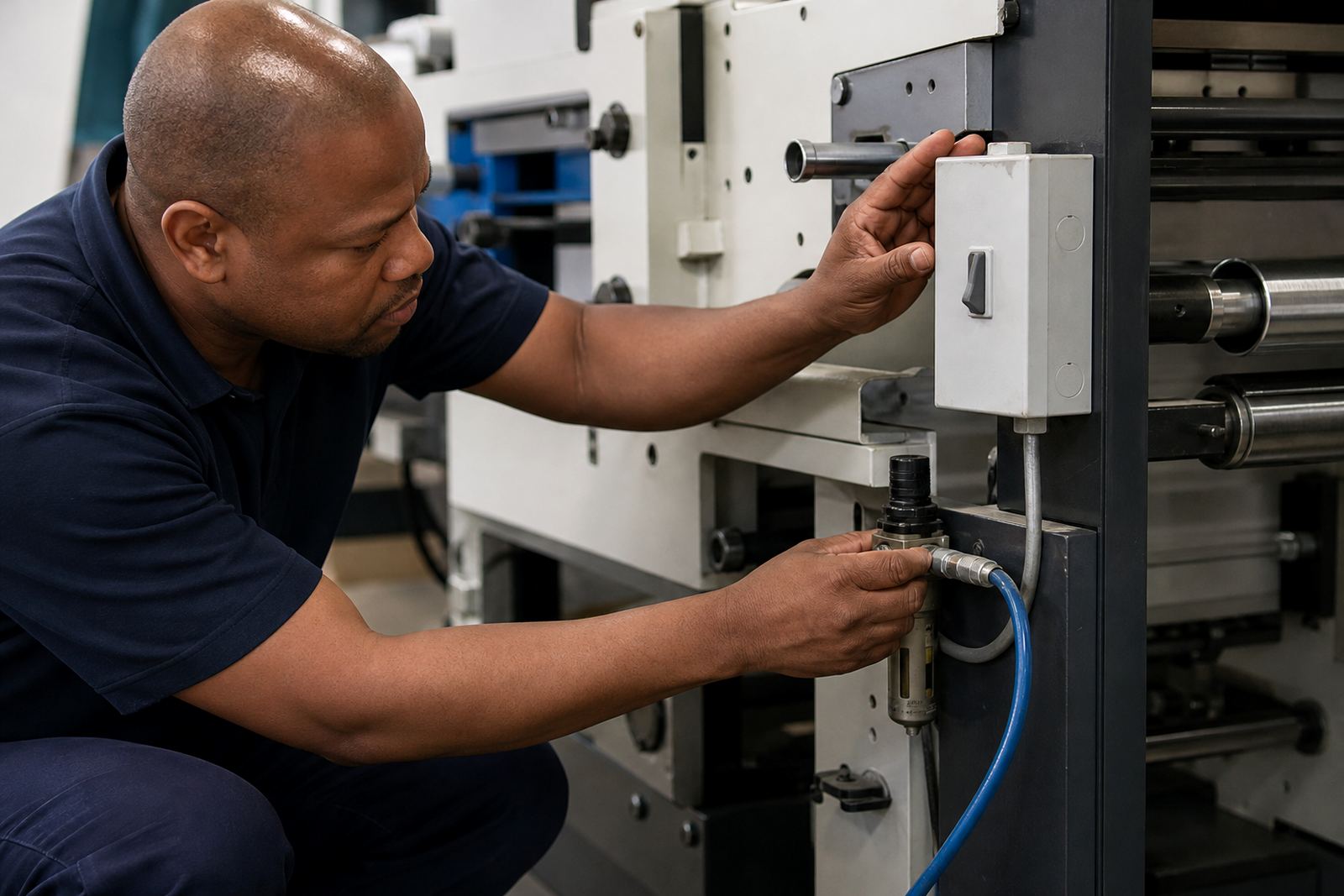
The air supply should be sized for the equipment and routed so that pressure does not fall away at the machine. Long, thin or badly joined lines can create problems that show up only when the press is running at speed. If the compressor is placed far from the press, allow for proper line sizing, drainage points and filtration as required.
Do not overlook routine draining and maintenance. A good air system is not only about the compressor itself, it is about dry air, clean lines and stable pressure at the point of use.
- Fit filtration and moisture control suited to the site conditions.
- Drain receivers and low points regularly, especially in humid areas.
- Keep air lines short where possible and support them properly.
- Check for leaks at joints, couplings and valves before production starts.
- Record pressure readings during startup and compare them over time.
Check The Press Bay Before Installation Day
A neat press bay makes installation faster and safer. The floor should be level enough for positioning and maintenance, with clear routes for delivery, movement and emergency access. If the site is in a building with strict body corporate rules or municipal requirements, confirm what work hours, noise limits or service interruptions are allowed before anything is moved in.
Lighting also matters. Poor light slows down setup, plate mounting, cleaning and inspection work. Add that to cables, hoses and pallets in the same area and the risk of a small trip hazard becomes a daily issue. Keep the bay organised from the start, because a busy label room rarely gets less busy later on.
A final point is housekeeping. Dust, ink residues and offcut material should not sit near power points or air lines. Clean conditions help the equipment, but they also help the team work steadily through long shifts, including those awkward nights when the schedule runs after a load-shedding break.
- Confirm floor space for installation, operation and service access.
- Provide clear walkways and no-storage zones around the machine.
- Check lighting, ventilation and general cleanliness before handover.
- Make sure the bay has safe access to the main isolator and emergency stops.
- Agree on who is responsible for site preparation and who signs it off.
Use Training And Preventive Checks To Protect Uptime
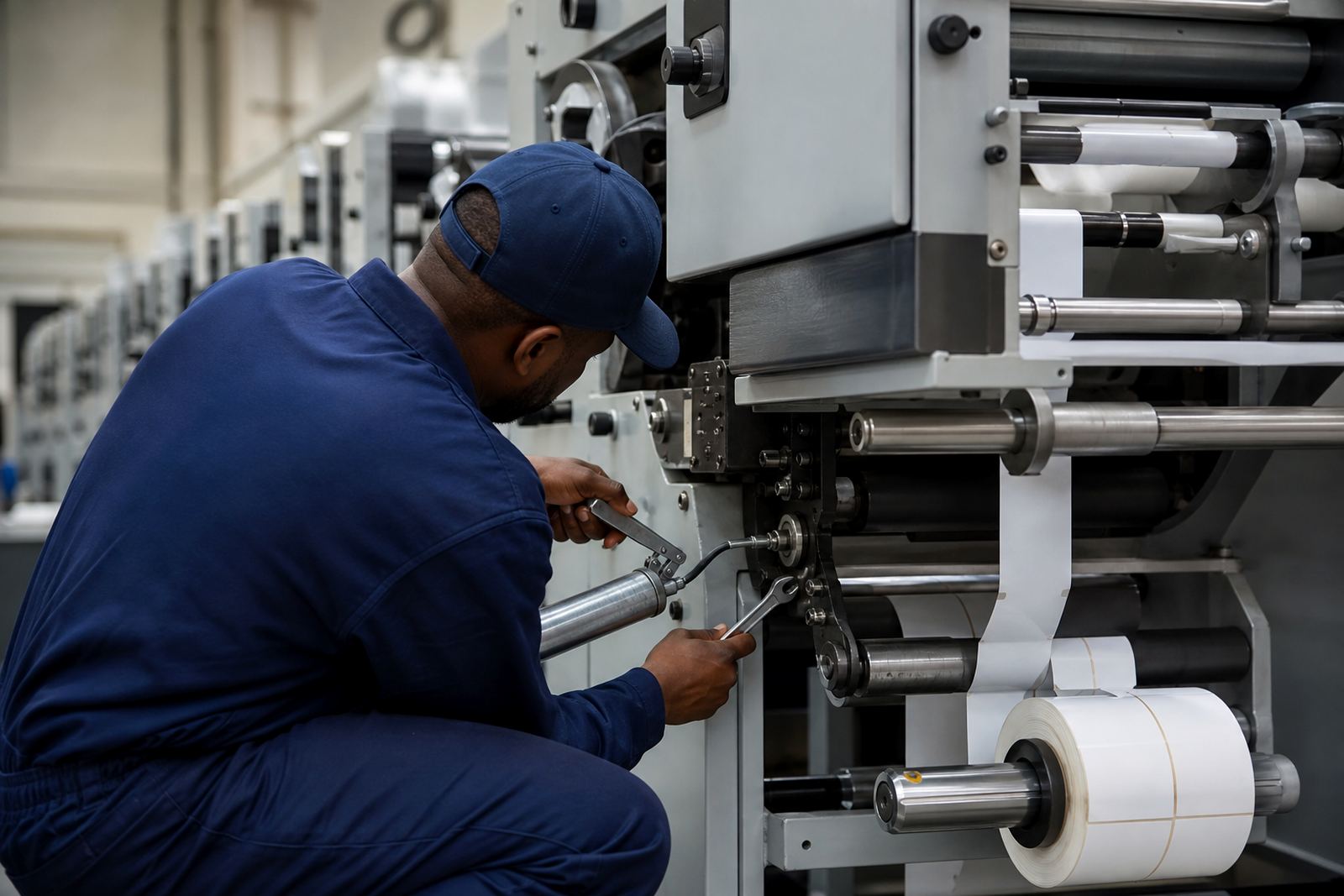
Utility planning does not end once the press is running. Operators and maintenance staff need to know what normal power and air behaviour looks like so they can spot trouble early. A loose terminal, blocked filter or draining issue may begin as a small nuisance and end as a lost shift if nobody notices it in time.
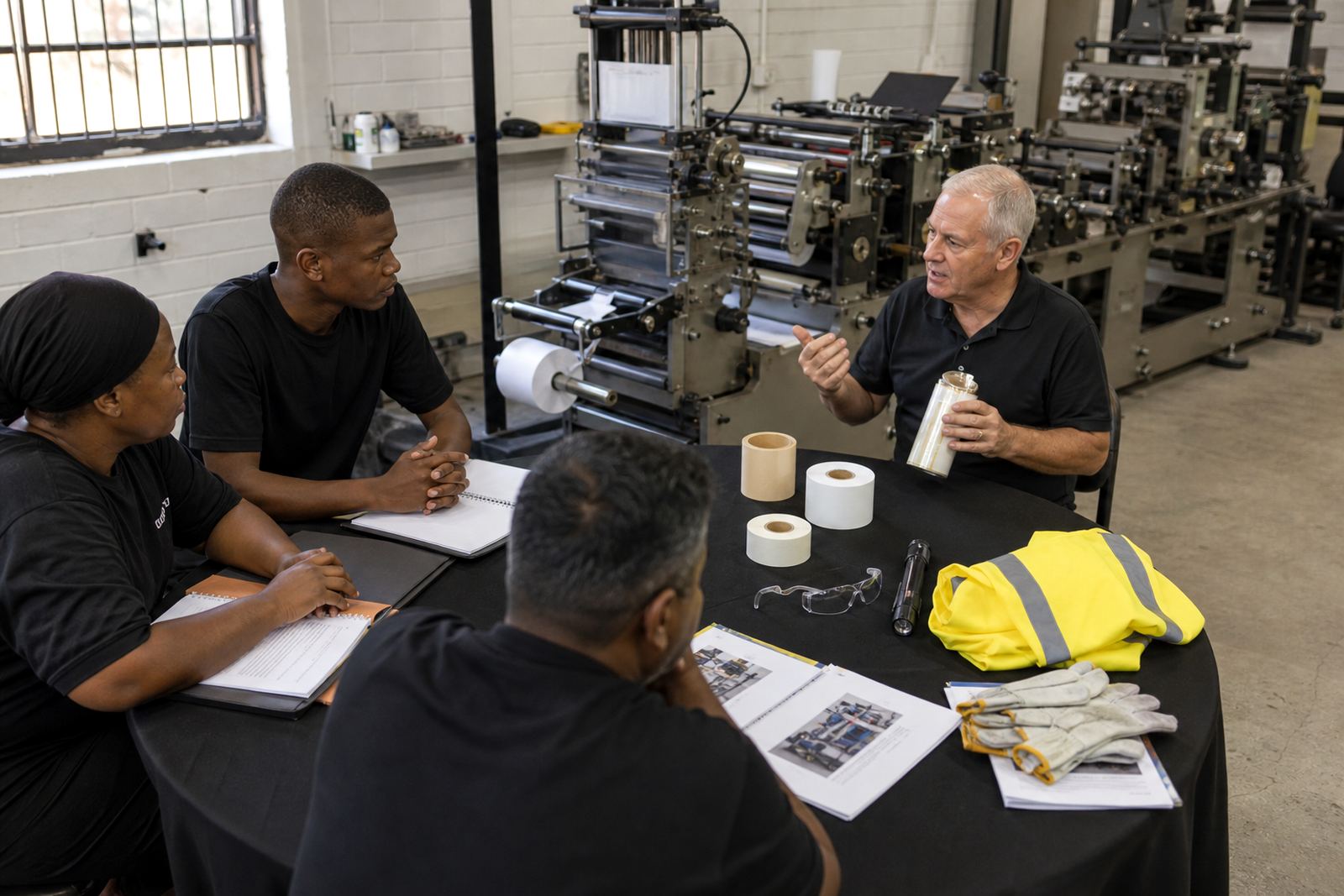
During operator training, build in practical checks that fit the site. That includes verifying air pressure, checking for warning lights, confirming startup sequence, and knowing when to call for support rather than pushing on through a fault. Good habits are just as important as the machine settings. They keep the line steadier and make preventive maintenance more useful.
For sites across Johannesburg, Pretoria, Durban, Cape Town and beyond, the same principle applies: treat utilities as part of production, not a side issue. When the air is dry, the power is stable and the bay is prepared, the press can settle into regular work with fewer interruptions and less waste.