1. Start With the Press, the Product and the Shift Pattern
Begin by matching training to the press line, the labels being printed and the way the plant actually runs day to day. A converter in Kempton Park working on short food label runs will need a different focus from a site in Durban handling high humidity, long production days and frequent changeovers. The aim is not general theory, but practical skill on the exact tasks your team performs.
Map the whole workflow before training starts. That includes reel loading, web path checks, plate mounting, ink handling, drying, rewind, inspection and finishing. If the site runs nights or uses split shifts, build the plan around that. Training should also reflect load-shedding procedures, power restoration checks and the way the team secures work in progress when a run stops unexpectedly.
- List the common label sizes and substrates used on site.
- Note which shifts need full training and which need refreshers only.
- Identify any local risks such as humidity, dust or unstable power supply.
- Confirm who signs off on each stage of training.
2. Train Operators in the Right Order
Operators need a step by step path that starts with safe machine handling and ends with stable production. Do not begin with advanced fault finding before the team can load a reel, set web tension and confirm registration. For most sites, it helps to group the learning into setup, running, quality checks and shutdown. That makes it easier for new staff to remember what to do under pressure.
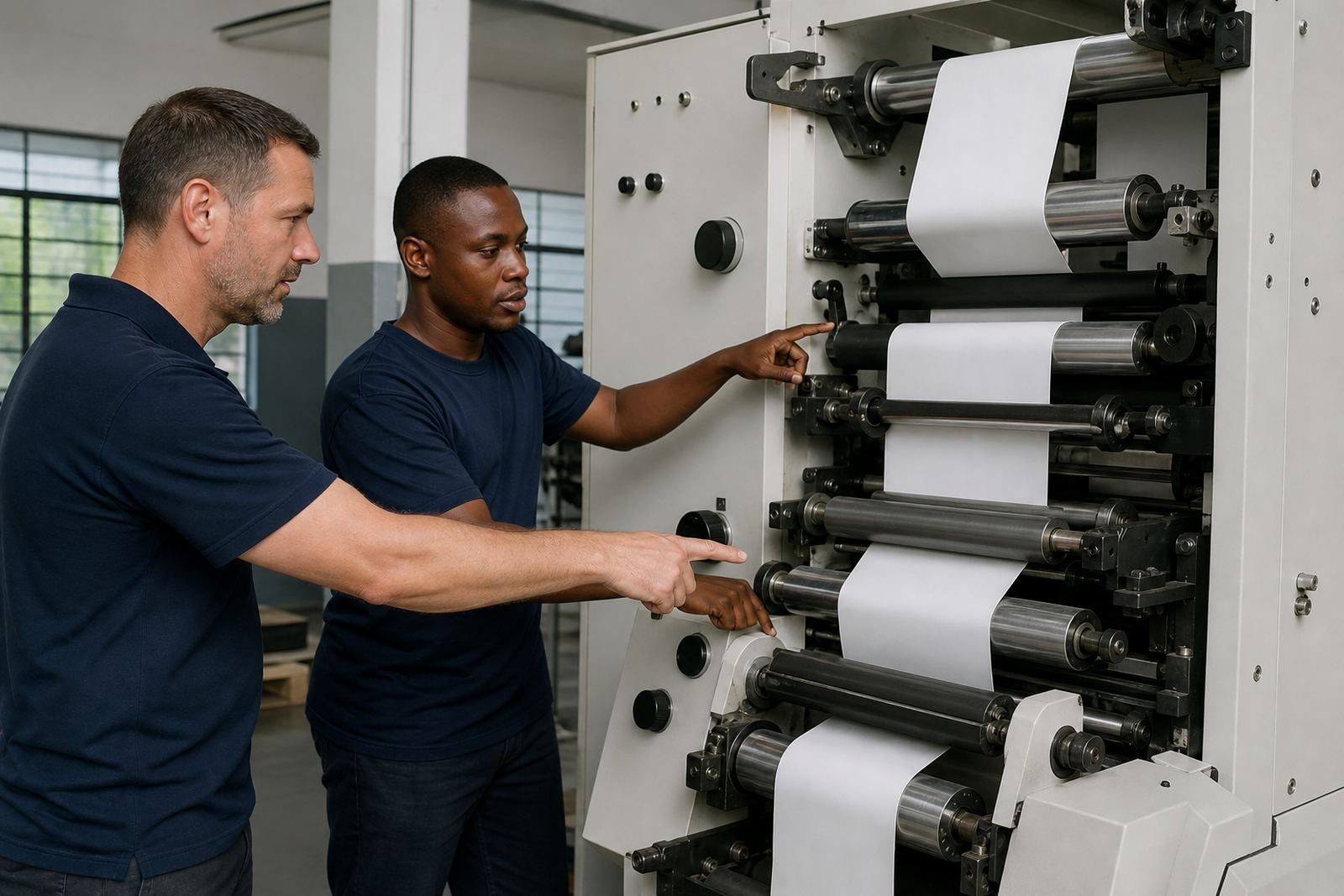
Use live demonstrations where possible, then let each operator repeat the task under supervision. Keep written notes beside the machine and keep them short. If the team works with narrow-web flexo presses for labels, focus on the small details that affect print consistency such as ink viscosity, doctoring, plate alignment and drying behaviour. A clear operator who can spot a problem early will save material and reduce stoppages.
- Safe start-up and shutdown sequence.
- Web threading, tension control and guide settings.
- Plate mounting, register adjustment and colour checks.
- Basic fault spotting for smears, misregister and drying issues.
3. Give Supervisors a Different Layer of Training
Supervisors need more than machine operation. They should know how to plan the shift, assign tasks, track waste and decide when to stop a run for correction. They also need to understand the limits of the equipment so they can make practical decisions during busy periods. This part of the plan should cover production control, communication and record keeping.
Good supervisors keep the team calm during changeovers and can see when a small issue may become a bigger one. They should know how to read the press logs, compare output to target and check that the correct plates, inks and finishing tools are in place before the run starts. They should also know when to call technical support rather than trying to push through a fault that could damage the press or the job.
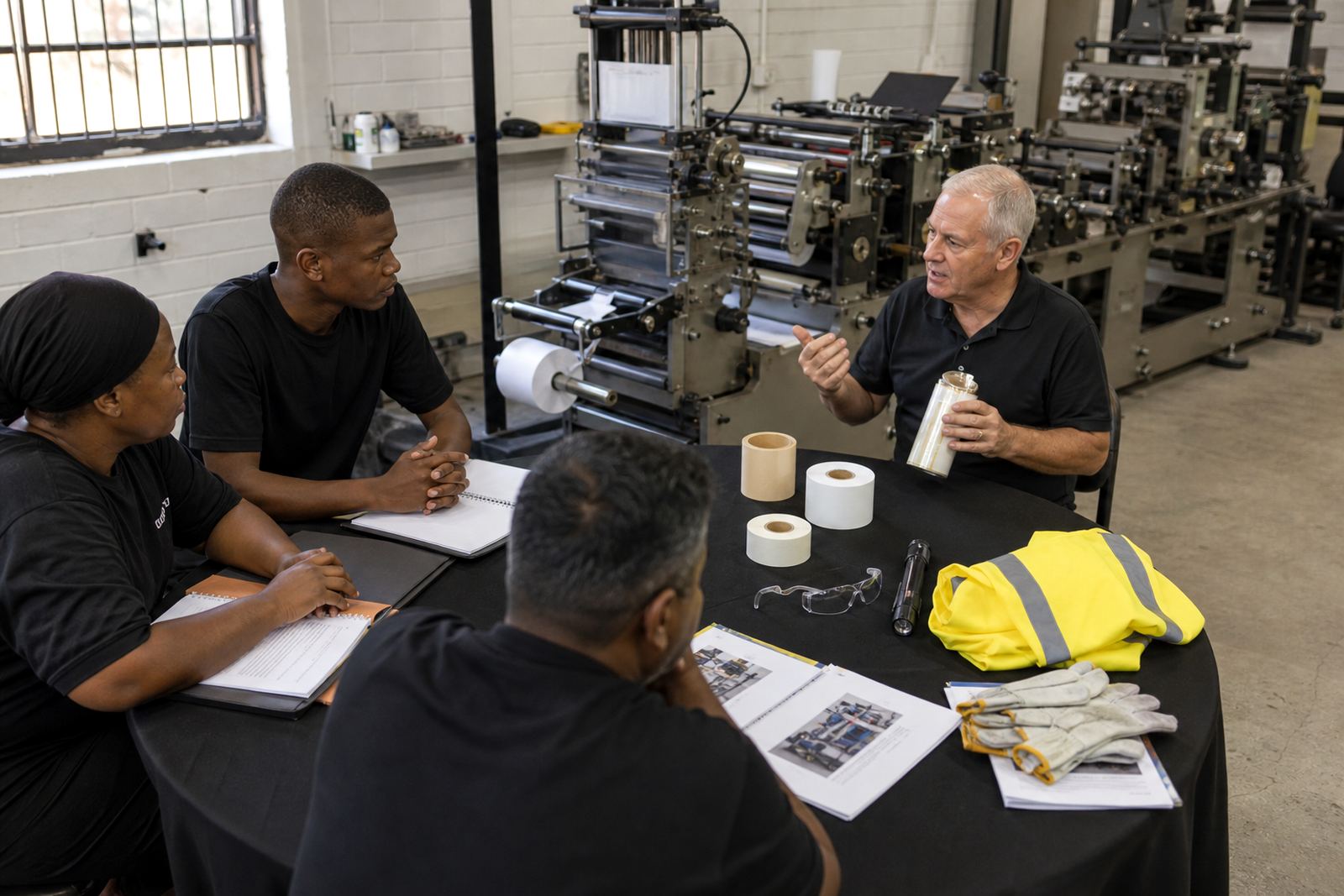
Include brief scenario drills. For example, what happens if registration drifts halfway through a run, or if a drying unit is not performing after a power cut? These discussions help supervisors build practical judgement without waiting for a real production loss.
4. Include Support Staff in the Plan, Not Just the Press Crew
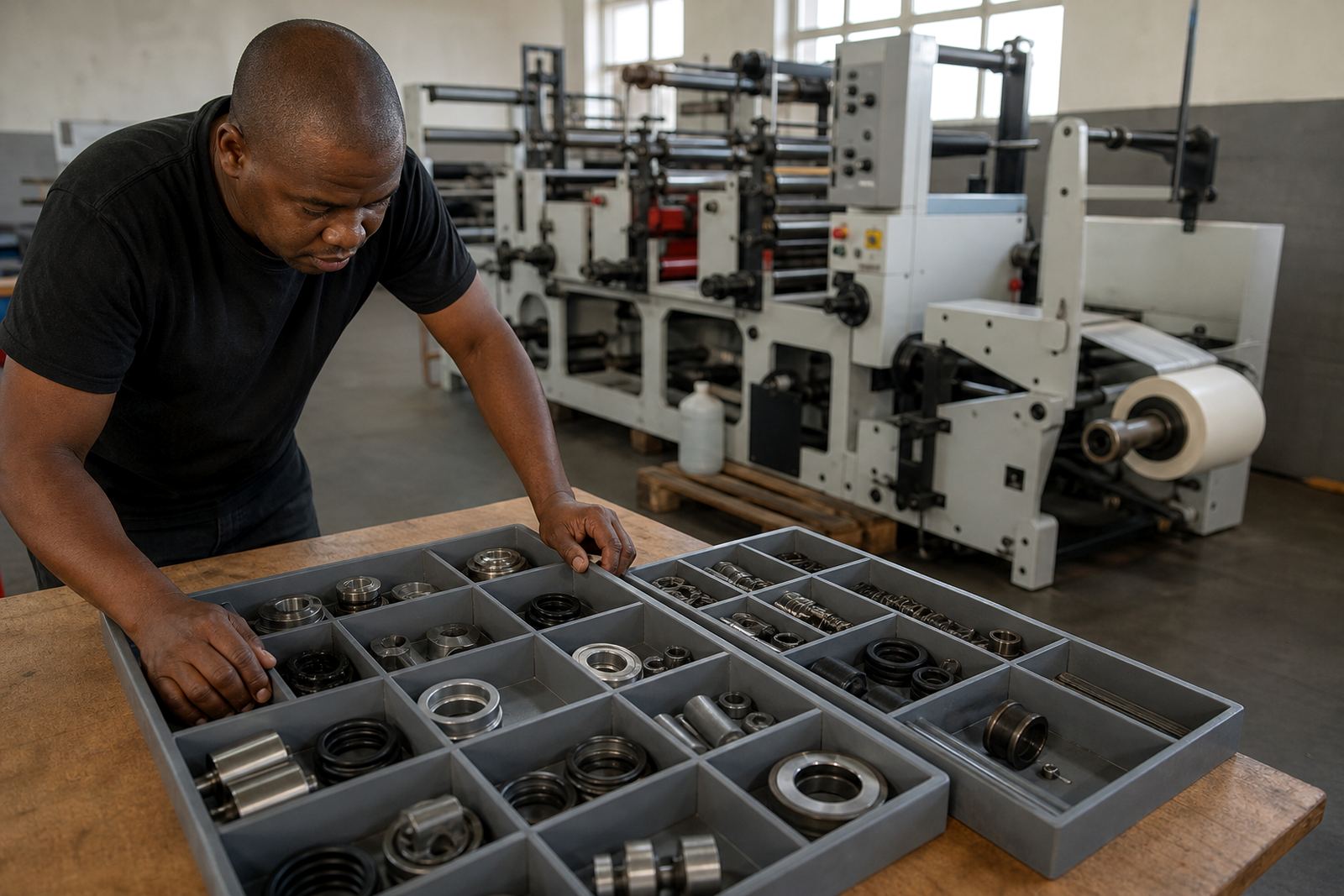
Support staff often make the difference between a smooth restart and a long delay. Maintenance personnel, stores staff and production planners need enough knowledge to support the press team correctly. If the wrong plates, sleeves or spare parts are issued, the whole shift can fall behind. A training plan that includes support staff will reduce avoidable downtime and keep the job moving.
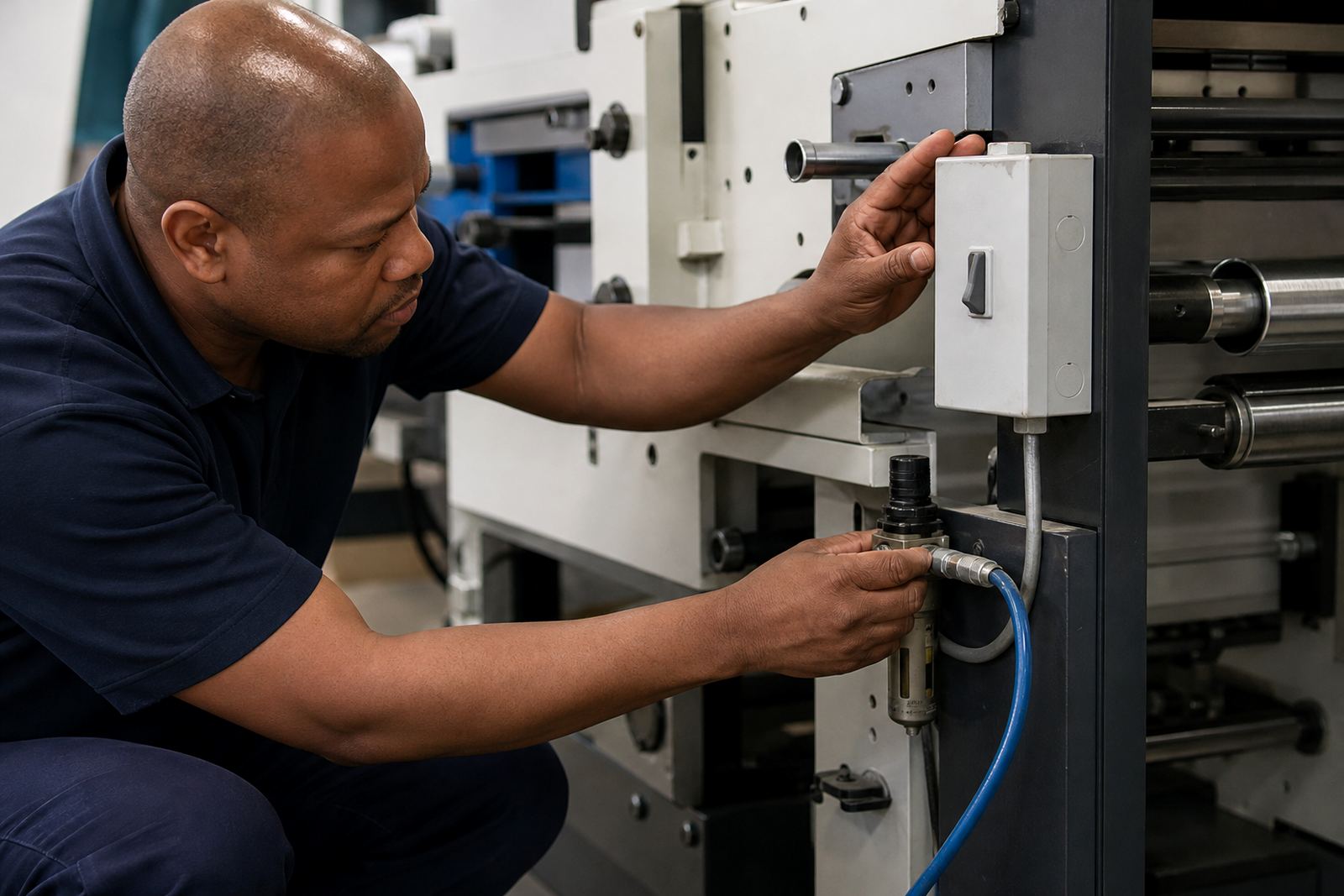
Support training should cover stock handling, basic inspection of wear items, safe storage of consumables and the correct way to record faults. Staff should know what to check before a technician arrives, how to isolate the machine safely and how to protect partially printed stock from dust, moisture or damage. In coastal areas like Cape Town and Gqeberha, this matters even more because humidity can affect materials and finished reels left too long in the wrong conditions.
- Identify the spares that must always be on hand.
- Show staff how to log faults clearly and quickly.
- Teach safe isolation and handover procedures.
- Explain how to store inks, plates and tooling correctly.
5. Build Finishing and Quality Checks Into the Training
Many problems only show up after the print is finished, so finishing setup and inspection must be part of the training plan from the beginning. Operators should understand how die cutting, slitting, rewinding and inspection affect the final label. If finishing is rushed, a good print job can still leave the press in poor shape for the customer. That is why quality checks should be built into each stage, not left to the end.
Train the team to check edge quality, roll build, adhesive behaviour and repeat accuracy. They should also know how to spot issues that may not show on the press but appear during packing or application. For food, cosmetics and retail labels, small faults can cause returns or delays at packing lines. Keep the checks simple, repeatable and written in the same order every time so the team can use them under pressure.
A useful rule is to check early, check often and record everything that changes. If a setup adjustment is made on the press, it should be noted before the run continues. That makes later troubleshooting faster and less guesswork is needed.
6. Sign Off, Refresh and Keep the Training Current
Training should end with sign-off, not just attendance. Each operator supervisor and support person should be assessed on the tasks they are expected to perform. Keep the sign-off practical, using the same equipment and job types that the site handles every week. Once the team is signed off, set review dates so skills do not fade after a busy season or staff change.
Refreshers are important after new press installation, a major service, a repeat fault or a long shutdown. They are also useful when the business adds a new substrate, changes the finishing method or brings in a new shift. In South African plants, load-shedding, staff rotation and seasonal humidity all make refresher training worthwhile. A short session at the right time is better than a long one after waste has already built up.
Keep training records in one place and review them during maintenance planning. That way you can see who needs extra help, which stations cause delays and where a quick refresher will improve output. Over time, the plan becomes part of the site routine rather than a once-off exercise.