Start With the Product and the End Use
Begin with what the label must do on the shelf, in storage and during transport. A label for chilled food, for example, faces a different job from one used on household goods, cosmetics or warehouse items. Some packs need a label that stays in place through condensation, while others need a clean finish for premium retail presentation.
Think through the full journey before selecting material. The pack may pass through filling, sleeving, carton packing, storage in a cold room, long-distance transport and shelf display. If the label must stay readable after all that, substrate choice matters as much as the print quality itself.
- Check if the pack is dry, chilled, frozen or exposed to moisture.
- Decide whether the label must stay on for the full life of the pack or peel off cleanly.
- Match the substrate to the surface, such as glass, plastic, laminated board or metal.
- Confirm whether the product will sit in sunlight, refrigeration or humid storage.
Match the Substrate to the Surface and Adhesive
Not every face material behaves the same way on every surface. A label that works well on a flat carton may lift on a curved bottle, while a material that performs well on a dry container may fail on an oily or textured surface. The adhesive has to work with the substrate and the application method, not against it.
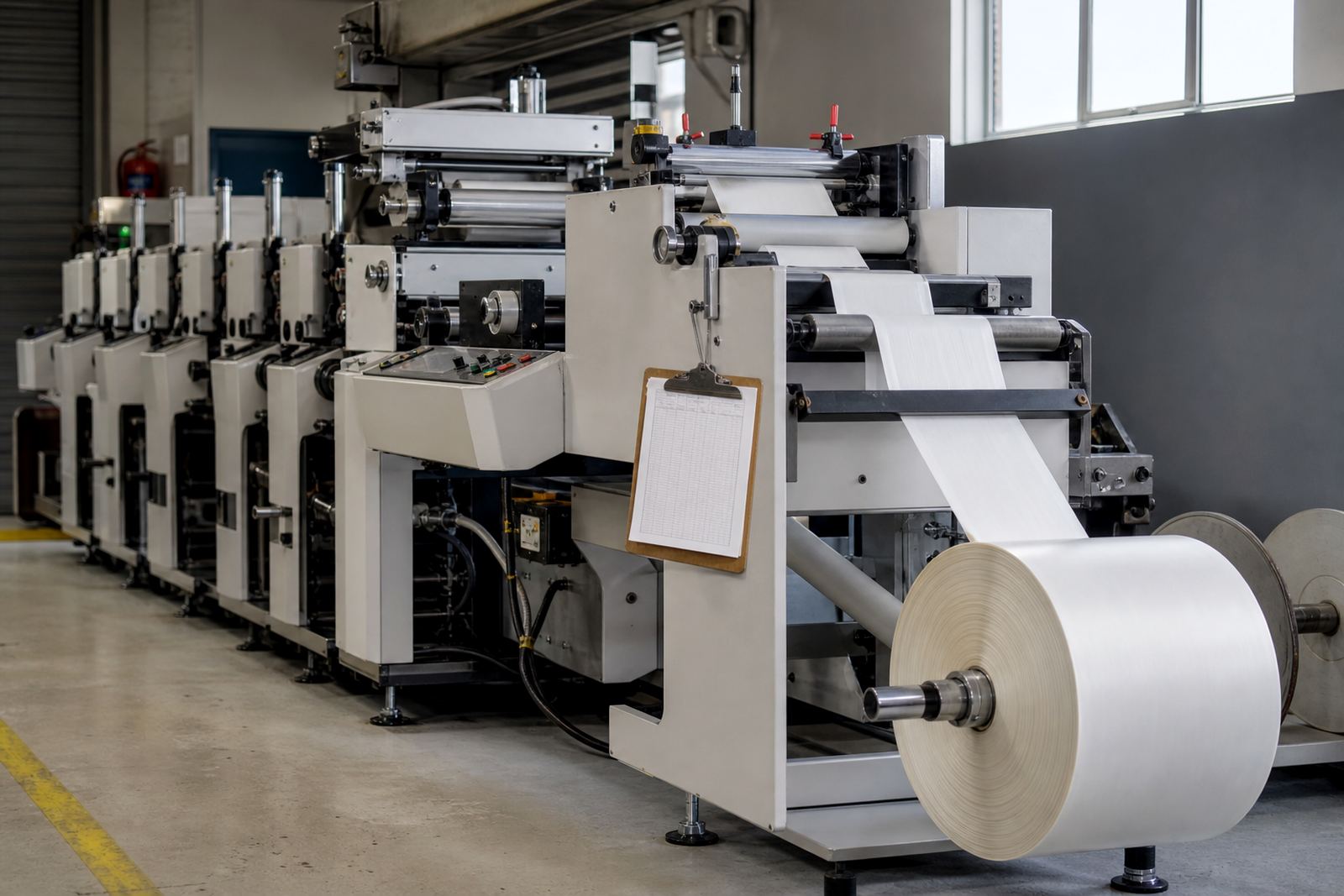
For narrow-web flexo work, a clean, stable roll structure helps with register, cutting and waste control. If the backing liner, face stock and adhesive are not suited to the job, setup becomes harder and print finishing can become inconsistent. This is especially important when labels are applied at speed or when the pack shape changes across a range.
- Use test rolls on the actual pack before full production.
- Check adhesion after 24 hours, not only straight after application.
- Allow for dust, oil, moisture and chilled surfaces during packing.
- Keep note of any label edge lift, tunnelling or stretching during application.
Choose Materials That Suit Print and Finishing
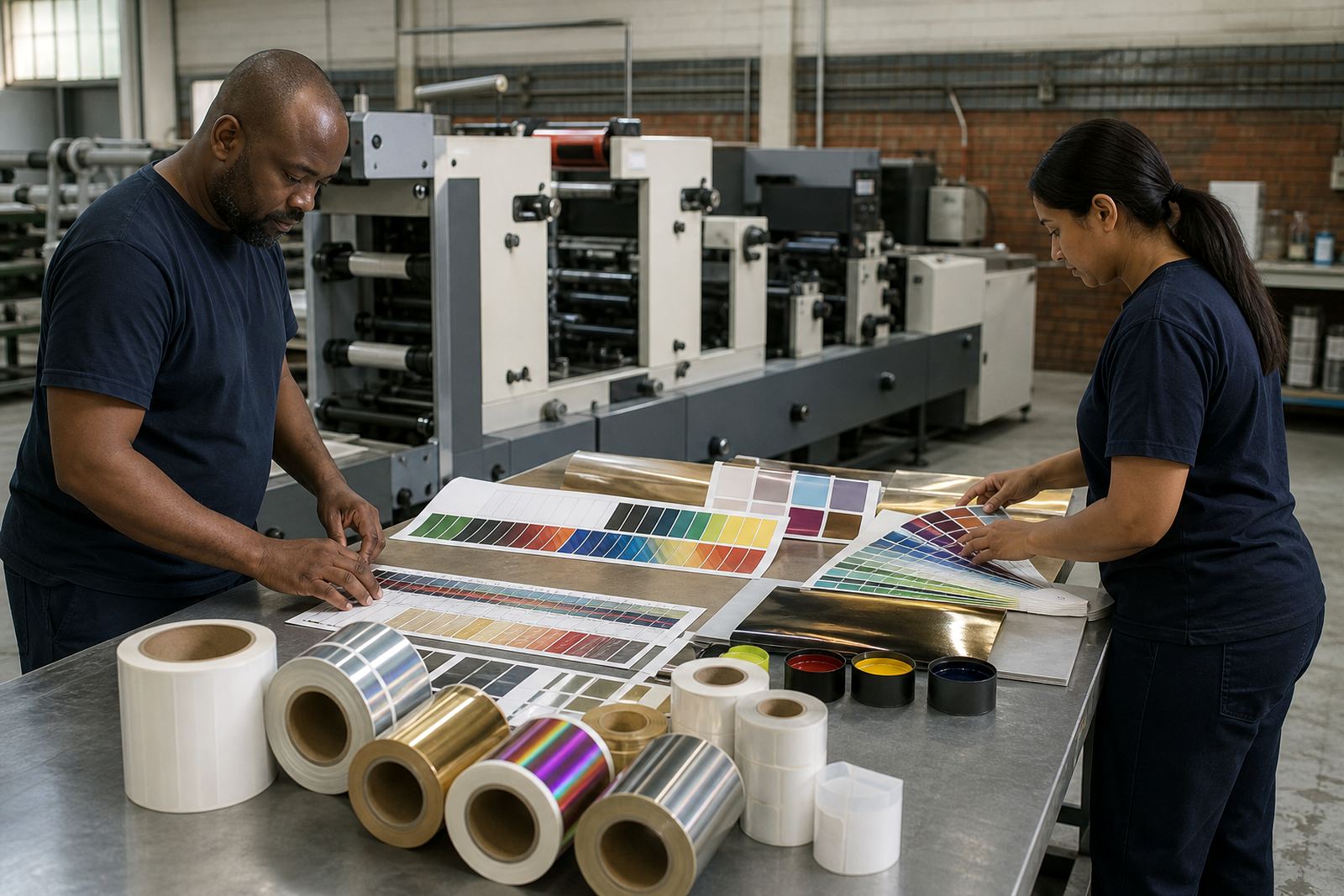
Different substrates respond differently to ink laydown, drying and finishing. Some materials give a crisp, bright result for retail labels, while others are better for practical information, barcodes or variable data. If a job needs varnish, foiling, lamination or die-cut detail, the base material must hold its shape through each stage.
For converters working in Gauteng, Durban or Cape Town, ambient conditions can also affect handling. Coastal humidity can change how materials behave, while dry inland conditions may affect static and web control. A material that looks fine in a sample run can behave differently once it is running on the press for a full shift, so it is worth checking the finishing plan before production starts.
- Confirm whether the label needs a matte, gloss or natural look.
- Check if the print must support overprinting, batch coding or barcodes.
- Make sure the substrate can take the chosen finish without warping.
- Ask whether the label will need extra scuff resistance or moisture protection.
Practical Steps for Food, Beverage and Retail Labels
Food and beverage labels often need a balance of appearance, compliance and resistance to handling. Some packs sit in a cold chain, some are washed down during production, and some spend time near hot filling or on shelves under strong light. Retail labels may need a different feel again, especially where colour and shelf impact matter.
A good starting point is to separate the label into three needs: appearance, performance and application. If one of those is weak, the whole job can suffer. A premium looking label that peels in the chiller is just as much of a problem as a durable label that prints poorly or slows down line speed.
- For chilled or frozen goods, test moisture resistance and edge stability.
- For retail packs, check colour consistency and finish under store lighting.
- For squeeze bottles or curved containers, test flexibility and wrap performance.
- For short runs, confirm setup time and waste levels before selecting the final stock.
Industrial, Household and Logistics Applications
Industrial and logistics labels usually need a different balance from consumer packs. They may need to carry part numbers, warnings, serial information or tracking data, and the main concern is often legibility rather than decoration. The label may also face abrasion, solvent contact or rough handling in transit.
Household and warehouse labels should be selected with the real working environment in mind. In many cases, the label needs to stay readable after stacking, pallet wrap, dust and repeated movement. If the pack goes through long storage periods or is moved between depots in Johannesburg, Pretoria, Durban or Gqeberha, the material has to cope with those conditions without curling or fading.
- Use a substrate that supports clear text and sharp barcodes.
- Allow for scuffing where cartons rub together in transport.
- Consider whether the label will be exposed to cleaning chemicals.
- Keep batch and traceability details readable for the full supply chain.
Use a Simple Selection Checklist Before Press Setup
Before the job is released, it helps to run through a short checklist with the customer or production team. That avoids delays at setup and reduces changes once the roll is on press. It also helps with spare parts planning, finishing setup and operator training if the same substrate will be used again.
At Flexography Printer in Spartan, Kempton Park, substrate selection is usually tied to the full production plan, from press installation and commissioning through to startup support and maintenance. A clear material choice makes it easier to keep production steady, whether the job is running in the East Rand or sent to another province. It also reduces guesswork when the job needs repeat orders later on.
- What is the pack made from and where will it be used?
- Will the label face moisture, heat, cold or rough handling?
- Does the label need a premium finish or a purely functional result?
- Has the material been tested on the actual container or carton?
- Are the press, adhesive and finishing steps matched to the chosen stock?
When to Ask for Technical Support
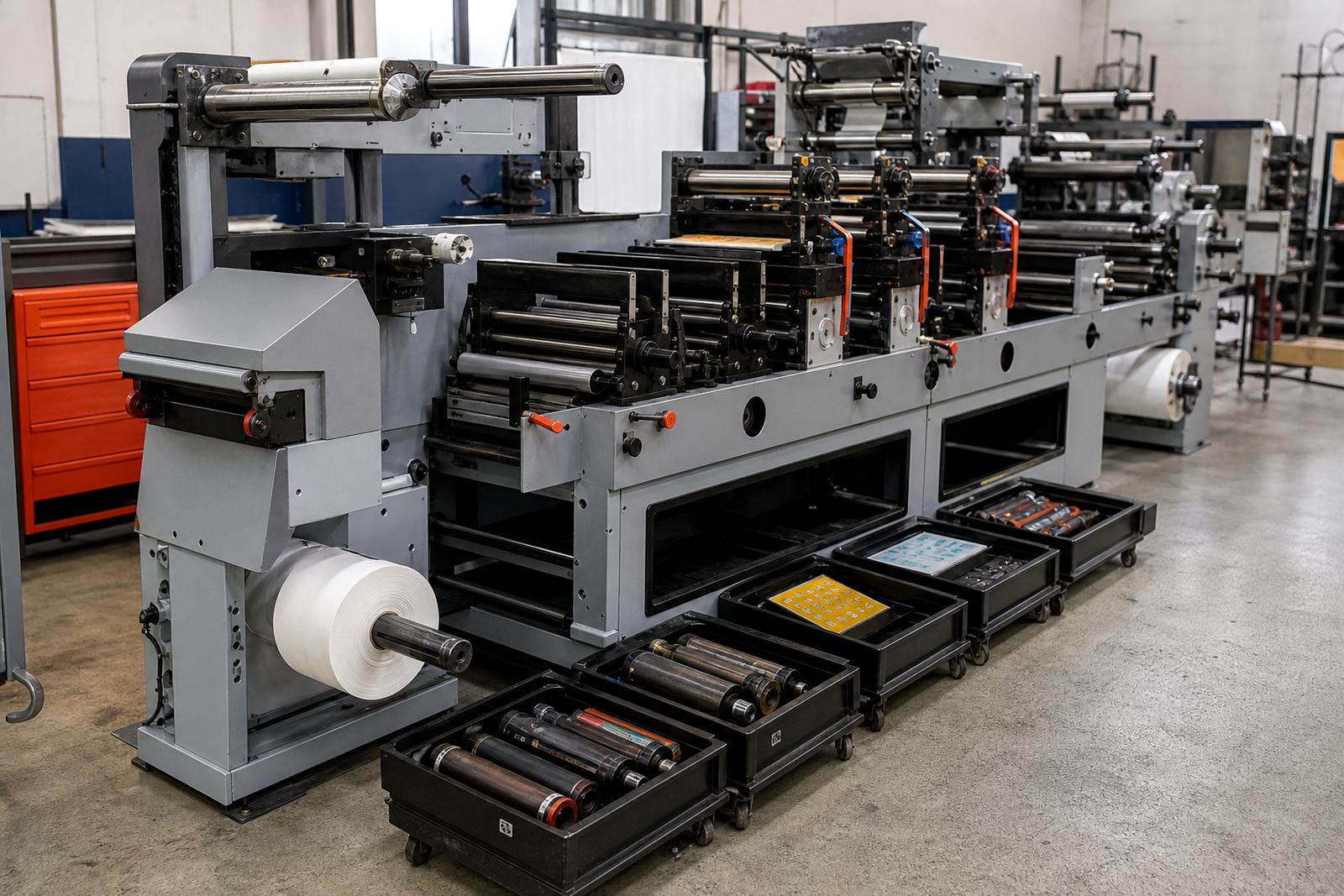
If a substrate keeps lifting, smudging, blocking or slowing the line, it is time to review the setup rather than forcing the press to compensate. Sometimes the issue is the face material, sometimes it is the adhesive, and sometimes the answer is in plate mounting, anilox care or the finishing process. A small change early on can save a lot of waste later.
For converters across South Africa, support can help when a new pack format is introduced, when a customer changes material, or when a label has to perform better in harsh conditions. If you are unsure about the best substrate for a job, a proper trial on the actual product is always better than relying on a paper sample alone.