What Press Commissioning Covers
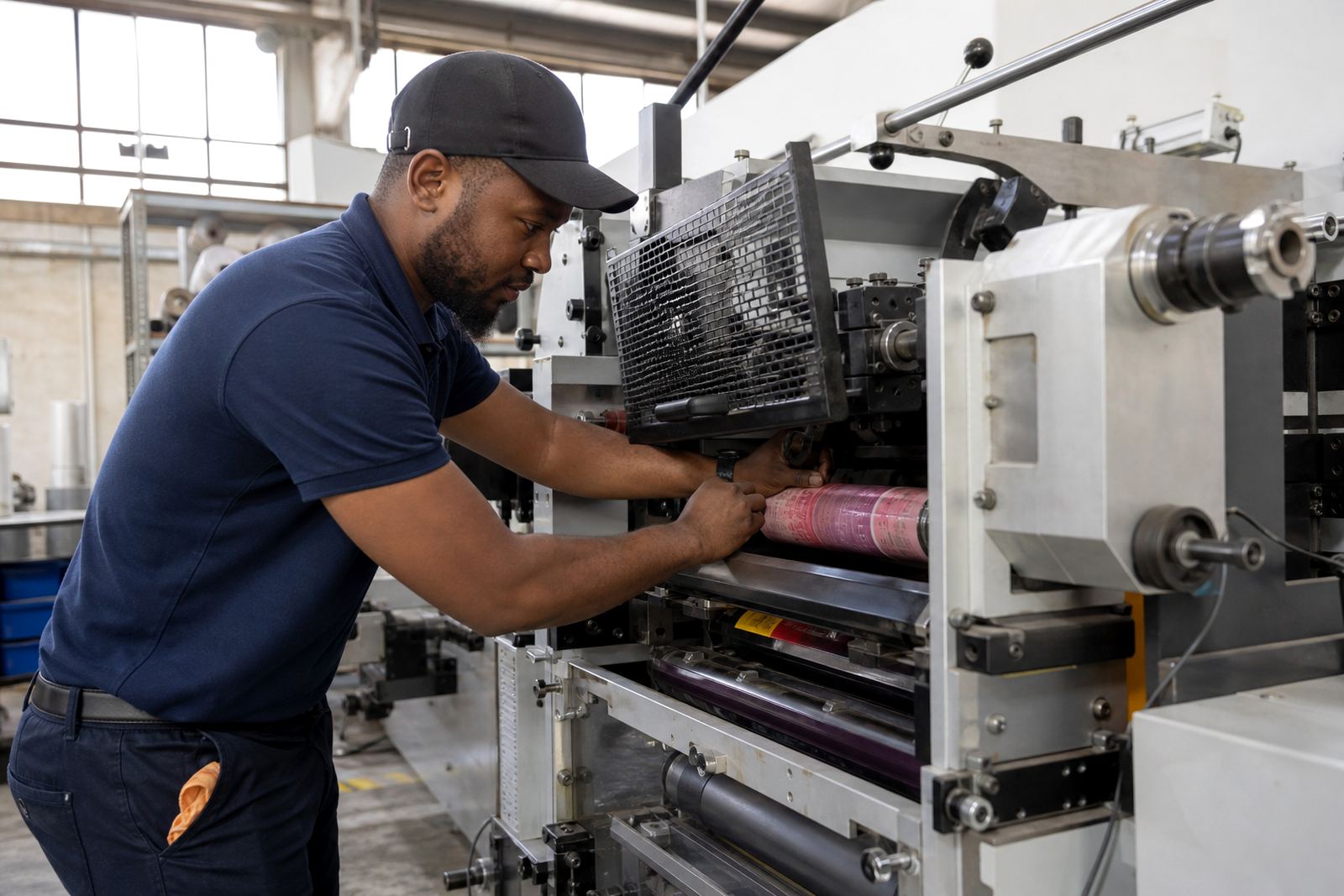
Press commissioning is the point where a new or relocated narrow-web flexo label press is brought into working order for day-to-day production. We check the installation, confirm the press is mechanically and electrically ready, then work through print, register and finishing functions so the machine can run labels with fewer stops and less waste.
For label converters in Johannesburg, Pretoria, Durban, Cape Town, Gqeberha and surrounding areas, this service is useful after delivery, after a move between sites, or after major repairs. It is also practical where a press has been idle for some time and needs a controlled return to production. We keep the process practical and the handover clear, so your team knows what has been tested and what still needs monitoring.
Checks We Carry Out On Site
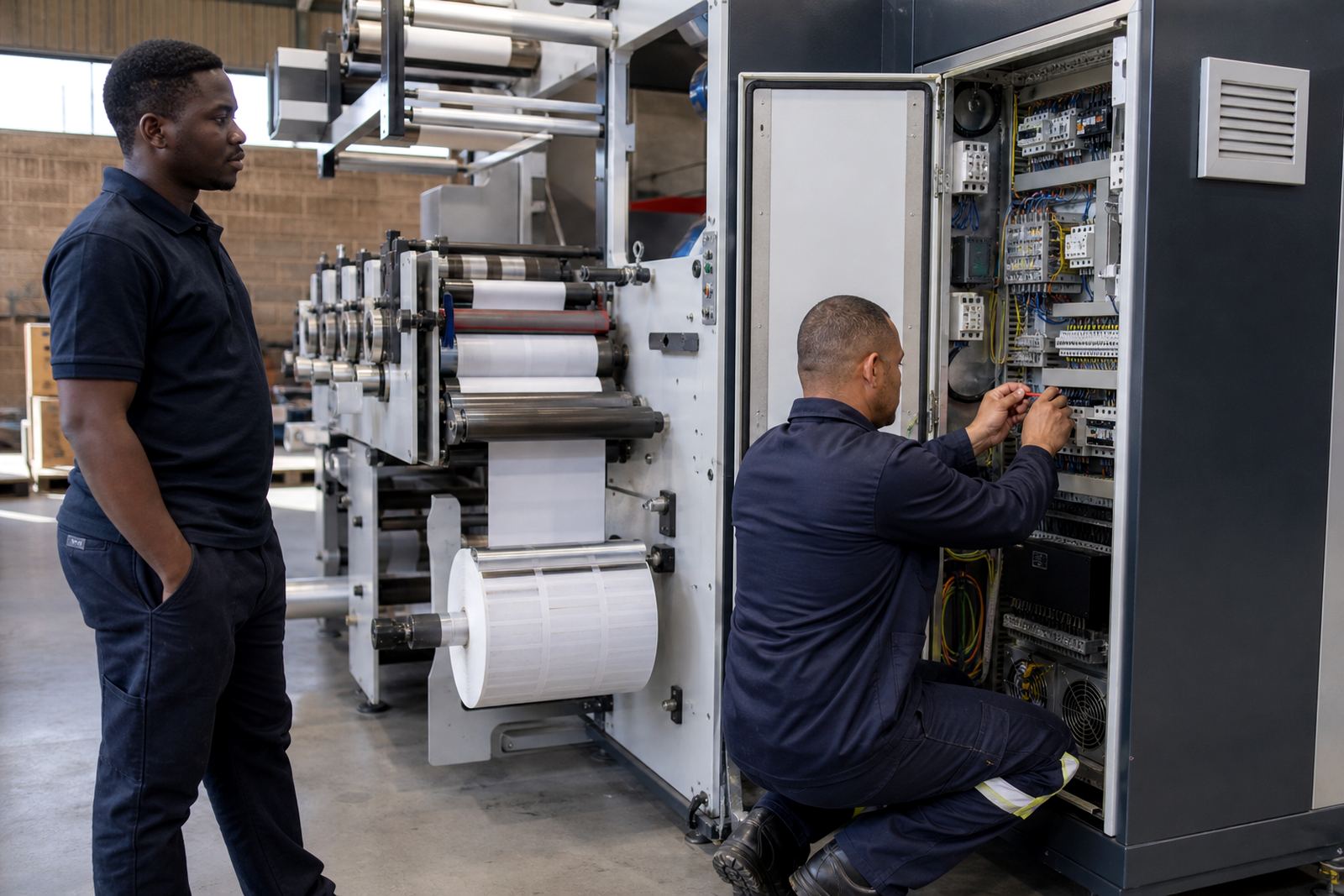
Commissioning starts with a structured inspection of the press and its support systems. We confirm the machine has been placed, levelled and connected correctly, then move through the functions that affect print quality and running stability. This includes feed, web path, tension control, infeed and outfeed behaviour, drying or curing arrangements where fitted, and the finishing section if the line includes cutting, slitting or sheeting.
- Mechanical alignment and basic safety checks
- Web path, tension and tracking verification
- Print station setup and repeat checks
- Finishing section setup and waste handling review
- Operator controls, alarms and start-up sequence testing
- Housekeeping checks for dust, adhesive build-up and access points
We also look at the site conditions around the press. In many South African plants, load-shedding, dust, coastal humidity and uneven power supply can affect how a press behaves during startup. Where required, we work through practical steps to reduce those risks before full production begins.
Setup, Trial Runs And Handover
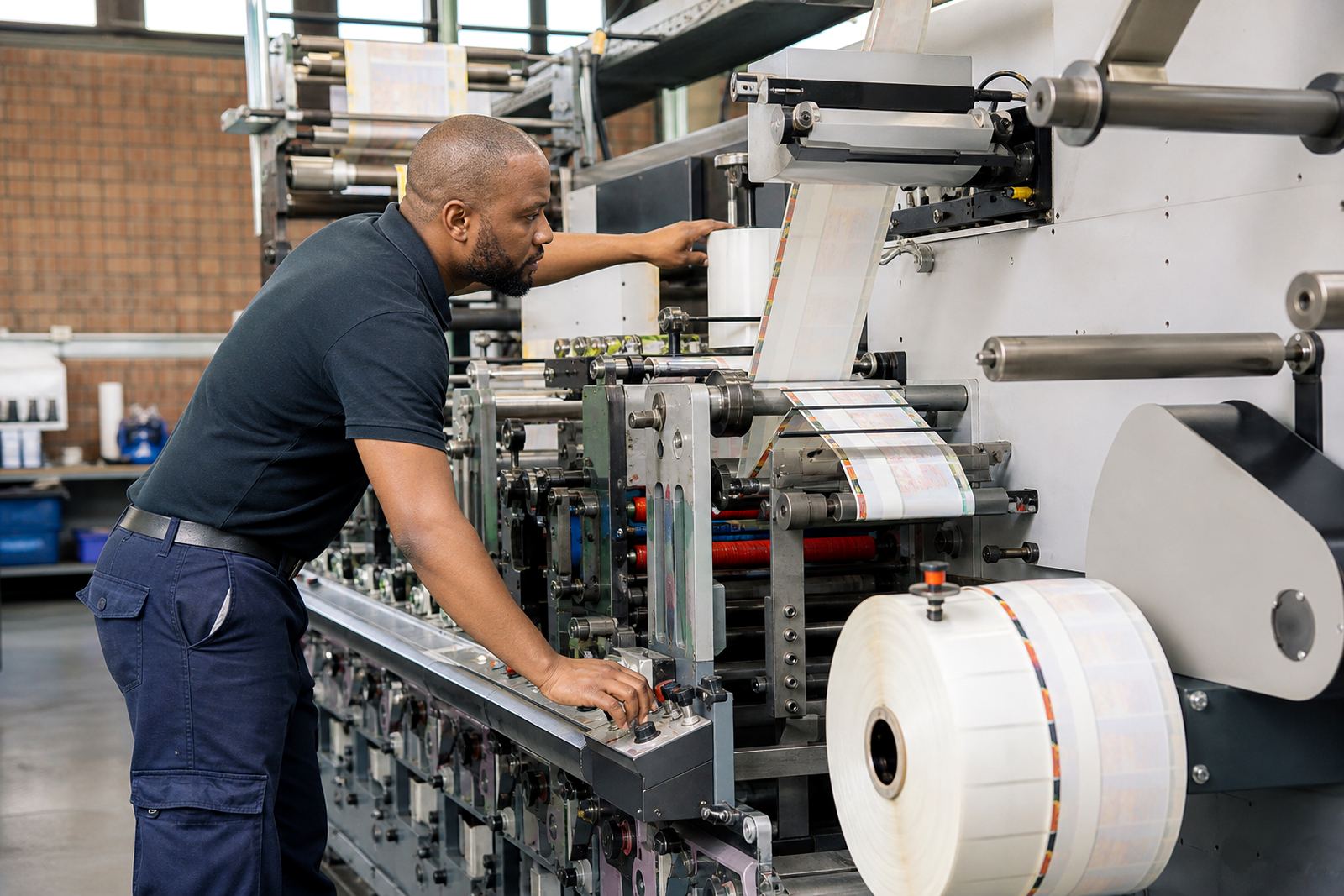
Once the core checks are complete, we move into trial running. The aim is to confirm that the press can produce steady output on the materials and job types you actually use. We set up practical run conditions, test registration and repeatability, and check that the operator can make normal adjustments without guesswork. If finishing is part of the line, we verify that the setup supports clean rewind, accurate slitting and neat presentation on the finished label roll or sheet.
The handover is not just a quick demonstration. We explain the operating sequence, what to watch during changeover, and which signals point to a press setting that needs attention. Where a site runs multiple shifts, we also make sure the day and night teams understand the same basic settings and fault response so the line does not drift from one shift to the next.
- Initial dry run and safety confirmation
- Trial print and registration checks
- Finishing test on the intended material path
- Operator walk-through and Q&A
- Handover notes for the site team
Turnaround And What Affects It
Turnaround depends on the size of the press, the condition of the installation, the number of stations to be set up and whether finishing equipment is included. A straightforward commissioning job can be handled in a short on-site visit, while more involved work may need extra time for adjustments, trials and operator coaching. We plan each job around the site so production loss is kept under control.
If a press is being commissioned in a plant with limited power backup, or where production only runs after hours, we can schedule around that. In practice, the best results come from having the installation complete, materials on hand and at least one operator available for the handover. That way, we can test actual jobs instead of making assumptions.
Pricing Approach And Budget Planning
Commissioning is priced according to the work required, not on a one-size-fits-all basis. We look at site location, the press condition, how much setup is needed, whether the job includes finishing alignment, and whether operator training needs to be folded into the same visit. Travel, overnight stays and special site access can also affect the final quotation.
For budgeting, it helps to think of commissioning as the cost of avoiding repeat stoppages, wasted substrate and poor first runs. A proper setup at the start often saves more than it costs because the press starts production in a more controlled way. We quote clearly, with the scope set out before work begins, so there are no surprises once the team is on site.
Maintenance Follow-Up After Commissioning
Commissioning does not end when the last test job is printed. We usually recommend a follow-up maintenance interval after the first production period, especially where the press is new to the site or has been moved between branches. Early rechecks help catch small shifts in tension, wear on setup parts, loose fittings or finishing drift before they grow into downtime.
- First recheck after initial production runs
- Regular preventive maintenance based on usage
- Prompt attention after power interruptions or breakdowns
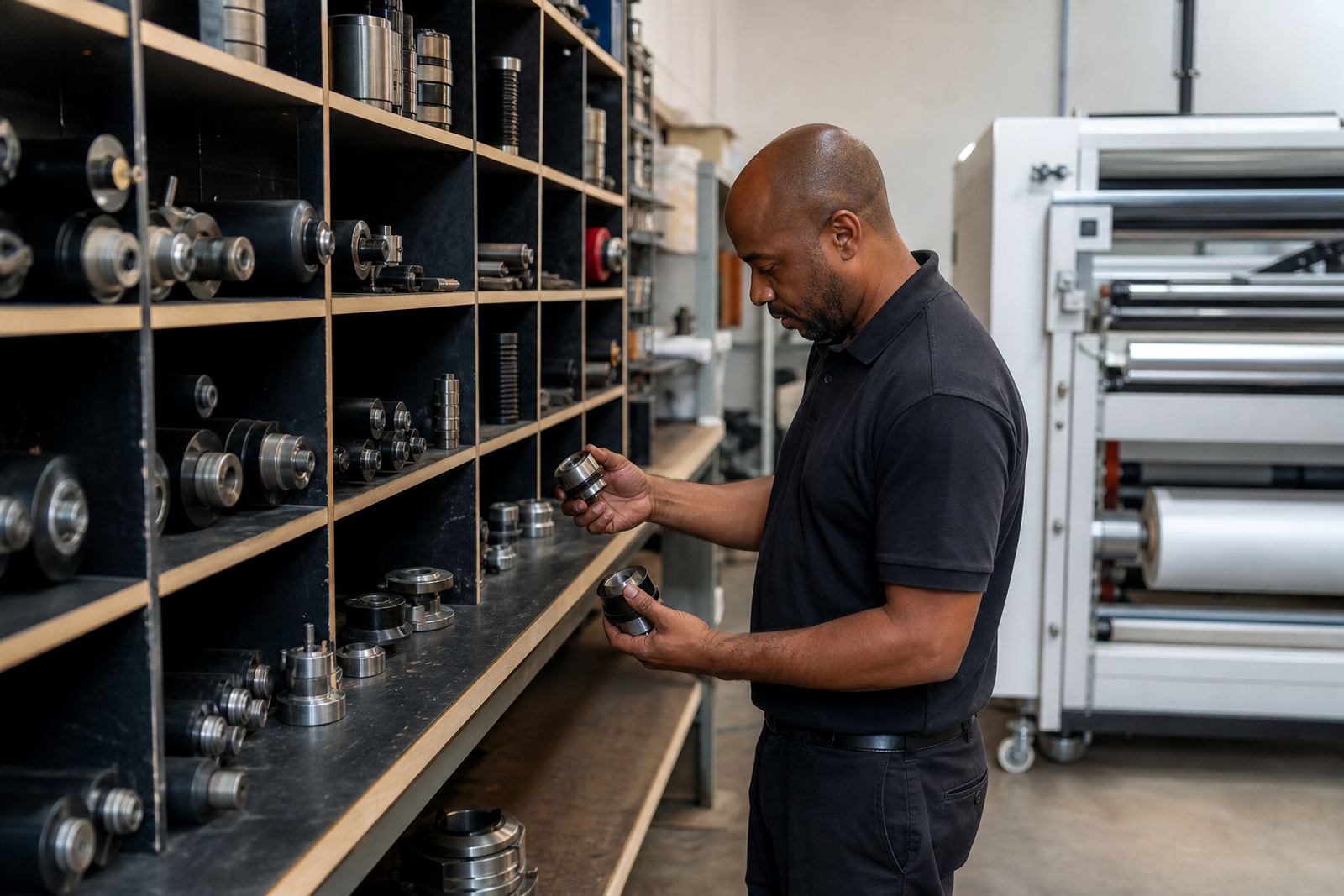
- Support for anilox care, plate mounting and setup corrections
- Remote support where a quick call or photo review can save time
For converter plants in Kempton Park, the East Rand and wider Gauteng, this follow-up is especially useful during busy seasons when changeovers are frequent and the team is under pressure to keep the line moving.
South African Support From Spartan, Kempton Park
Flexography Printer is based in Spartan, Kempton Park and supports label converters across South Africa, including Johannesburg, Pretoria, Durban, Cape Town and Gqeberha. Our team includes Thabo Mokoena, Aisha Patel, Johan van der Merwe, Lerato Ndlovu, Sibusiso Khumalo and Megan Naidoo, each focused on a practical part of the commissioning process from technical setup to operator support.
Clients get in touch through the enquiry form on our contact page and we plan the next step from there. Whether the press is going into a food and beverage line, cosmetics labels or retail packaging, the goal stays the same: stable production, a clear handover and a press team that knows how to keep running without unnecessary stops.
Key facts
| Service type | Press commissioning for narrow-web flexo label presses |
|---|---|
| Coverage | South Africa, with support in Gauteng, KwaZulu-Natal, Western Cape and Eastern Cape |
| Typical scope | Setup checks, trial runs, finishing alignment and operator handover |
| Site requirements | Installed press, connected utilities, materials for test runs and an operator present |
| Turnaround | Depends on press condition, site readiness and scope of testing |
| Follow-up | Recommended after initial production and then at regular preventive maintenance intervals |