What Preventive Maintenance Covers
Our preventive maintenance service is set up for narrow-web flexo label presses used on labels and light packaging work. We focus on the practical items that affect uptime, print consistency and changeover speed, from cleaning and inspection to checking wear points, tension paths and finishing related components. The aim is to catch small issues before they turn into a stoppage or a bad production run.
Work is planned around your shift pattern and the way your plant runs. Whether you are operating in Kempton Park, Johannesburg, Pretoria, Durban, Cape Town or Gqeberha, we can schedule routine visits that suit your production calendar and downtime windows.
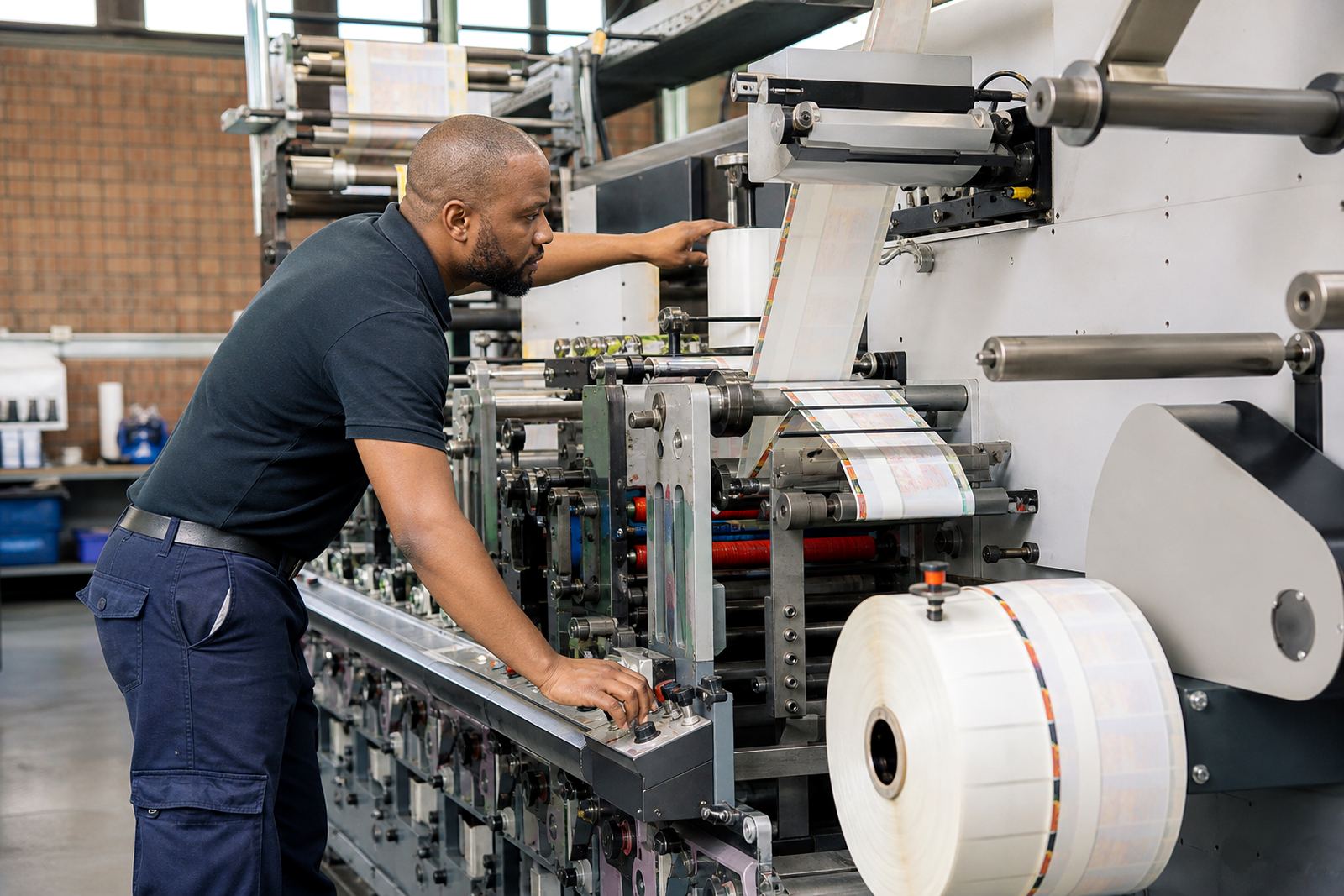
- Mechanical inspection of key press sections
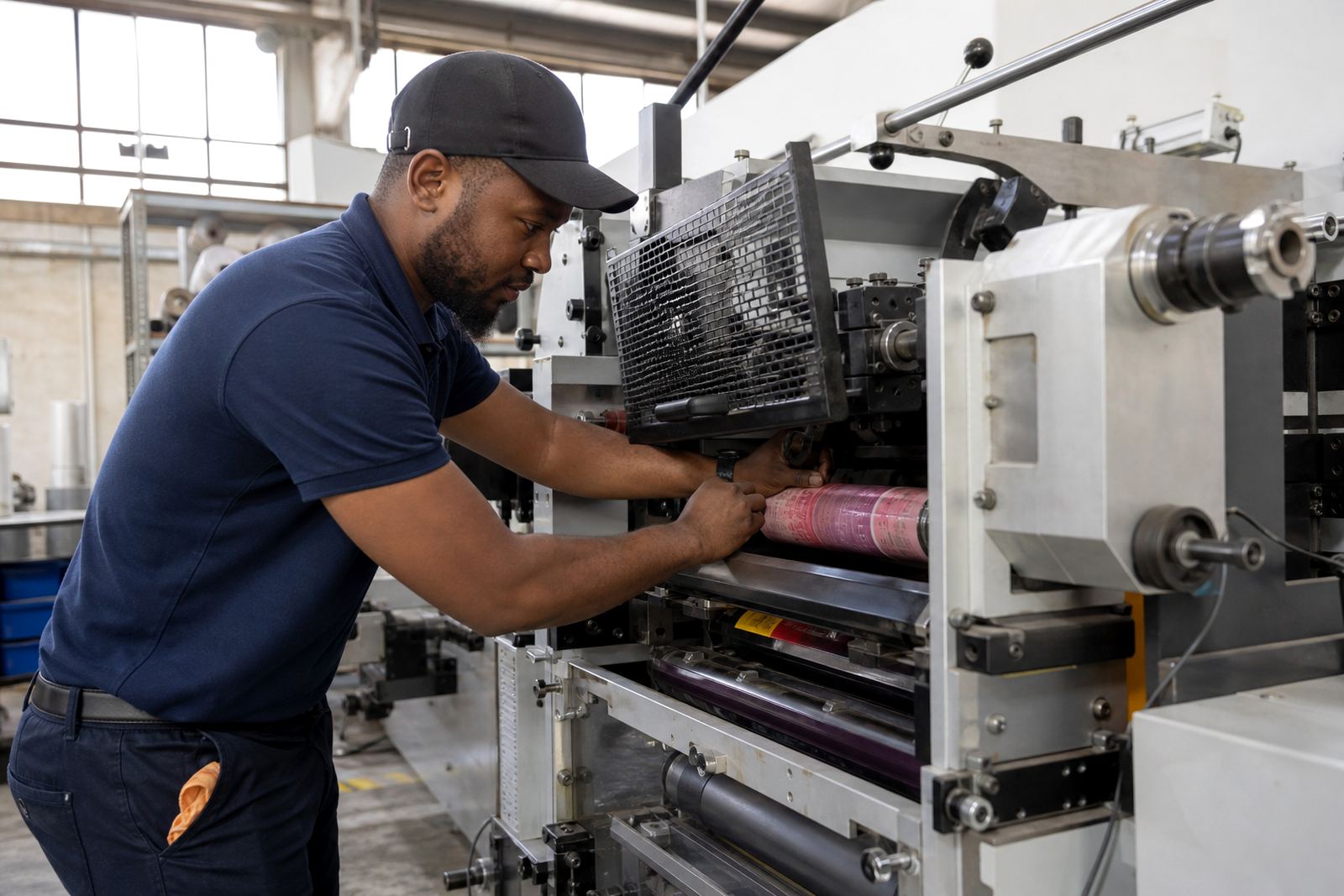
- Cleaning of accessible components and build-up points
- Alignment checks for print and web path related areas
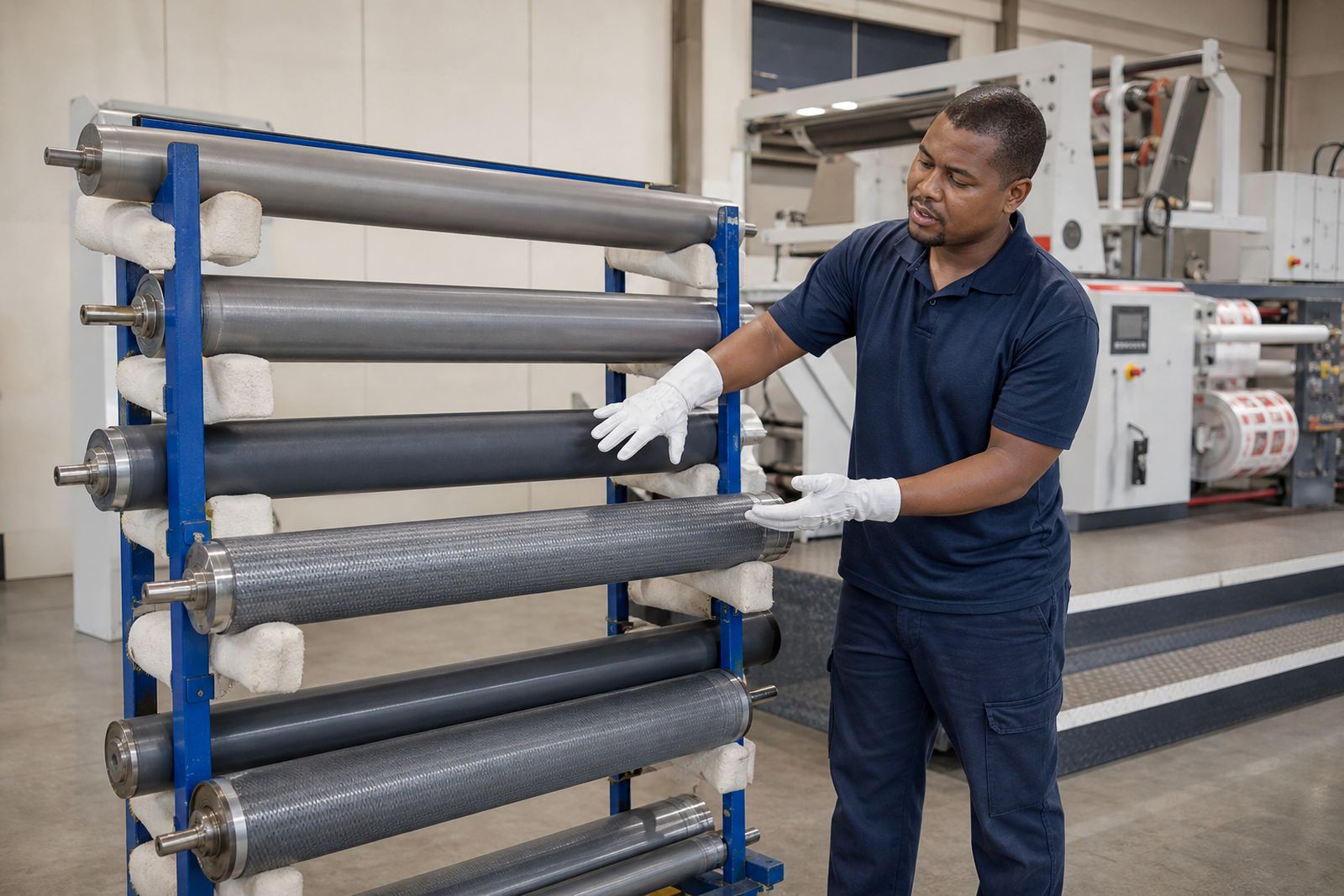
- Condition checks on rollers, guides and wear parts
- Basic calibration and function testing where needed
How We Plan Maintenance Intervals
Maintenance intervals depend on press use, substrate mix, finishing load and the number of shifts you run. A converter doing short runs with frequent changeovers may need more regular checks than a plant on longer repeat work. Coastal humidity in places like Durban and Gqeberha can also mean extra attention to cleaning, storage and corrosion control. Load-shedding and stop-start production put more pressure on settings, so a tighter maintenance plan can pay off.
We normally recommend a maintenance schedule based on running hours, not just calendar dates. That makes it easier to match service with actual wear, and it helps you budget for planned support instead of emergency callouts. If your team is still building experience, we can also recommend a simple monthly or quarterly routine for in-house checks between visits.
- Light-use sites: scheduled checks at longer intervals
- Medium-use sites: regular planned servicing through the year
- High-use sites: tighter intervals with more frequent inspection
- Coastal sites: extra attention to moisture, corrosion and dust control
What Happens During a Service Visit
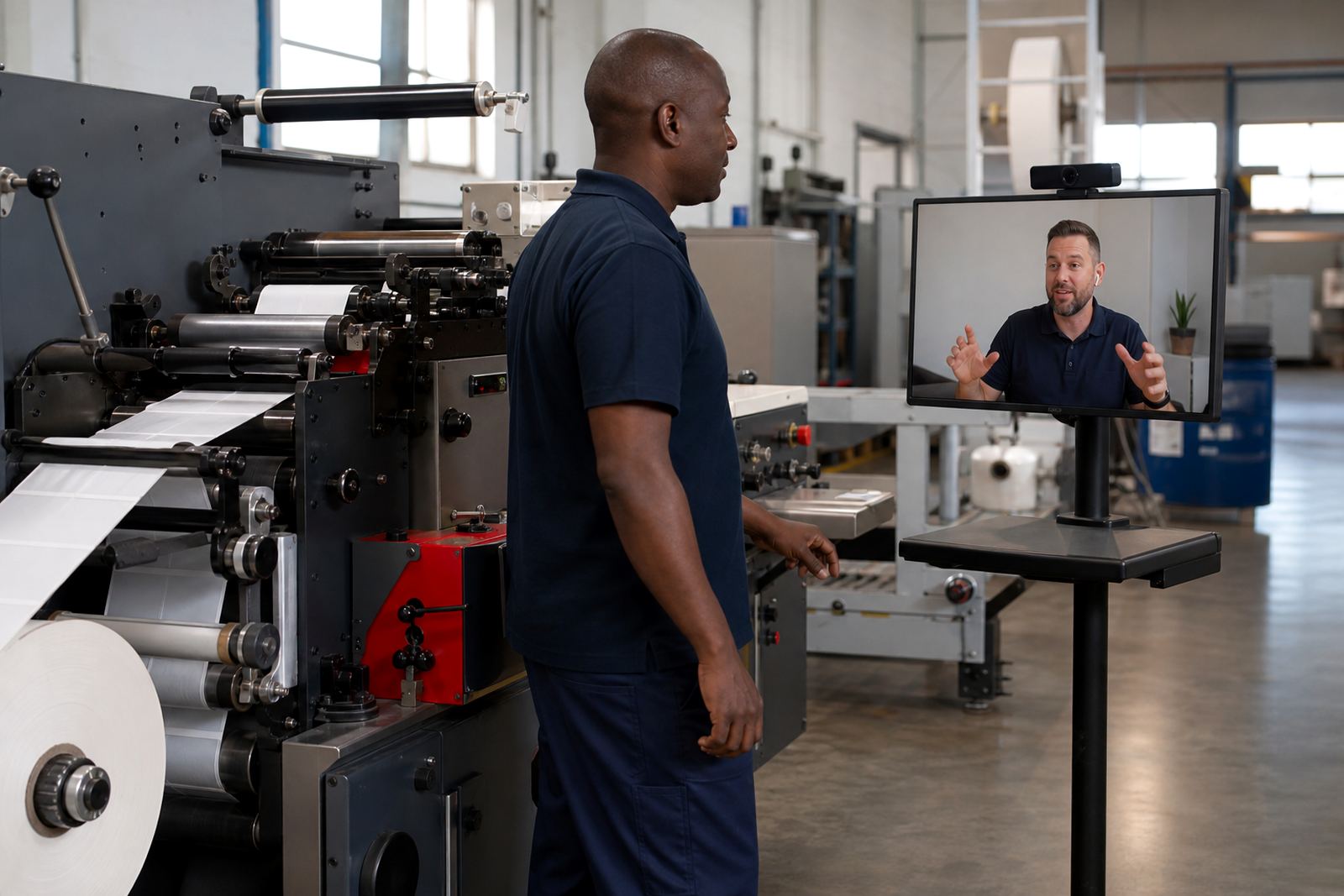
Each visit starts with a short discussion with your production team. We ask about recent faults, changeover issues, print defects, web breaks or finishing problems so the inspection can focus on the right areas. After that, the technician carries out the planned checks, records any concerns and highlights parts that may need follow up.
Where possible, we test the press in a production ready condition so the team can see how it behaves under real operating settings. If an issue needs more time, we separate it into what can be completed on site and what should be handled as a parts or workshop follow up. That keeps the visit practical and reduces unnecessary downtime.
- Pre-visit review of machine history and symptoms
- On-site inspection and cleaning
- Adjustment of minor issues where practical
- Test run and operational sign-off
- Maintenance notes and recommendations for next steps
Spare Parts, Wear Items and Minor Repairs
Preventive maintenance often reveals parts that are still working but nearing the end of their useful life. We will flag these early so you can plan replacements before they fail during a job. That may include common wear items, rollers, bearings, belts, seals, guide components and finishing related consumables. We keep the advice practical, with no guesswork and no pressure to replace parts that are still serviceable.
If minor repairs can be handled during the visit without affecting the schedule, we will discuss that with your team first. For more involved faults, we separate the maintenance scope from breakdown support so you know exactly what is included. This helps with ordering, planning and keeping production moving while parts are arranged.
- Wear part identification and condition reporting
- Advice on replacements before failure
- Minor corrective work where approved
- Support for press and finishing related components
Turnaround and Support Across South Africa
For customers in Spartan, Kempton Park and the wider East Rand, turnaround is usually quicker because we are based locally. For Johannesburg, Pretoria and Centurion sites, service can often be arranged within a practical lead time depending on the schedule. We also support converters in Durban, Cape Town and Gqeberha, with travel planned around workload and urgency.
Turnaround depends on the size of the press, the number of units to inspect and whether any follow-up parts are needed. A routine maintenance visit is usually faster to schedule than a repair call, because the work is planned in advance and the service window is clearer. If you have a tight production date, we can prioritise the most critical checks first and deal with the rest in sequence.
Pricing Approach and Service Planning
We price preventive maintenance according to the scope of work, travel, press condition and the time needed on site. That means you get a quote based on the actual job, not a fixed one size fits all rate. If your press line has extra finishing stations, more frequent changeovers or repeated cleaning needs, those factors are included in the service scope.
For regular customers, we can structure maintenance into planned visits so budgeting is easier through the year. This suits converters who want to control downtime, avoid emergency callouts and keep production steady during busy periods. We are upfront about what is included, what is optional and what may need separate approval if a part is found worn beyond service limits.
- Quoted on scope, travel and on-site time
- Optional follow-up work quoted separately
- Planned service better than urgent breakdown costs
- Regular visits can be scheduled to suit your production cycle
Key facts
| Service type | Scheduled preventive maintenance for narrow-web flexo label presses |
|---|---|
| Main focus | Cleanliness, alignment, wear checks and production readiness |
| Typical interval basis | Running hours, shift pattern and substrate mix |
| Coverage | Kempton Park, Johannesburg, Pretoria, Durban, Cape Town and Gqeberha |
| Maintenance record | Service notes, fault observations and follow-up recommendations |
| Related support | Operator guidance, parts advice and finishing setup checks |